Breast cancer doesn’t impact every women the same. Among Latinas, breast cancer is the No. 1 cancer killer. Many Latinas face unique survivorship journeys, shaped by cultural and spiritual beliefs and struggles with barriers to care, screening, patient-doctor communication, and other social determinants of health. To recognize Breast Cancer Awareness Month (October), let’s use #SaludTues on Oct. 27, 2020, to tweet about the latest progress in Latina breast cancer data and research, the importance of breast cancer screening, and tips and stories for prevention and survivorship! WHAT: #SaludTues Tweetchat “How to Reduce Breast Cancer and Improve Survivorship among Latinas”
WHERE: Twitter
WHEN: 1-2 p.m. ET (12-1 p.m. CT), Tuesday, Oct. 27, 2020
HOST: Salud ...
Latinos and other people who have diabetes are getting more access to much-needed supplies amid COVID-19. Beyond Type 1—a diabetes nonprofit organization—launched a new bilingual tool last week: GetInsulin.org in English and GetInsultin.org in Spanish. This online platform is a tool to help those using insulin find inexpensive options. It also has assistance programs for patients in any financial circumstances. “The job losses we’ve seen during COVID-19 mean that many individuals who lost their employer-based health insurance due to COVID-19 are experiencing insulin access issues for the first time in their lives,” Christel Marchand Aprigliano, Beyond Type 1's chief advocacy officer, told Healio. “List prices for insulin are high, so a sudden insurance loss may ...
If you interact with Salud America! in any way, we want to hear from you! Take the 2020 Salud America! Survey to let us know what you think about our digital communications for awareness and action around Latino health equity.
1. Take the Survey to Enter to Win an iPad!
Why not get something free?! If you take the survey by Nov. 8, 2020, you can enter a raffle for a free iPad! TAKE THE 2020 SALUD AMERICA! SURVEY
2. Take the Survey Because You Care!
You're on our website right now. We know you care about health, whether you got here from a tweetchat or email or web page or video. If you take our survey, it can help us better understand how our digital content motivates and impacts efforts to promote Latino health equity. We want a society where everyone has a just ...
Children of color continue to struggle with obesity. Obesity rate continues to be significantly higher for Latino (20.7%) and black children (22.9%) than for white children (11.7%) ages 10-17, according to the new State of Childhood Obesity report from the Robert Wood Johnson Foundation (RWJF). Obesity—and other chronic diseases—are more prevalent among those of color and those in poverty because discriminatory systems have disinvested in healthy policies and basic resources for them. In the midst of the current COVID-19 pandemic, which is worsened by obesity, it is more critical than ever to prioritize children’s health. Latino children and young adults account for over 40% of the COVID-19 deaths among people ages 0-24, according to the CDC. To prioritize children’s ...
Latinos face many transportation inequities that impact their ability to build health and wealth. This is due in part to a lack of diversity among decision makers, planners, and engineers and ethnocentric policies, projects, and investments that reinforce the auto-centric status quo. Ultimately, past and present planning practices have failed to be inclusive of Latino needs, failed to represent historic and existing inequities, and failed to responsibly evaluate and measure impacts, targets, and performance. Two new reports from our year-long workgroup of planners and planning scholars provide recommendations to prioritize Latino experiences and needs in the planning process; address inequities and promote racially/economically mixed communities, and modify metrics used to ...
Almost 60% of Americans believe that racism can impact the health care an individual receives, according to the National Cancer Opinion Survey conducted by the American Society of Clinical Oncology (ASCO). The survey also found that about two-thirds of Americans have skipped or delayed scheduled cancer screenings due to the COVID-19 pandemic, which is disproportionately harming Latinos. These results have wide-ranging implications for preventative care and the perception of health care disparities in the United States.
About the Survey on Racism, Health Care
The National Cancer Opinion Survey is conducted annually. This year, ASCO surveyed over 4,000 U.S. adults older than 18, with over 1,000 of them former or current cancer patients. “This survey assesses Americans’ ...
By Tanya Enriquez DelValle
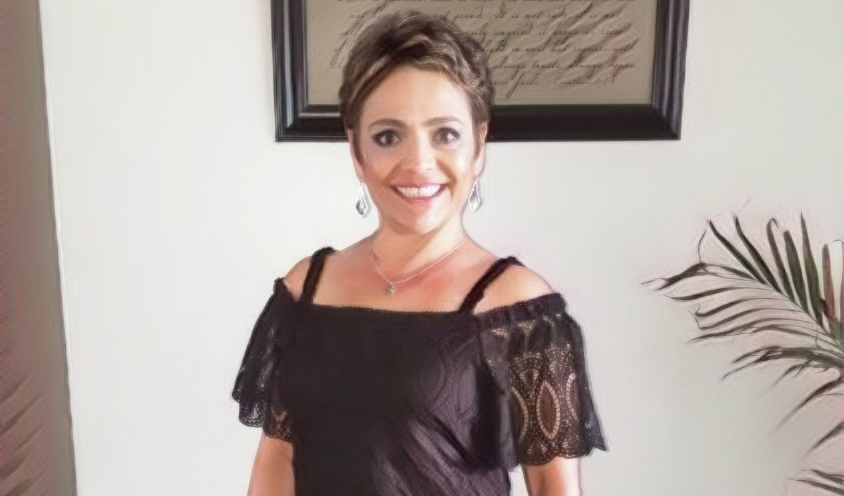
Breast Cancer Survivor in San Antonio Five years after being diagnosed with breast cancer at age 27, I got my first tattoo…the energizer bunny with the pink ribbon on the drum. I was going to keep going and going. Here I am now 50 and still cancer free! I have an incredible life. I am a counselor at Legacy of Educational Excellence (LEE) High School, married to the man of my dreams for 15 years, and excited about the next adventure in my life. Twenty-three years ago, on Nov. 21, 1997, my world changed when I was diagnosed with breast cancer. I remember asking my doctors if I was going to die. They said, "Not anytime soon." That was all I needed to hear. From that point forward I decided that cancer was NOT going to get the best of me. ...
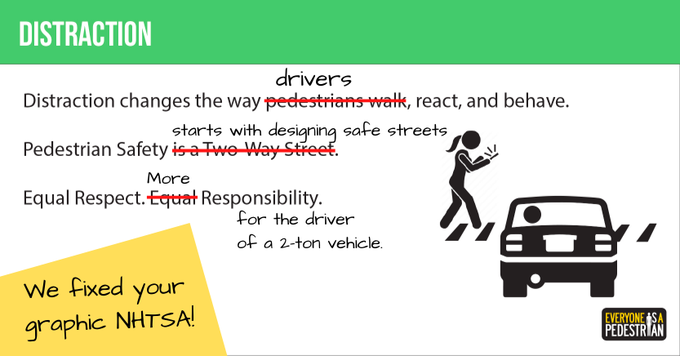
The National Highway Traffic Safety Administration (NHTSA) is celebrating pedestrians by designating October as the first-ever Pedestrian Safety Month and creating a playbook with social media materials to raise awareness. This is good, because pedestrians deserve safety on a road, parking lot, or crosswalk. But it’s not all good. NHTSA is mostly focused on individual pedestrian safety, as opposed to systemic policy changes. This is a form of pedestrian-blaming. By blaming the pedestrian, like in victim-blaming or justifying inequities, Pedestrian Safety Month actually distracts from efforts to address the very transportation systems that endanger pedestrians in the first place. We are excited to see that Transportation for America’s Twitter thread that modified NHTSA ...
Exposure to the fumes from harmful tobacco products, such as cigarettes and cigars, can severely affect people, especially in children. Recent research shows that children who live with a smoker are more likely to become hospitalized than their peers living in smoke-free households. According to Dr. Ashley Merianos, an associate professor in the School of Human Services at the University of Cincinnati, this data does not come as a complete surprise. "In past studies, we found up to nearly one-in-two children who come to the pediatric emergency department are exposed to tobacco smoke," Merianos told The Denver Channel. "We also found that the children who had been exposed had increased respiratory-related procedures, increased diagnostic testing. So, for example, being tested for ...