Every woman’s health matters. A pregnancy can bring potential complications to both mother and child. Some risks are worse for Latinas and other mothers of color. That’s why the CDC’s new campaign, “Hear Her,” encourages all women to know how to prevent maternal mortality, and share their concerns with their health care provider. Let’s use #SaludTues on Tuesday, Sept. 15, 2020, to tweet about the importance of CDC’s new campaign and maternal health, especially for Latinas in honor of the launch of Hispanic Heritage Month (9/15 to 10/15)! WHAT: #SaludTues Tweetchat “Hear Her: Preventing Pregnancy-related Deaths”
WHERE: Twitter
WHEN: 1-2 p.m. ET (12-1 p.m. CT), Tuesday, Sept. 15, 2020
HOST: Salud America! at UT Health San Antonio (@SaludAmerica)
...
We know that Latinos, by-in-large, face a host of health disparities. But we also know there is a historic lack of research about these inequities and how to address them. This is why the National Institute on Minority Health and Health Disparities' recent "Funding of Latino Health-Related Research," is so important. The study—published in Frontiers of Public Health—looked at the impact of interventions or policies premeditated to reduce health disparities. This information could advance research in Latino health and contribute to the achievement of better health outcomes in this diverse population, according to Dr. Larissa Avilés-Santa, who led the study. "Latinos are expected to constitute 25% of the U.S. population by 2060," the researchers write. "Differences in the ...
As everyone adapts to a quickly spreading coronavirus, many are taking every precaution necessary to avoid infection and spread — including practicing good hygiene. Using hand sanitizer is a popular way to keep your hands clean and avoid coronavirus. Companies throughout the world have ramped up production of these kinds of items to meet the demands of consumers reacting to the wide sweeping nature of this pandemic. Still, not every company has the best intentions, according to New Jersey physician anesthesiologist Dr. Nina Radcliff. “Hand sanitizers that are deemed safe and used effectively can serve as a secondary method of hand washing,” Radcliff writes in a recent The Press of Atlantic City health column. “But not all hand sanitizers are created equal and it’s ...
Don't let down your guard against COVID-19 during Labor Day weekend. Cases spiked after the Memorial Day and Fourth of July holidays, so health experts are stressing the importance of containing the coronavirus during the coming holiday. How can we contain the virus? Latinos can wear a mask and care for it properly, avoid public places (or at least get together safely, familia), and know what to do if you’re exposed, according to our "Juntos, We Can Stop COVID-19" campaign. "Labor Day is coming up, and we need to stress personal responsibility," said Adm. Brett Giroir, assistant secretary for health at the Department of Health and Human Services, CNBC reports. "We have to go into the fall with decreasing cases like we’re doing now. We can’t risk a lack of personal ...
Despite the nation's high rates of coronavirus infections, transitions, and deaths, many U.S. schools reopened for the fall semester. Some school districts have chosen to adhere to stricter guidelines through remote learning, while others are implementing in-person teaching with specific safety protocols, and others a hybrid of virtual and in-person. Whatever type of learning, the bottom line is that COVID-19 has not gone away. Outbreaks are happening, and teaching in school only adds to the risk of spreading coronavirus infection, according to Margie Kochsmier, an infection preventionist with FHN Healthcare System in Freeport, Ill. "Anyone—including children—can get COVID-19. Generally, children tend to have more mild symptoms, but it's important to remember that anyone ...
COVID-19 continues to disproportionately impact Latinos, killing over 33,000 and hospitalizing many more. To improve Latino health, we must take action to slow the spread of coronavirus. But how do you communicate this issue to Latinos amid misinformation and information overload? Culturally relevant fact sheets, infographics, and video role model stories to inform and urge Latino families to take action to help slow the spread of coronavirus. Let’s use #SaludTues on Sept. 8, 2020, to Tweet about the #JuntosStopCOVID campaign to make sure Latinos and all people know what they can do to slow the spread of COVID-19. WHAT: #SaludTues Tweetchat: “Juntos, We Can Stop COVID-19”
TIME/DATE: 1-2 p.m. EST Tuesday, Sept. 8, 2020
WHERE: On Twitter with hashtag ...
U.S. leaders have "failed miserably" in planning and executing a cohesive national response to COVID-19, which has killed over 170,000 people here, according to a new report. The report is Public Health Law Watch's Assessing Legal Responses to COVID-19. It features 50 top national experts evaluating the policy response to the pandemic. The experts blame neither resources nor individual courage, but rather "a failure of leadership and the implementation of an effective response." COVID-19 revealed weaknesses in the nation’s health care and public health systems. It also worsened existing health inequities for Latinos and other people of color—even creating new disparities. Still, the report offers 100+ recommendations on how federal, state, and local leaders can better ...
More and more, new research shows that smoking and vaping is associated with a substantially higher risk of COVID-19 progression. Worse, this comes at a time of worry over the impacts of these habits, including a series of vape-related lung illnesses as well as fatalities. Earlier this week, the California State Assembly passed a ban on the sale of flavored tobacco products, including e-cigarettes and vapes. While this is significant progress, the fight to ban these kinds of items in the Golden State isn't over, yet. The bill will go to the State Senate for a final vote.
The Bill and Its Potential Impacts
Senate Bill 793, authored by Senator Jerry Hill (D-San Mateo), specifically makes any sale punishable by a fine of $250. This also includes flavored e-cigarettes, cigars, and ...
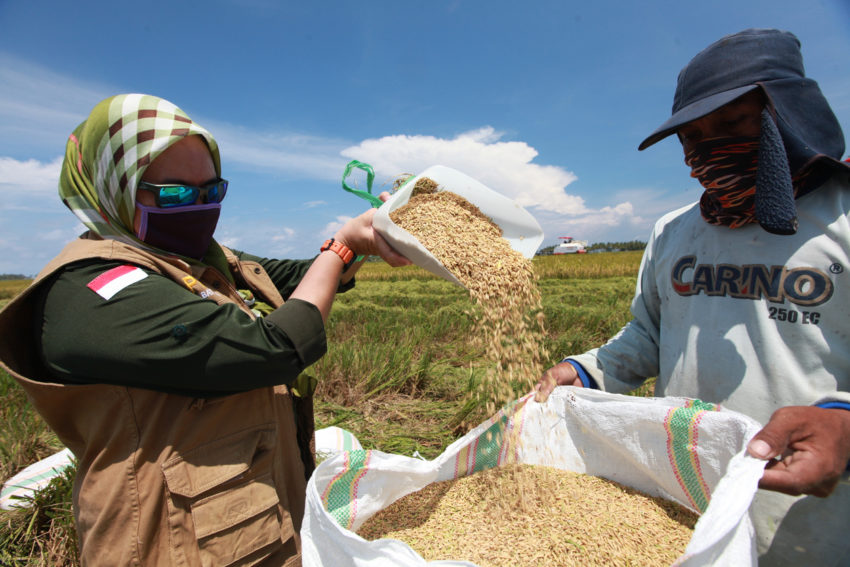
Latino farmworkers living in rural communities are experiencing some of the most devastating effects of the coronavirus pandemic. These laborers are experiencing high rates of COVID-19 infections. Their access to medical care, which was limited even before the virus, has only worsened during the pandemic. On top of everything else, farmworkers are also having to battle against poor workplace treatment, according to Rosalinda Guillen, the Executive Director of Community to Community Development. "There's just a myriad of indignities that the workers suffered at those packing sheds that we're hearing from other workers in other areas where the same thing is happening over and over and over again," Guillen said. "It is about the disease. It is about workers feeling that finally it ...