Several barriers affect Latinos when it comes to accessing quality health care. Finances, communication, and transportation are three of the most prevalent issues. In North Carolina, these issues, especially communication, are especially acute. Latinos who do not speak English often have to pay extra in rural areas of North Carolina to have a translator with them at their doctor’ “Probably one of the biggest problems [at the Greater Hickory Cooperative Christian Ministry (GHCCM)] is communication,” said Sue Troutman, a registered nurse at GHCCM. “If they don’t speak good English, they miss things. Sometimes they don’t know what’s available and that’s partially to the translation barrier.” Even when translators are on staff, the possibility exists that something is ...
The Health Resources and Services Administration (HRSA) recently announced more than $140 million that will be distributed among 12 workforce programs across the country. A study from the Association of American Medical Colleges projects a shortfall of between 14,900 and 35,600 primary care physicians by 2025. The award from HRSA will fund grants related to primary care training, specifically, encouraging diversity in the primary care workforce. As the Latino population continues to grow in the United States, there is also a growing need for qualified Latino/Hispanic healthcare workers to address this population’s needs. In addition to needing someone to communicate in Spanish, having healthcare workers that are culturally sensitive to the needs of their patients is essential to the ...
In Las Cruces, NM city council members will meet today, May 23, 2016, to discuss plans for expanding the local agriculture and food environment, through a comprehensive Urban Agriculture and Food Policy plan, developed by local non-profit La Semilla Food Center. Exactly what is urban agriculture (UA)? The idea is to inform leaders about the many forms, benefits and opportunities that UA has to offer the local community. UA is the practice of cultivating, processing, and distributing food in and around towns and cities. Through UA communities are no longer held to the idea that local growing is just for farmers or rural communities, but in reality schools, churches, local businesses, housing authorities, residents and virtually anyone with a desire to grow and produce their ...
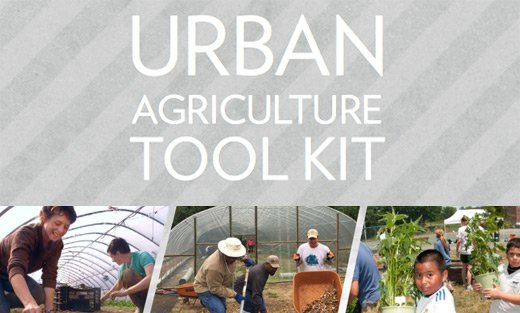
The U.S. Department of Agriculture (USDA) has newly released a toolkit for those in urban agriculture or looking to be an agri-business entrepreneur. The opportunities in agri-business help drive job growth in agriculture and expand food access and choice which is vital to Latino communities in need of healthy food access in urban and rural areas. The toolkit is an electronic document that helps urban and small farms navigate more than 70 resources including tech assistance and financing opportunities. Baltimore organizations have added resources into the toolkit including "How-To' guides and law project manuals. To learn more, click here! To access the Toolkit, click here! Copy & Share on Twitter: Attention all #urbanfarm #entrepreneurs, need resources? See the new @USDA ...
The child poverty rate in Colorado declined in 2014, marking the first consecutive decline in over a decade as was determined by the annual KIDS COUNT in Colorado! report. However, disparities still exist and improvements are not reaching all children. Colorado’s overall child poverty rate is 15%, which is still five points higher than it was in 2000. Poverty is defined as an annual income of less than $23,850 for a family of four. Disparities also remain significant for many children of ethnic and racial minorities. “We’re encouraged by the improvements in well-being for Colorado kids,” said Chris Watney, President and CEO of the Colorado Children’s Campaign. “These trends are buoyed by economic progress, as well as key policy changes supported by research. Breakthroughs ...
In the Spring of 2016, the National Shared Use Task Forced announced the winners of the Shared Use Ambassadorship Program, a new national recognition program that acknowledges the work of researchers, practitioners, and policymakers who are advancing shared use in their respective communities. The goal is not only to recognize individuals, but to collect and share success stories across the country in the shared use field as a way to encourage others. "They are at the forefront of some of the most creative and effective shared use strategies, from engaging hospitals and exploring the role of shared use in hospital settings, to amplifying the youth voice to effectively advocate for shared use in their schools, to tackling the challenges of shared use implementation in rural ...
Research shows the prevalence of the Human papillomavirus (HPV) in the United States is down by 60% among teenage girls, since the introduction of the HPV vaccine, Fox News reports. For the study, researchers pulled data from the CDC’s National Health and Nutrition Examination Survey and concluded that HPV is down 64 percent among teenage girls ages 14 to 19 and 34 percent among young women ages 20 to 24. Although the HPV vaccine has the potential to prevent thousands of individuals from getting HPV related cancers (cervical cancers, penile cancers, head and neck cancers) uptake of the vaccine remains low. “We have this cancer-prevention vaccine that is severely underutilized in the United States,” Dr. Kevin Henry of Temple University said in news update from Fred Hutch ...
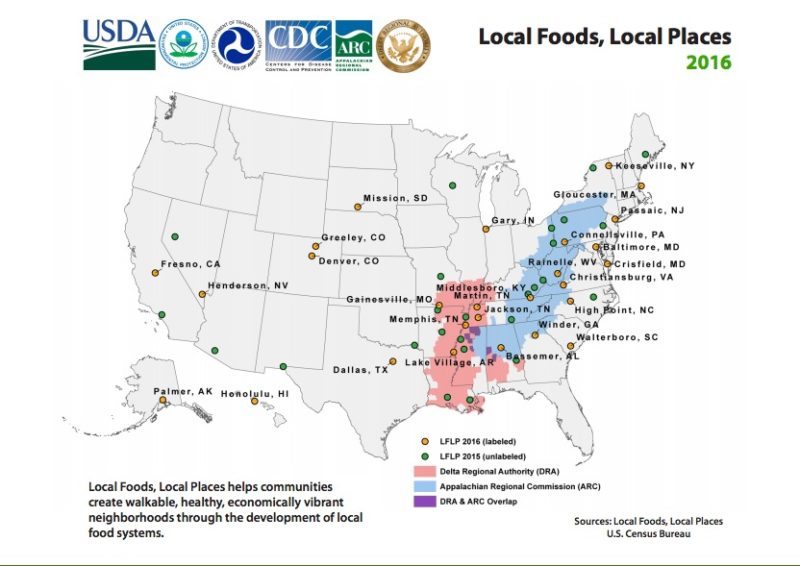
Access to healthier foods is vital for Latino families who may be more at risk for health-related diseases. Local Foods, Local Places (LFLP), a federal initiative has planned to help increase access to healthier foods and help revitalize 27 communities through local food enterprises. The partner community works with experts to help community members access local opportunities for revitalizing downtowns and neighborhoods. The communities selected for assistance in 2016 were chosen from more than 300 applicants. Some assistance and support will be directed towards changes in: Williamson, W. Va. for healthier food and healthcare systems, with access to healthier foods and access to health care
Rocky Moun, N.C. for new farmer's markets and urban community gardens, and affordable ...
According to a report published in the Annals of Family Medicine, more than half of family physicians seeking board certification work in small solo practices, especially Hispanic or Latino physicians. One fifth of the small practices are in rural settings. “Our findings have implications for the future of family medicine,” said one of the report’s authors, Dr. Winston R. Liaw of Virginia Commonwealth University in Richmond. “First, smaller practices may be missing out on hew payment models that are dependent on patient-centered medial home certification.” Small or solo practices were more commonly the choice for Hispanic physicians. Dr. Liaw and colleagues analyzed demographic survey data from 10,888 family physicians seeking certification through the American Board of ...