This is part of our Food and Latino Kids: A Research Review »
Federal food assistance
Research on the impacts of healthy food financing initiatives among SNAP and WIC participants is important because a large proportion of them are Latino, and/or belong to communities impacted by non-medical drivers of health. Latinos comprise 19 percent of SNAP and 32 percent of WIC participants.36,37 About 50 percent of U.S. Latino children are served by the WIC program.37
Efforts to promote healthier food via federal food assistance
In 2009, the U.S. government revised the “package” of food eligible for WIC food to include a wider variety of healthy foods, including whole grains, fruits and vegetables, and lower-fat milk. Three studies found that the new WIC food package significantly ...
This is part of our Food and Latino Kids: A Research Review »
Efforts rising to boost healthy food in corner stores
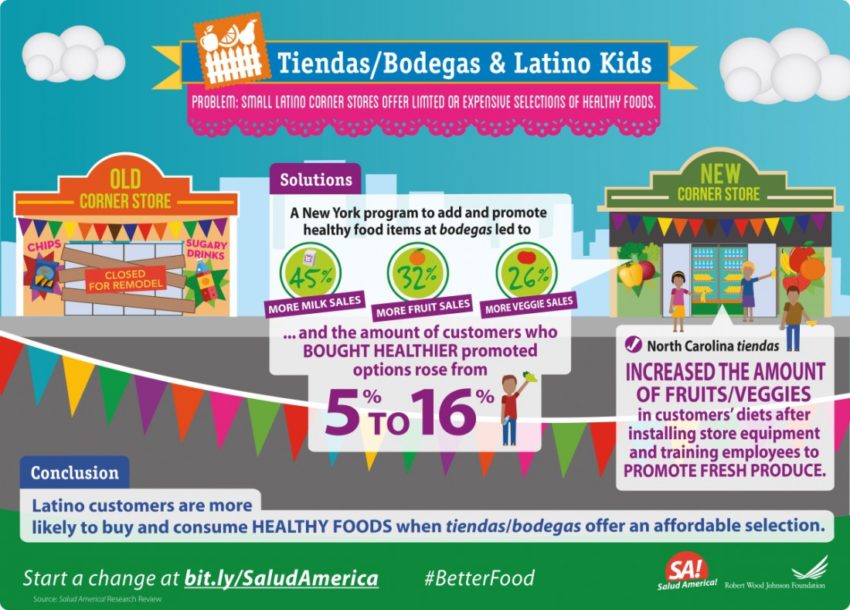
Initial findings on the impact of initiatives aimed at expanding healthy foods in corner stores have been generally favorable, although most studies to date are not large and rigorous in their methods and analyses. Additionally, the majority of studies have not been conducted in areas with significant Latino populations. Two reviews of several studies on corner store initiatives in areas with small numbers of Latinos found that most stores reported that the interventions were linked to increased sales of promoted healthy foods, including fruits and vegetables, low-fat milk, high-fiber cereals, and water.71,72 A small, randomized, controlled study of tiendas in ...
This is part of our Food and Latino Kids: A Research Review »
Many people face financial challenges to healthy eating
Focus groups of Latino mothers have revealed that the most significant barrier to establishing healthy eating habits for their children is financial constraint.82 Many Latino families experience intermittent or chronic food insecurity; however, food is usually given the highest priority. Because of financial constraints, lower-income Latino mothers’ food purchases are driven almost exclusively by price.83 Mothers have expressed that they commonly travel to several different locations to purchase specific items at the lowest prices available.82 These practices demonstrate that Latino mothers’ desire to provide healthy meals for their families and protect ...
This is part of our Food and Latino Kids: A Research Review »
Conclusions
A large portion of U.S. families lack access to healthy, affordable foods in their neighborhoods. Lack of access is especially prevalent in low-income communities, including Latino communities. In these neighborhoods, convenience stores and fast-food restaurants are widespread, but there is a scarcity of supermarkets and farmers’ markets that can provide fresh and healthy food options. Healthy food financing initiatives are relatively recent, but promising at increasing the availability of healthy foods in low-income neighborhoods. These initiatives involve children and adults and are spread across various localities with different environments, characteristics, and obesity rates. There is still ...
This is part of our Food and Latino Kids: A Research Review »
Introduction
While a nationwide concern, obesity is especially prevalent among Latino children. Nearly 40 percent of U.S. Latino youth ages 2-19 are overweight or obese compared with 28.5 percent of non-Latino white youths.1 Obesity is linked to increased risk of developing type 2 diabetes, cardiovascular disease, asthma, liver disease, and cancer.2 Given that Latinos are one of the fastest-growing U.S. populations, preventing and reducing obesity among Latinos will have an important impact on our nation’s health. Latino children are more likely to live in poverty than others,3,4 causing diet quality to suffer and increasing the risk for developing obesity.5 Limited neighborhood access to affordable, healthy ...
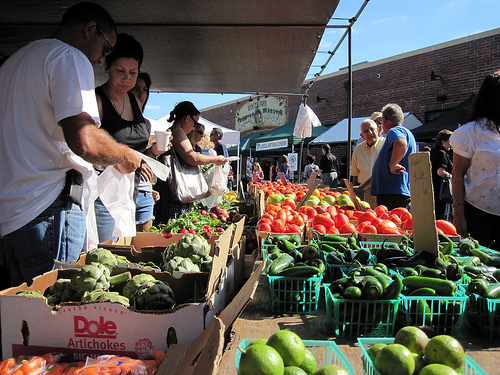
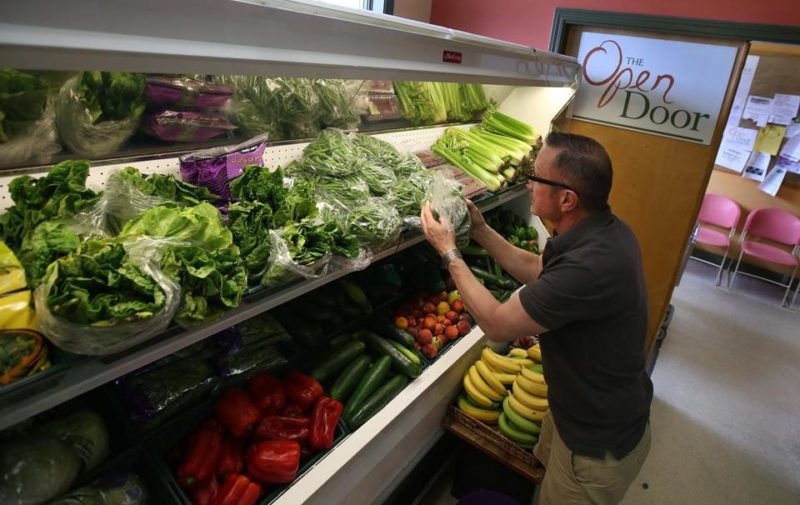
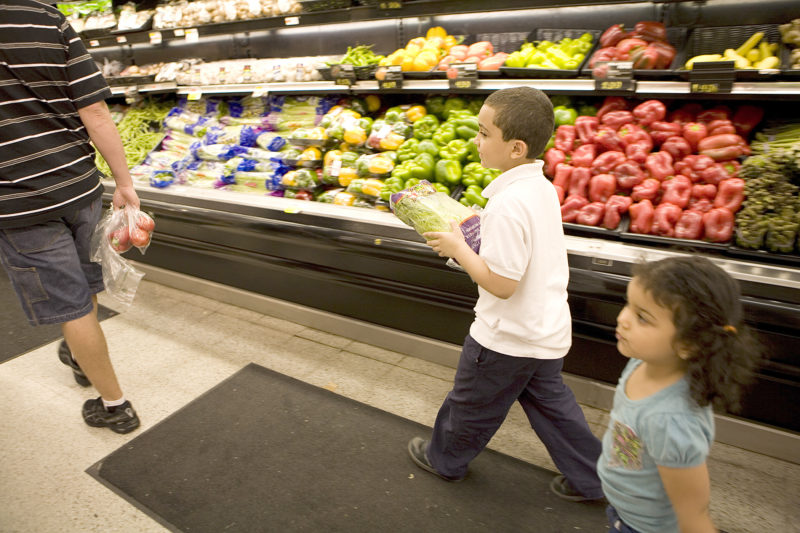
Healthy food is important to health for all people. Yet fast food and corner stores outnumber supermarkets and farmers’ markets in many neighborhoods, including Latino neighborhoods. This results in overconsumption of unhealthy foods, and more risk of obesity. Fortunately, healthy food financing initiatives can boost access to healthy, affordable foods. This happens when supermarkets and farmers’ markets get certain incentives to develop their businesses in certain areas. Groups also can help corner stores to expand their inventory of healthy, affordable foods. Also, more marketing of healthy foods, and less of junk foods, can help spur desirability. See the Full Research Review with references (PDF)
Read the Issue Brief in English (PDF)
Read the Issue Brief in ...
A controversy is growing over sugary drinks and their impact on health in San Antonio, Texas. Sugary drinks recently surged into the national spotlight with emerging research on the link between too much dietary sugar and health issues like diabetes and obesity, and the growth of sugary drink pricing initiatives by cities to cut consumption and increase revenue for health promotion programs. These issues have prompted push-back by the beverage industry. That push-back reached San Antonio, where beverage industry reps and health leaders sparred over local health, fueled by research by Salud America!, the childhood obesity prevention network. Obesity and diabetes are grave local and national health concerns with no single cause, and no single cure. “But you simply cannot ...
The Affordable Care Act (ACA) was designed to increase access to quality health care for everyone in the country. The ACA’s open enrollment phase is currently underway through January 31, 2016. Health coverage under the new enrollment period began as early as January 1, 2016. To date, nearly 17 million individuals have gained coverage through the ACA and it has seen the largest reduction of uninsured Americans in four decades. Many now have access to vital preventive services such as mammograms, cervical cancer screenings, and flu shots. On Jan. 5, 2016, use #SaludTues to tweet with us as we discuss all the need-to-know facts about healthcare coverage. WHAT: #SaludTues Tweetchat: “Connecting People to Coverage Before the End of Open Enrollment”
DATE: Tuesday, Jan. ...
Over 75 percent of flavored electronic cigarettes contain diacetyl, a chemical linked to severe lung disease. Diacetyl along with two other compounds was found in most sweet tasting flavors, such as cupcake, cotton candy and fruit squirts, CBS News reports. Researchers at Harvard University looked for the presence of dyacetyl, a chemical additive that’s often added to foods such as popcorn to give them a buttery flavor. Diacetyl has been associated with a severe lung disease condition known as bronchioles obliterans more commonly known as “popcorn lung,” named after many workers at microwave popcorn factories were diagnosed with the disease. "One of three flavoring chemicals was found in 92 percent of the e-cigarettes we sampled and these chemicals are of interest because of ...