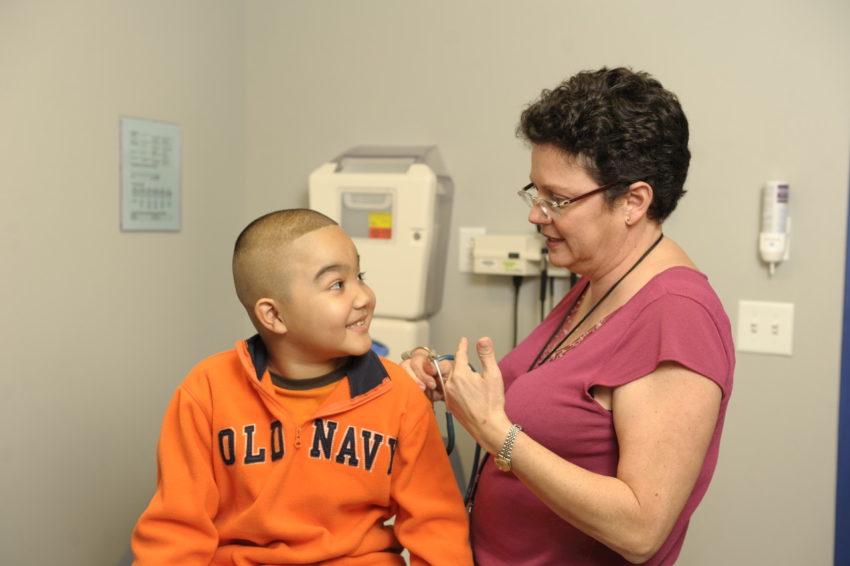
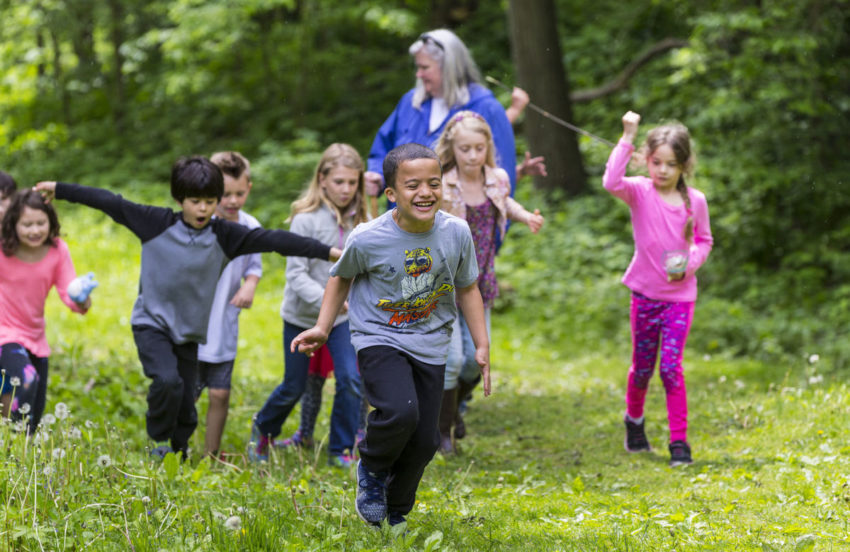
Pediatricians play a big role in a child's health. But not in the way you might think. Treating flu and other illnesses is only 10% of what makes a person healthy. The rest is genetics (20%), environment (20%), and daily behaviors (50%). That's why it's so important for pediatricians to engage parents and kids to improve daily behaviors—like reading to young children and playing outside—especially among Latinos who have limited safe places to play and early educational gaps. Two amazing reading programs are doing just that.
Reach Out and Read
Latinos often enter kindergarten developmentally behind their non-Latino peers, Salud America! research shows. For example, as early as age four, children in low-income families hear 30 million fewer words than than their middle and ...
"You Matter." "You are Brave." "You are Enough." These three phrases are the highlights of a big, bright, colorful mural completed earlier in October by Denver artists Pat Milbery and Jason Graves to help drive mental health awareness and bust stigma. The mural is part of Kaiser Permanente's “Find Your Words” campaign. The campaign encourages people suffering from depression or who know someone dealing with it to find the courage to talk. The campaign is led by Kaiser alongside the National Alliance on Mental Illness (NAMI), National Suicide Prevention Lifeline, Crisis Text Line and Mental Health America. The campaign launched in four states with social media and a resource website with an interactive forum on mental health issues.
The Reason for the ...
Salud America! Guest Blogger
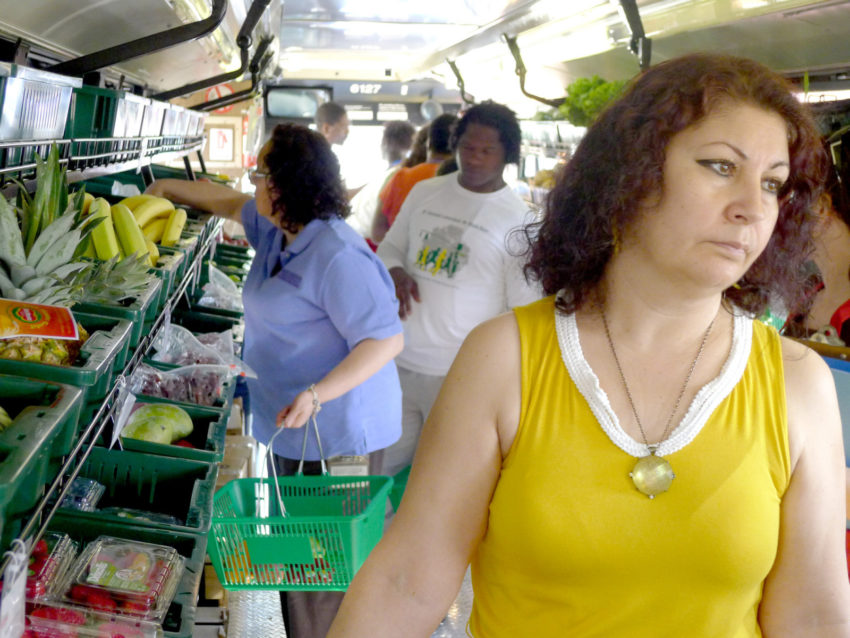
Ethan Goffman of Mobility Lab In rural areas, a car is a lifeline to groceries, community, and medical care—all the basics of life. Seniors who can no longer drive, Latinos who often live without easy access to grocery stores or farmer's markets, and other people without access to a car, must depend on neighbors and whatever public transit may be available. Enter Rabbit Transit, which is striving to connect otherwise isolated individuals. The agency serves York County (7.2% Latino) and nine other rural counties in Central Pennsylvania, providing some 2.5 million trips a year, explained Richard Farr, the agency’s executive director. “Part of our mission statement is really focusing on a high quality of life for our residents,” Farr said. ...
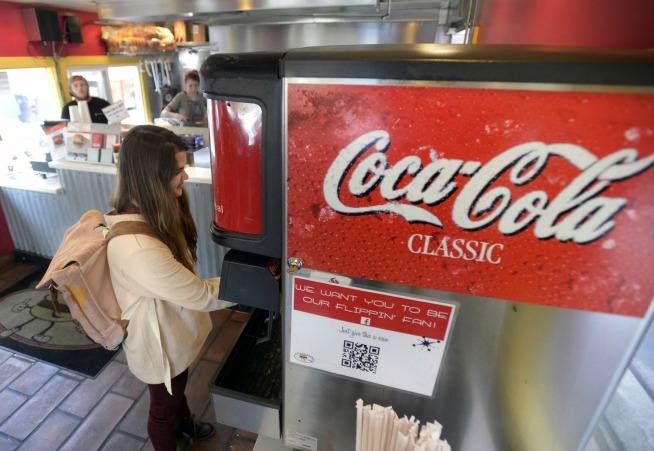
On Oct. 15, 2017, California Gov. Jerry Brown signed a law that bans schools from marketing unhealthy foods that are not allowed to be sold or served in schools. This law, Assembly Bill 841, also forbids schools from partnering with companies for programs that reward students with foods or drinks that do not meet USDA Smart Snacks in School regulations and other standards. The idea is to help students make healthier food choices. "This law will help ensure that students receive consistent messages from their schools about the importance of proper nutrition as well as reinforce parents’ efforts to help their children choose healthy foods," according to a report by Changelab Solutions. This will lead to "healthier students who are better able to thrive academically."
Latino ...
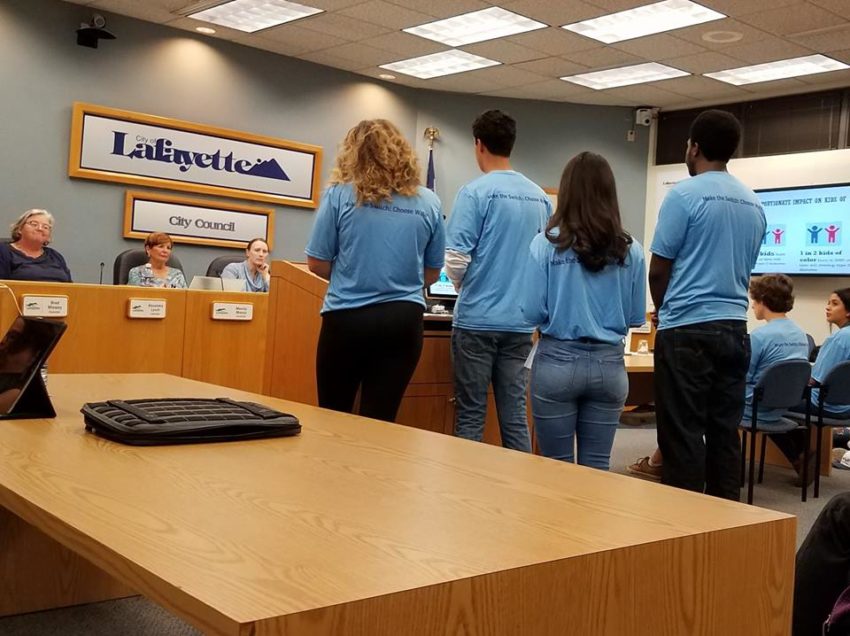
Kids were fed up with the effect of sugary drinks on people's health in the small mountain town of Lafayette, Colorado (16% Latino). They pushed city leaders for change, and scored a big victory in October 2017 when the Lafayette City Council voted 5-1 for an ordinance to require all local restaurants to offer only milk and water with kids’ meals. This means that kids will no longer see enticing pictures of sodas or juices as an option on kid's menus. The city is the fifth U.S. city, and the first outside of California, with such an ordinance. However, this isn't an outright ban on sugary drinks. Parents can ask for a sugary drink with their child’s meal, and restaurants can meet that request.
Youth Speak Up for Healthier Generations
The ordinance is a huge success ...
Bacteria in floodwaters and ample breeding grounds for disease-carrying mosquitoes are just a few of the public health threats plaguing coastal Texas after Hurricane Harvey. But there's a scarier—and unseen—health enemy lurking. Stress. That's why state leaders created the Hurricane Harvey Task Force on School Mental Health Supports. The task force, the first of its kind in Texas, will respond to mental health issues in schools impacted by Hurricane Harvey, according to Texas Gov. Greg Abbott and Texas Education Agency Commissioner Mike Morath. “Our state leaders are absolutely right that addressing the trauma created by Hurricane Harvey must be an integral part of the state’s strategy for recovering from the storm," said Josette Saxton, director of mental health ...
You can share the best—or worst—places to bike in San Antonio, thanks to a new bilingual crowdsourced map. The Open Ciclismo map, launched in October 2017 in English and Spanish by the local online news source the Rivard Report and Bike San Antonio, enables people to identify biking problems, issues, and solutions across San Antonio (63.7% Latino). You can report a public dangerous intersection, suggest a bicycling improvement, or share safe places to ride. Just indicate the location, add a description, and upload or share a video. "By crowdsourcing this data and riders’ experiences, we aim to create up-to-date awareness of hotspots for cycling safety, crime, and infrastructure improvements—holding city officials accountable for safe cycling and pedestrian life in San ...
Latino communities are getting help to tackle obesity and mental illness, thanks to $5 million in new grants from the U.S. Department of Health and Human Services (HHS) Office of Minority Health (OMH). The money is for 15 local groups from across the country. The groups will use the money to drive solutions among Latino and other minority populations that suffer higher burdens of obesity, mental illness, and opioid addiction. “We selected the opioid crisis, childhood obesity and serious mental illness as our top three clinical priorities at HHS because they are three of the country’s most pressing public health concerns,” said Dr. Tom Price, HHS leader, in a news release.
Who Will Help Latinos?
The 15 groups include several in Latino-populated areas: Mariposa ...
What happened when 10 teachers in Wisconsin committed to take their elementary students outside one day a week to explore and play in nature? The students studied the natural world, learned other lessons, and got physical activity outside. Successful outdoor education! "Playing outside is different socially, emotionally and physically than what happens in the classroom," one of the teachers told the the Wisconsin State Journal.
Why Is Outdoor Education Good for Kids?
Outdoor teaching and recess during school can improve students' learning, and much more. It can boost physical, mental, and emotional health, particularly for Latino kids who don't get as much time for physical activity during the school day. It also can foster a desire to conserve and preserve green space ...