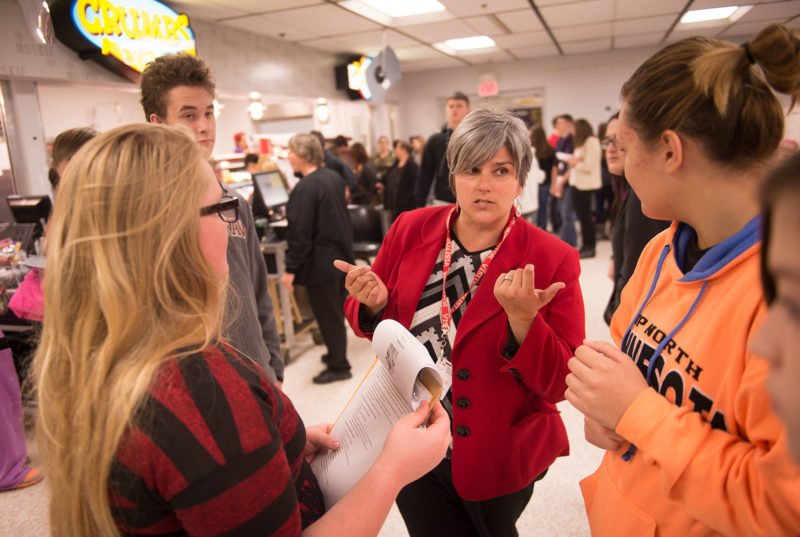
A new movement towards healthier lunchrooms is happening in Iowa high schools by empowering students to assess and change their lunchrooms, helping to let take charge within their schools in making the healthy choice, the easy choice. Students are allowed to help change their lunchrooms through the Smarter Lunchrooms Movement, that applies the Cornell Center for Behavioral Economics in Child Nutrition Programs (BEN) into simple low-cost concepts that improve nutrition and marketing for healthier choices. With a three-pronged partnership between the Iowa Department of Education, the University of Iowa Public Policy, the College of Public Health and the Iowa Department of Education, five high schools across the state plan to let student's use BEN to make decisions within their own ...
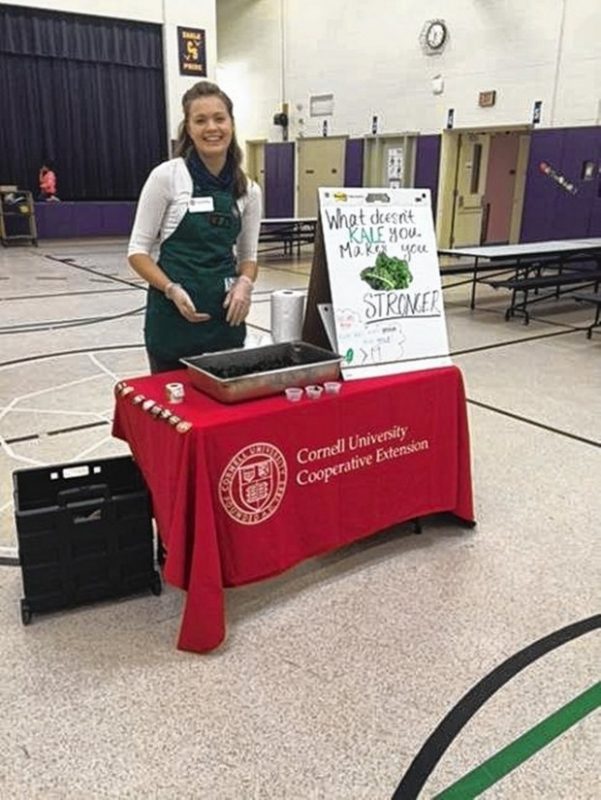
Want to get your kids to eat vegetables? A lunch lady from New York has cracked the code on how to get picky eaters to eat healthier foods like kale and beans. Donna Riviello, the food service director at Clyde-Savannah Central School District has helped kids try unfamiliar vegetables in school lunches like kale, sweet potatoes, and legumes. Working with marketing tactics and taste testing trials in the schools lunch room, she has kids try out new vegetables and even has them pair it with other favorites. A recent article states that some studies have shown it takes as many as twenty times for a kid to like new foods, and Riviello stated it usually takes students five to seven times to make up their minds about the new vegetables, saying that "There's a psychology to ...
In September 2014, the Seattle Department of Transportation launched the Second Avenue protected bike lane pilot project. As a pilot project, a two-lane cycle track was constructed on the southbound side of Second Avenue with paint and plastic posts. The purpose of pilot bike lane projects, like this, are to design and implement demonstration projects that illustrate to the public how new types of infrastructure-bike lanes-could work in the real world, particular how new types of infrastructure could work on real roads. The demonstration worked. “If you look at the bike volumes, before there were about 188 folks a day who would ride down Second," Dawn Schellenberg, the SDOT project developer in charge of the plan said, according to one source. "If you make it a two-way bike ...
According to a report by the Center on Budget and Policy Priorities more than half a million people could lose their Supplemental Nutrition Assistance Program (SNAP) benefits in 2016 due to the return of a three -month limit of benefits for unemployed adults age 18-49 who aren’t disabled or raising minor children in many areas. The impact will be felt in 22 states that are reimposing the limits this year. Latinos are disproportionately affected by poverty, food insecurity, and unemployment. They are also more likely to receive emergency food assistance. More than 22% of Latino households are food insecure as compared to 11% White, non-Latino households. Over 25% of Latino children live in food-insecure households. Work requirements in public assistance programs typically require ...
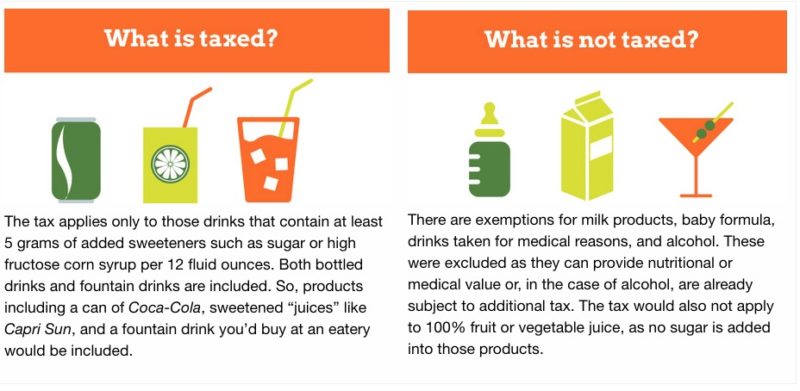
A new coalition has joined together as the Healthy Boulder Kids, aimed to help advocate healthier changes for kids in the state to have equal access to healthy foods and opportunities for activity. The group also is aiming to help prevent childhood health risks like diabetes and obesity and is submitting language for an excise tax on distributors of 2 cents per ounce on sugary drinks that contain at least 5 grams of sugar, high-fructose corn syrup or other added sweeteners per 12 fluid ounces. The measure would provide funding for programs that give greater access and opportunity for healthy foods and exercise for families and children living in Boulder. It would also not tax 100 percent fruit juice, vegetable juices (with no added sweeteners), milk products, liquid medicines, ...
Mars announced last week to pledge to lower sodium in their processed foods by twenty percent by 2021. The plan for Mars Food is to add more herbs and spices to maintain their products flavor and reduce the salt. High salt and sugar contents are common in processed foods, and not always easy to see in labeling, making it an easy hazard for heart health risks. According to the American Heart Association (AHA), some of the sodium levels in Mars's popular Uncle Ben's rice products are high enough that if a person serves themselves an extra serving of the chicken-flavored rice, they would be over the recommended daily amount of sodium. The AHA has long requested food companies to reduce sodium in its products for health reasons. Mars is also now requesting the FDA to issue ...
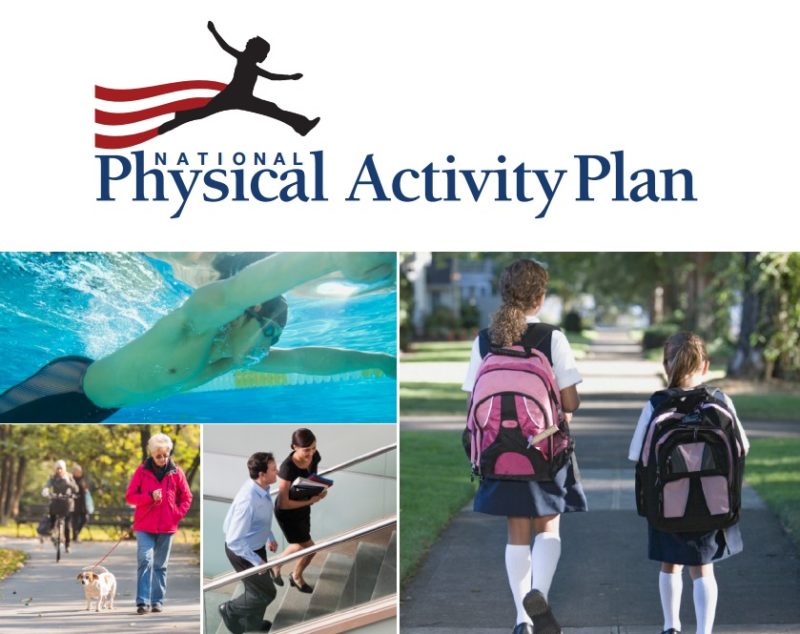
In 2010, through a process that engaged hundreds of professionals, researchers, and public and private organizations, the first U.S. National Physical Activity Plan (the Plan) was released. The Plan was a "living document" of a comprehensive set of policies, programs, and initiatives designed to increase physical activity in seven societal sectors: business and industry; community recreation, fitness and parks; education; health care; mass media; public health; and transportation, land use and community design. The overarching goal of the Plan is to create environments that support physical activity where people live, work, and play in order to improve health, prevent disease and disability, and enhance quality of life, and to be updated on a regular basis. In April 2016, the ...
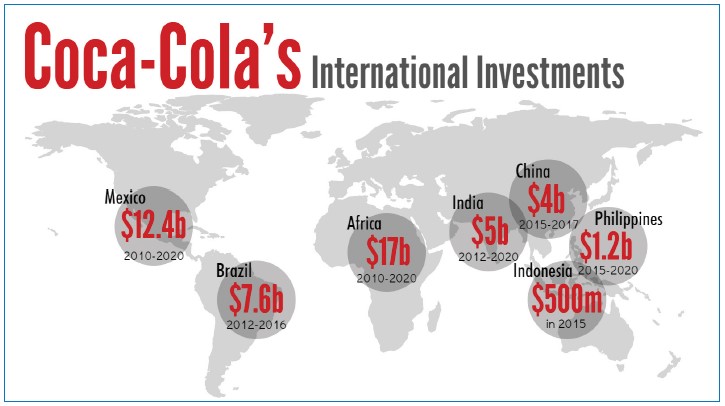
Health organizations around the world are asking the largest beverage industries, Coca-Cola and PepsiCo to adopt changes in regards to marketing to kids ages 16 and younger. Gathering with the Center for Science in the Public Interest (CSPI) in Wash. D.C., groups such as The World Public Health Nutrition Association, World Obesity Federation, Healthy Latin America Coalition, Alianza por la salud Alimentaria, and more wrote to big soda's CEO's and institutional investors to consider the soda-related health risks that communities in low-income countries continue to face with rising rates of diabetes, obesity, and heart disease. Billions of dollars is spent in marketing soda world-wide and much of the "core demographic" according to CSPI's recent article, are teens and low-income ...
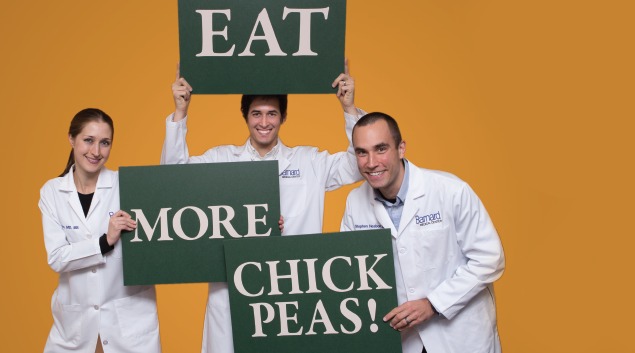
A non-profit committee made up of 12,000 physicians, Physicians Committee for Responsible Medicine (PCRM), is asking hospitals to re-consider fast food chains and set an example with healthier food options within hospital's facilities. The movement is a play on Chick-fil-A signs that ask consumers to "Eat more chicken", but physicians hold signs asking consumers to "Eat more chickpeas". In a recent article, Angie Eakin, MD, one of the doctors on the ads explains, "Many of the hospitals that host Chick-fil-A are in states with high rates of diet-related diseases, making hospitals part of the overall toxic food environment. Hospitals should be fast-food-free, and patients should eat more chickpeas, vegetables, fruits, and other foods that can promote healing and prevent ...