In 2012, Travis County (33.9% Latino) voters approved a proposition to raise property taxes to support health care initiatives in Central Texas, which included $35 million annually for the Dell Medical School. Less than four years later, on June 26, 2016, the University of Texas at Austin Dell Medical School opened their doors to their first class of students. Twenty-two percent of the first class identifies with racial or ethnic groups historically underrepresented in medicine, compared to the national average last year, which was 13 percent, according to one source. “We simply cannot create the transformative changes we envision without a strong connection both to vulnerable communities and to clinical programs that provide health care access to those communities,” Dean ...
Registered nurse Derek Dimas learned kids need to eat healthier to help decrease the high rates of obesity in his hometown of Corpus Christi, Texas (50.7 % Latino). By starting a program to help kids see fruits and vegetables as delicious works of art, students in schools across the city are having fun learning how to create and enjoy healthier snacks.
The Obesity Problem
In spring 2014, Derek Dimas, a nursing student at the time, was certain he wanted to make a huge impact on the overall health of his community of Corpus Christi in Nueces County. While taking an epidemiology class, Dimas reviewed data and learned that the city had record-high levels of obesity, hypertension, and heart disease. About 42% of local Latinos and blacks are overweight or obese, he said. “For ...
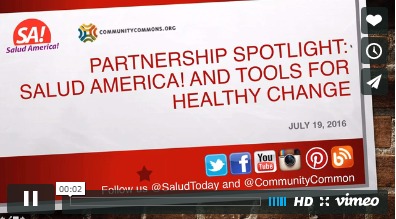
On Tuesday July 19, 2016 Community Commons featured Salud America! (SA!) in a webinar that explains how free membership with the SA! website can benefit you! The website provides free tools and stories aimed at creating healthy environments on a daily basis and also gives members the opportunity to: Browse content by one of each six topic areas
Search for news updates, research, toolkits, maps, and more!
Watch videos and read stories of inspiring role models who are positively impacting the health of Latinos in their community. In order to take full advantage to Salud America! and Community Commons visit the registration page and login in. Salud America! is your source and network for action on Latino childhood obesity prevention. Find more content on how to create ...
Latino children are disproportionately affected by high rates of obesity. In the U.S. today, nearly 40% of Latino kids (ages 2-19 years) are overweight or obese. Among 2-5 year olds, nearly 30% of Latino kids compared to only 21% of non-Hispanic white children are obese. According to a 2011 report from the Children's Hospital Association of Texas (CHAT), nearly 1/2 of all Latino children in Texas are overweight obese. To learn more about childhood obesity in Texas read the full report ...
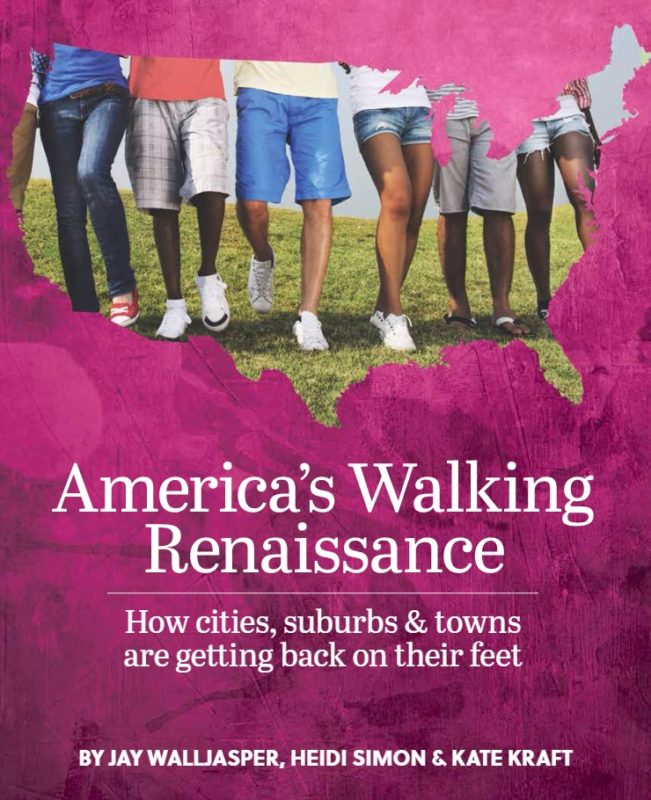
What are missing but not missed at a Renaissance Festival? Cars. America Walks and the Every Body Walk! Collaborative released a new book, America's Walking Renaissance, which examines how nine cities suburbs, and towns across the country are embracing walking and creating more walkable places. "Walking is the gateway to increased physical activity, and a stimulus to safer, more livable and equitably prosperous communities," Tyler Norris, MDiv, Vice President, Total Health Partnerships at Kaiser Permanente, stated in the introduction. Access the book for free here. Learn more about the urgency in fighting childhood obesity with walking and physical activity here. Spread the ...
By Rosalie Aguilar, Salud America! Project Coordinator At least 76% of U.S. Latinos connect to the Internet by mobile phone—many of which are connected to social media networks according to the Pew Research Center. Social media and online communities can be a great way to share information and tools to drive social change. Salud America! uses its website and online community to keep educators, parents, leaders, and members of the health care industry informed about the latest stories, policies and systems change to reverse Latino childhood obesity. This week we’ll be chatting about online communities and resources that can activate change. WHAT: #SaludTues Tweetchat: “Online Communities & Tools For Healthy Change” DATE: Tuesday, July 19th, 2016
TIME: 1-2 ...
School-park partnerships are popping up all over the country!
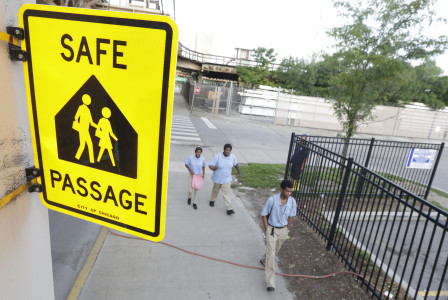
In the summer of 2016, the Chicago Park District in Chicago, Ill. (28.9% Latino) provided Chicago Public Schools (CPS) $112,500 to implement a new initiative to watch over children walking and biking to 20 city parks for summer programs.
The program is modeled after CPS's Safe Passage, which has been around since 2009 to watch kids traveling to and from school in at-risk neighborhoods.
The summer safety program will hire 150 CPS workers and train them in relationship-building skills and de-escalation strategies to be the eyes and ears for children getting to and from park activities.
One of the parents said that the training helped her intervene in an altercation that she would have otherwise probably ignored.
"We want ...
Because walking has numerous health benefits, it shouldn't be so complicated to figure out where kids and families can walk safely and be physically active in nature. The following infographics (English and Spanish) from the National Recreation and Parks Association, EverybodyWalk, National Environmental Education Foundation, Active Living Research,and the Surgeon General demonstrate how powerful nature walks are to transform your health and why everyone deserves safe access to parks and places to walk. National Recreation and Parks Association - Safe Routes to Parks
National Recreation and Parks Association - The Power of Parks
EverybodyWalk - Anatomy of Walking
EverybodyWalk - Health Benefits of Walking Health Benefits of Walking in Spanish National ...
Latino kids need your help. They have the nation's highest childhood obesity rate. They struggle to access healthy foods and drinks and physical activity. They are increasingly targeted by unhealthy food marketing. You're invited to join our free public webinar at 11 a.m. CST/ 12 p.m. EST on Tuesday, July 19, 2016, to get tools you can use to make a healthy change for Latino kids. The webinar—a partnership of Salud America! and Community Commons—will explore available resources, data, maps, case studies, and other tools that make it easy for you to start a healthy change to reduce Latino childhood obesity in your community. A healthy change can mean working with a local school to open playgrounds after school, pushing for policies that help new mothers to breastfeed their ...