This is part of our Sugary Drinks & Latino Kids: A Research Review »
More sugary drinks is linked to higher body weight
Those who consume a greater amount of SSBs tend to have higher body weight than those who drink less.5 A recent systematic review and meta-analysis of 32 studies, including prospective cohort studies and randomized controlled trials, associated SSB intake with risk of weight gain in children and adults.22 Similarly, a meta-analysis of 88 studies found a clear association between soft drink consumption and weight.23 By contrast, a recent systematic review of papers focused on regular soda consumption among children and adolescents and published between 2004 and 2014 did not find an association between regular soda consumption and weight among all age ...
Abstract
Did you know three of four Latino kids have had a sugary drink by age 2? Latino kids at all ages consume more sugary drinks—soda, sports and energy drinks, sugary fruit juices, and flavored milk—than the average child. This extra consumption puts them at greater risk of unhealthy weight. Several strategies are emerging to limit kids' sugary drink consumption. These include: policies on the availability and promotion of sugary drinks and water in school and early child care settings; regulatory and voluntary measures to limit marketing of sugary drinks to children; and pricing initiatives to raise the price of sugary drinks. Increasing access to water also is a critical way to develop healthier, hydrated children. Read the Issue Brief in English (PDF)
Read the ...
Does your supermarket prominently feature unhealthy foods? You’re invited to sign a Salud America! and Care2 letter campaign asking grocery stores to use labels, floor arrows, and other marketing strategies to promote fruit and veggie options for Latino families. Fruits and veggies are critical to help kids grow up at a healthy weight. Access to, and purchases of, affordable healthy foods tends to improve when healthy food offerings are expanded and promoted in underserved communities, according to Salud America! research. But some grocers’ marketing, placement, and store design nudges families toward unhealthy foods. The new letter campaign asks members of state grocery store associations to consider changes like: adding green arrows on the floor to guide ...
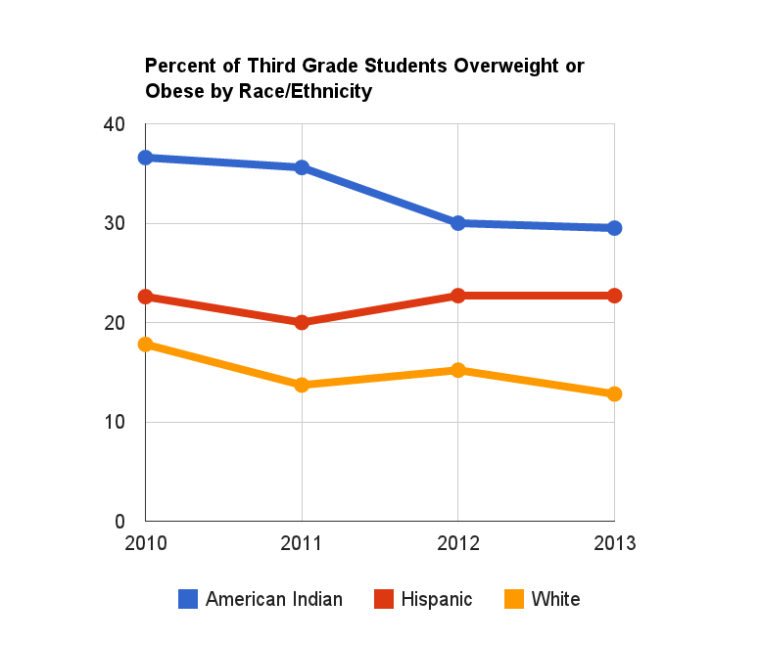
Santa Fe, New Mexico (51.2% Latino) is still struggling with increasing rates of obesity among children and adults, where reports detail 28.8% percent of adults in the state are obese and 25.6% of kindergarten students were obese or overweight in 2015. The 2015 report from the New Mexico Childhood Obesity Update, revealed that third graders and kindergarten rates of obesity have decreased by 10.6% over six years, but the majority of students in New Mexico, namely Hispanic students, have experienced very little decline in rates of obesity over the last six years. Many in school efforts around healthier foods, and physical activity helped decrease the continued rising rates of childhood obesity, but now other efforts around sugary drink consumption are being discussed. Mayor ...
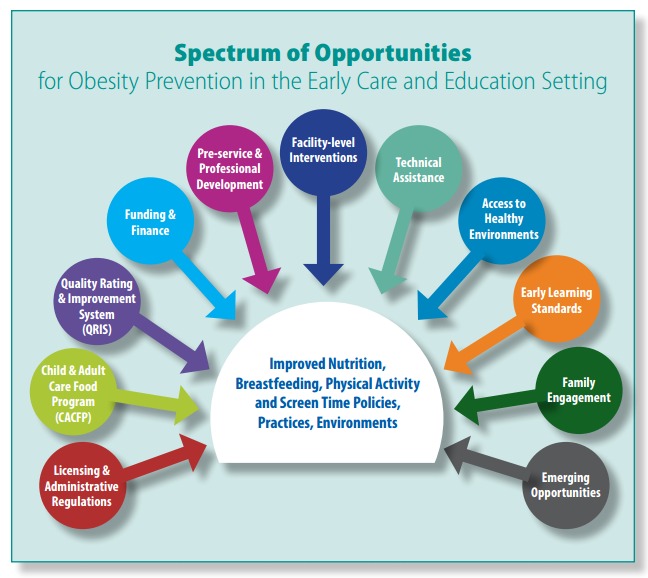
One of four U.S. kids is already overweight or obese by age 2-5, with a higher prevalence among Latino kids (30%) than white kids (21%). This is a problem because children aren't "outgrowing" overweight and obesty. Children who are overweight when they enter kindergarten are four times more likely to be obese in 8th grade compared to their peers who are normal weight. Because 64% of children 3 to 5 years of age are cared for weekly in non-parental care arrangements, early care and education (ECE) is a critical setting to address childhood obesity. In 2016, the CDC released the first-ever state indicator report looking at state efforts to address childhood obesity in ECE. The Early Care and Education State Indicator Report looks at how The Spectrum outlines 11 unique ...
Latinos deserve to live in a culture of health. That's why SaludToday, led by Dr. Amelie G. Ramirez, works hard to promote Latino health awareness, stories, and solutions. Today we're excited to be nominated as Best Health Advocate Reaching Latino(a)s through Through Social Media by LATISM (Latinos in Social Media). LATISM is a nonprofit that empowers Latinos through tech innovation and social media. SaludToday is nominated with two great organizations (@MinorityHealth and @CuidadodeSalud). We will present our work at #LATISM16 on Oct. 20, 2016, in Florida. Vote for us here! “We believe SaludToday is helping to influence individual and collective health knowledge, improve attitudes and promote healthy behaviors and a culture of health, which may ultimately lead to ...
How can busy families stay healthy? Dr. Amelie Ramirez, a San Antonio health expert and leader of SaludToday, said it's going to take individual and systemic change. For systems, that means more local farmer's markets. Healthier cafeteria food. More physical activity programs during school, and opening playgrounds to families after school. For people, that means staying away from the middle aisles at the grocery store, where junk food is prevalent. Parents making healthy meals with kids. Make a game of reading food labels. Limiting screen time. More outdoor play time. Ramirez was featured this week on the Making Awesome Changes TV series, which partners San Antonio's KSAT-TV and Salud America! to feature people pushing for healthy changes. Salud America!, a Latino ...
Combo meals at fast food joints are usually not a healthy option, often including a sugary beverage, one or two fried sides, and a high-calorie, low nutrient main entree, but recent studies now suggest that excluding sodas from kids meal may make the healthier the choice the easier choice for kids and parents on the go. According to research published recently in the American Journal of Public Health online, kids meals that include a sugary beverage as part of the meal, add up to 82 more calories on average for each kids meal. Also, parents who buy kids meals where the price includes a beverage usually opt to choose a high-calorie, sugar-sweetened beverage rather than a sugar-free drink or no beverage. Researchers suggest from the findings that restaurants should ungroup sodas ...
Get ready! On Oct. 5, Salud America! will launch a free online tool where people can select their own county and get customized data on food access, activity, and equity issues compared to the state and nation. The tool, called the Salud Report Card, will also offer policy solutions, case studies, and share-ability to inspire people to start and support healthy changes in their communities. We're inviting parents, teachers, and local leaders to a webinar to explore the new Salud Report Card tool and how to use it at 1 p.m. CST Wednesday, Oct. 5, 2016. "We see the Salud Report Card as a great way for activists, parents, educators, and healthcare professionals to take action by engaging local leaders in conversations that will create healthier communities for Latino kids and the ...