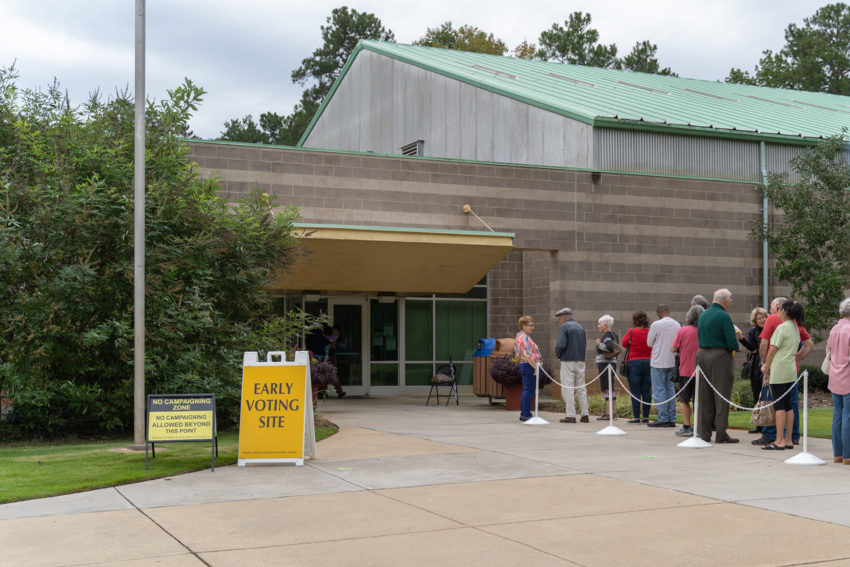
For years, political analysts and partisan think tanks have continued to focus on one group of Americans in order to win elections: Latinos. About 2 million Latinos are expected to vote during the 2020 presidential election, accounting for the largest non-white demographic group in history. They are just over 13% of the electorate this year, according to new data from the Pew Research Center. Expert says, with those demographics, 2020 presents a historic opportunity for Latinos to make their mark on national politics and factor in on who takes office in the White House.
What's the History of Latino Voting in the Presidential Election?
Historically, relatively few registered Latinos voted in presidential elections. When it comes to party, democrats have maintained a significant ...
The U.S. Latino population grew to 60.6 million in 2019, a record 18.5% of the total population, according to new Census Bureau data. Here are all the details you need to know.
The U.S. Latino Population Continues to Grow
The U.S. population reached 328,239,523 in 2019. Latinos reached 60,572,237 in 2019. Now at 18.5% of the U.S. population, Latinos are the second-largest racial/ethnic group, behind non-Latino Whites (60.1%). They have greater numbers than Blacks (13.4), Asians (5.9%), and American Indians or Alaska Natives (1.3%). Latinos accounted for 16% of the U.S. population in 2010. In fact, the U.S. Latino population is up by 10,093,626 from 2010 to 2019, or 20% growth, according to the new Census Bureau data.
Growth of the U.S. Latino Population Is Slowing
Even ...
Have you or someone close to you tested positive for COVID-19? You should have gotten a phone call from a local public health worker─a “case investigator” or “contact tracer”─who would give guidance on monitoring symptoms, quarantining to prevent spread, and more. But some cities don’t have enough people to make these important calls. Also, some people don’t answer or return phone calls from unknown numbers and may be uncomfortable answering questions. That is why, to reduce the spread of COVID-19, cities must invest in extensive contact tracing efforts and encourage the public to answer or return phone calls from the health department. “Case investigation and contact tracing, a core disease control measure employed by local and state health department ...
While the elderly are highly susceptible to becoming infected with the coronavirus, as well as its effects, young adults aren't off the hook, either. Those under the age of 44 make up a significant portion of coronavirus hospitalizations in the US, according to a new CDC report on July 10, 2020. Considering the high rate of infection among minority groups, young people of color are also facing significant threats. "I think everyone should be paying attention to this, and it's not just going to be the elderly," Stephen S. Morse, a professor of epidemiology at Columbia University's Mailman School of Public Health told New York Times. "There will be people age 20 and up. They do have to be careful, even if they think that they're young and healthy."
New Data Sheds Light
The CDC's ...
Walking and biking are critical transportation options for physical and mental health. More importantly, they are essential to get to destinations, particularly Latinos during the coronavirus pandemic — including those who are simultaneously less likely to work from home than their white peers and more likely to be impacted by job loss. When the pandemic began, the portion of auto loan accounts in financial hardship jumped from 0.64% in March to 3.54% in April, according to TransUnion. Financial hardship status is defined by factors incliuding: A deferred payment or frozen past-due payment because a person is unable to keep up with payments due to a change in financial circumstances, such as loss of a job
Significant cut in hours or pay
Medical illness To recover and ...
Are you concerned about the spike in COVID-19 cases and hospitalizations in San Antonio? The UTHealth School of Public Health in San Antonio is recruiting workers on behalf of Metro Health to become Case Investigators and Contact Tracers. Case Investigators/Contact Tracers will be responsible for connecting with COVID-19 patients, as well as locating and counseling individuals those patients may have come into contact with during the course of their infection. Identifying, quarantining, and testing people exposed to a known COVID-19 patient helps end the chain of disease transmission. Apply now and share this opportunity with friends and family. You can also learn more about how COVID-19 impacts Latinos.
Data Collector: Case Investigator
Position Summary: This position ...
The coronavirus (COVID-19) outbreak is surging across the U.S., and the American death toll has eclipsed 130,000. Worse, this crisis is widening the gap experienced by households without internet access — a long-festering problem that has made unequal educational opportunities even more unbalanced, said Jordana Barton, a senior advisor in community development at the Federal Reserve Bank of Dallas. "The COVID-19 pandemic has brought national attention to the digital divide—the gap experienced by households without internet access," Barton wrote. "Directives for social distancing and stay-at-home orders have made access to broadband an urgent necessity for families as they struggle to stay connected with schooling, jobs, health care, government assistance, and more."
The Digital ...
Researchers are finding that population density is not associated with higher death rates from COVID-19. Unfortunately, some people still blame compact housing and transit for pandemic spikes, and use that misinformation to promote sprawling residential development and disinvestment in transit in the name of health. These are the same poor practices that have segregated neighborhoods and contributed to drastic disparities in health and wealth for a century. As city leaders respond to concerns about COVID transmission and develop economic recovery plans, they must challenge the discriminatory status quo, consider transportation expenses, and shift toward equitable, compact (not overcrowded) housing development. “Restoring urban transit networks to full force, expanding their ...
Delaying medical care can cause catastrophic health and financial problems. That’s why early in the COVID-19 pandemic, the Centers for Medicare and Medicaid Services temporarily expanded its telehealth coverage so physicians, nurse practitioners, clinical psychologists and licensed clinical social workers would be reimbursed for telehealth services. Other payers followed suit. Unfortunately, not everyone can just hop on a telehealth video call. Many Latinos and other vulnerable populations—older people, people experiencing domestic violence, and families with low income—face insurance, language, health literacy, digital literacy, and digital access barriers to telehealth services. Moreover, telehealth can be challenging for people with autism, intellectual and developmental ...