COVID-19 can affect anyone. But the coronavirus pandemic is impacting Latinos and other communities of color more severely. This is why Dr. Amelie G. Ramirez, director of Salud America! at UT Health San Antonio, is joining a webinar to discuss issues and solutions to COVID-19 health disparities. The webinar, "Why Are We Dying? Race, Ethnicity and Health Justice in the COVID-19 Pandemic," is set for 11 a.m. CST Monday, June 29, 2020. The event is sponsored by PanPals.com, a program at the Center for Medical Humanities and Ethics at UT Health San Antonio. Register for the webinar. The webinar features: Amelie Ramirez, DrPH, Professor and Chair, Department of Population Health Sciences and Director, Institute for Health Promotion Research, UT Health San Antonio. Dr. Ramirez ...
As shelter-in-place orders swept the U.S. during the coronavirus pandemic, healthcare providers’ implementation of telehealth expanded rapidly. In telehealth sessions, those seeking routine check-ups, mental health care, or other services can meet with their provider virtually using computers or other smart devices. This novel way of treating patients aims to look for ways to deliver care to patients in their homes to limit the transmission of the novel coronavirus. "The current public health emergency and the resulting accelerated growth potential in telehealth services is an opportunity for providers to enhance their care practices and for insurers and policymakers to recognize the value of telemedicine," a recent report from UCLA's Center for the Study of Latino health and ...
Unlike a pandemic or emergency, there is no epidemiological definition for public health crisis. Experts at the Boston University School of Public Health tried to solve this. They explored the distinction between immediate and important and how politics, perceived risk, and affected groups shape the concept of a crisis. For example, they juxtaposed the number of deaths caused by terrorism and by gun violence with action taken by the U.S. government. Between 2001 and 2013, 3,380 Americans were killed by terrorism and 406,496 Americans were killed by firearms on U.S. soil; yet the U.S. spent trillions on the War on Terror and failed to pass gun control legislation. They conclude that people often confuse the immediate and the important, and that the important often fails to receive ...
The current novel coronavirus afflicts more than just the lungs. For Latinos and other people of color, COVID-19 has caused disproportionately higher rates of cases and death, job loss, and other inequitable impacts. These groups are also experiencing more mental health issues than in previous eras, according to Dr. Madeline Aviles-Hernandez, the Outpatient Services Director at the Gándara Center. “This crisis is making life much more difficult for [Latinos, African-Americans and other culturally diverse populations] we serve, including those in recovery and people who have yet to be treated for such problems as anxiety and depression,” Aviles-Hernandez said in a statement. “Minorities have been—and continue to be—less likely to receive mental health ...
55,564 people—including members of Salud America!—submitted public comments to help shape the 2020-2025 Dietary Guidelines for Americans. A federal advisory committee will consider the public comments, collected from March 2019 to June 2020, as they create a scientific report to inform the new dietary guidelines. Our members made over 250 comments to add water to the MyPlate/MiPlato graphic, reduce added sugars, and promote dietary equity. The USDA and HHS will use the scientific report and comments to draft the 2020-2025 Dietary Guidelines for Americans. But don't worry if you missed commenting! USDA and HHS will open a new comment period for the advisory committee's scientific report around July 15, 2020. "We're excited that so many people spoke up for equitable ...
The American economy has been in freefall since the outbreak of the current novel coronavirus — and Latinos face the most widespread unemployment. Job loss is impacting Latinos and immigrant communities at higher rates than their peers during the pandemic, according to recently published data from the National Bureau of Economic Research (NBER). The pandemic is not only forcing more Latinos out of work, but it will have long-lasting ripple effects across the nation, according to Dr. Rogelio Sáenz, a professor in the Department of Demography at the University of Texas at San Antonio. "Over the last several decades, Latinos have represented the engine propelling the U.S. economy," Sáenz writes in a National Association for Community Asset Builders blog post. "While people ...
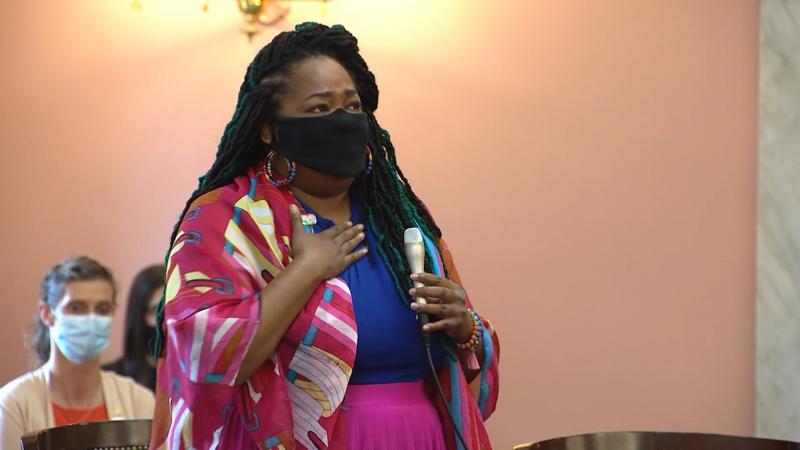
Systemic racism makes it harder for Latinos and other people of color to get healthcare, housing, transportation, education, employment, healthy food, safe treatment by police, and more. How can cities and states take a meaningful step to address racism? Declare racism a public health crisis. That’s what cities and counties in Ohio are doing, with a commitment to: Incorporate educational efforts to dismantle racism.
Review all portions of codified ordinances with a racial/ethnic equity lens.
Prioritize policies that will have the most beneficial health impact on people of color.
Train elected officials, staff, funders and grantees on workplace biases and how to mitigate them. “Through race-conscious policy-making, we’ve got to unwind the generations of ...
We know that older adults with underlying health conditions are most vulnerable to the worst effects of coronavirus. New data show that 10% of COVID-19 patients with diabetes die within one week of being hospitalized, according to a French study in the journal Diabetologia. Most hospitalizations are men and older adults (average age 69.8). The study also found that each increase in body mass index (BMI) is associated with an increase in the risk of intubation and/or death in the 7 days following admission for COVID-19, Dr. Samy Hadjadj told Medscape Medical News. "Before [this study] it was, 'all diabetes [patients] are the same.' Now we can surely consider more precisely the risk, taking age, sex, BMI, complications ... as clear 'very high-risk situations,'" Hadjadj said. "So ...
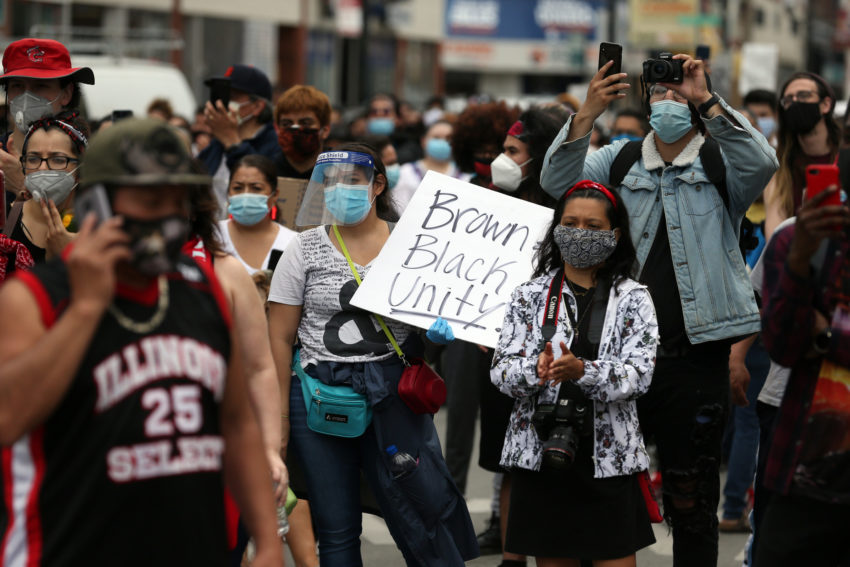
On April 30, protesters, many with guns and without face masks, entered Michigan’s state capitol to resist stay-home orders amid coronavirus, resist mask-wearing, and demand businesses reopen. “Infectious disease physicians and public health officials publicly condemned these actions and privately mourned the widening rift between leaders in science and a subset of the communities that they serve,” reads an open letter signed by 1,288 public health professionals, infectious disease professionals, and community stakeholders across the country. Then, when George Floyd was killed by a police officer May 25, protesters, many unarmed and wearing face masks, took to the streets to promote racial justice. This time, public health professionals responded differently. The noted ...