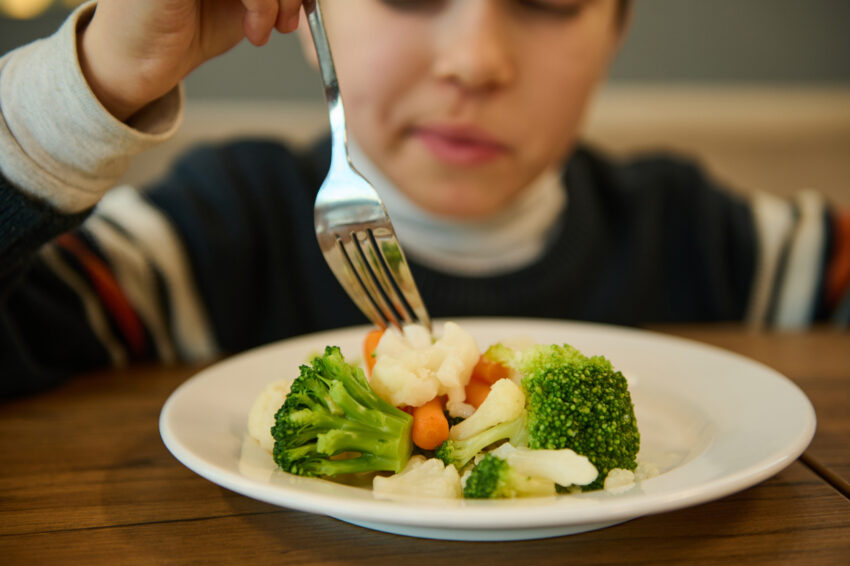
Nutritious food is an essential part of a healthy lifestyle for children. However, a February 2023 CDC report shows that many children ages 1-5 are not eating fruits and vegetables daily and are regularly drinking sugary beverages. “In 20 states, more than one half of children did not eat a vegetable daily during the preceding week. In 40 states and the District of Columbia, more than one half of children drank a sugar-sweetened beverage at least once during the preceding week,” according to the CDC. Let’s dive deeper and find out the state of diets among Latinos and all children, the role of healthy food access, and how we can create healthier food environments for children.
The State of Children’s Fruit and Vegetable Consumption
The new CDC report paints a grim ...
The average adult should sleep about 7-10 hours a day. But a person may get more (or less) sleep depending on the season, according to a recent study from researchers in Berlin, Germany. “Even in an urban population experiencing disrupted sleep, humans experience longer REM sleep in winter than summer and less deep sleep in autumn,” according to a news release about the sleep study. “In general, societies need to adjust sleep habits including length and timing to season, or adjust school and working schedules to seasonal sleep needs.” This begs a few questions. What other factors impact sleep? Are Latinos affected differently? Let’s explore the topic of sleep for Latinos, why it’s important, and factors that can impact it!
Sleep Can Differ Between ...
Dr. Amelie Ramirez, leader of Salud America! and a health researcher at UT Health San Antonio, is among 15 new inductees to the San Antonio Women's Hall of Fame. Since 1984, the San Antonio Women’s Hall of Fame has annually inducted women from Bexar and surrounding counties who have shaped the future of San Antonio and paved the way for women in Texas business, service, education, and more. Ramirez is recognized in the "health" category, where she will join 32 other women from public health, health promotion, medicine, nursing, and more. Ramirez and the other new inductees were inducted at an event in San Antonio on March 4, 2023. "I am humbled to join the San Antonio Women’s Hall of Fame. I wholeheartedly support its mission to help local women pursue a college ...
In January 2023, the Biden-Harris administration released a Blueprint for a Renters Bill of Rights. The purpose of the blueprint is to support a well-functioning, fair housing market for renters and all of society, which is important for Latinos who struggle with access to affordable housing. Let’s explore the blueprint and its five principles that “create a shared baseline for fairness” for Latino and all renters, according to the White House.
Blueprint Principle 1: Safe, Quality, Accessible, and Affordable Housing
Where you live affects your health. Renters should have access to safe, quality housing in neighborhoods that meet their health needs, including access to green spaces, reliable public transportation, and nutritious food. In addition, quality housing must ...
The USDA is proposing to make online food shopping an option for families in the Special Supplemental Nutrition Program for Women, Infants, and Children (WIC). Up to now, WIC participants had to use vouchers or electronic benefits cards (EBT) at the store. With the proposed changes, participants could shop online for groceries – a move that aims to improve the WIC shopping experience while increasing access to nutritious foods for WIC participants, thus positively impacting nutrition security. May 2023 Update: 329 Salud America! members submitted a model comment and were among over 1,600 people overall to USDA’s proposed changes to enable WIC participants to shop online for food. The model comment was created by Salud America! at UT Health San Antonio in partnership with ...
In November 2022, the USDA proposed science-backed changes to improve nutrition and promote and support breastfeeding in the food packages of the Special Supplemental Nutrition Program for Women, Infants, and Children (WIC). USDA sought comments on its proposal through Feb. 21, 2023. As of today, 15,238 people submitted comments on the proposed WIC food package update, including over 135 comments in English and Spanish from a comment campaign by Salud America! at UT Health San Antonio in partnership with UnidosUs! See all comments here.
Why are the Proposed WIC Changes Needed for Latinos?
Many Latinos face both food and nutrition insecurity. Of Latino low-income households, 69.4% were food secure, 18.8% were food insecure, and 11.8% were very low food security, according to ...
COVID-19 certainly hurt the health of many, including Latinos. But the pandemic is also threatening the education of children, amid three years of school shutdowns, isolation, and continuing waves of cases. Many students are falling behind in reading, especially. In 2022, the average reading score at both 4th and 8th grade decreased by 3 points compared to 2019, according to the National Center for Education Statistics. The National Assessment for Education Progress (NEAP), further highlights that while average 4th grade reading scores in 2022 were higher for Asian/Pacific Islander, Black, Latino, and White students, Latino and Black students still had lower reading average scores than White students. Let’s examine the literacy issues children face, the factors that ...
You’re probably familiar with Valentine’s Day on February 14. Every year, couples dote on each other and exchange candy, roses, and other gifts. But have you heard of Galentine’s Day? On February 13, Galentine’s Day is a time for women to celebrate their friendships with their gal pals, or lady friends. In honor of Galentine’s Day 2023, Salud America! is highlighting the incredible work and friendship of Drs. Amelie Ramirez and Patricia Chalela, two Latina researchers at the Institute for Health Promotion Research (IHPR) at UT Health San Antonio. The duo has a 30-year history working together to mitigate health challenges and differences in the Latino community through public health research. Their contributions to Latino health improvement are immeasurable. Let’s ...
The Supplemental Nutrition Assistance Program (SNAP) helps one in eight Americans put food on the table. During the COVID-19 pandemic in 2020, millions of Americans lost their jobs and experienced reduced incomes – causing Congress to make temporary emergency changes to SNAP. As a result, SNAP recipients experienced a boost in benefits, either receiving an additional $95 in benefits or an additional benefit valued up to the maximum benefit for their household size, whichever value was greater, according to the United States Department of Agriculture. While these emergency allotments have ended in many states, the Lone Star State has continued providing eligible households with an increased food budget. However, Texans may feel the pinch in the next few weeks, as Congress ...