The Healthy Americas Foundation (HAF) is giving a few scholars funding to research chronic diseases in Latino communities with help from the All of Us Research Program.
The new funding builds on HAF’s effort to improve Latino health by supporting researchers.
In 2022-2023, Healthy Americas Research Consortium awarded $10,000 each to 10 scholars to help understand cervical cancer screening issues, experiences with accessing screening, and ways to increase Pap and HPV screening in Latino and other underserved communities.
Projects utilized data from the National Institutes of Health’s (NIH) All of Us Research Hub.
NIH’s All of Us Research Program is a national campaign to collect and study data from 1 million or more Americans to help inform studies and accelerate research that ...
With the winter season in full swing, it’s peak time for flu, COVID-19, and RSV. Respiratory syncytial virus (RSV) is a respiratory virus that usually causes mild, cold-like symptoms. Most people recover in a week or two. But RSV can be serious, especially for infants and older adults. Latino children also face a “significantly higher burden.” “[A recent study] found that 59% of the burden of respiratory infections [including RSV] was distributed among Blacks and Hispanics,” MD Newsline reports. Let’s dive into how RSV can be transmitted, common symptoms, and how you can protect yourself and loved ones from getting infected.
What Are the Symptoms of RSV?
People infected with RSV usually show symptoms within 4 to 6 days after getting infected, ...
We’re seeking a communications specialist to join our communication team at Salud America!, our national Latino health equity organization based at the Institute for Health Promotion Research (IHPR) at UT Health San Antonio. The position will write, edit, and communicate health content and messages. This includes digital content curation for the Salud America! program, as well as assisting in the production of numerous IHPR internal and external communication vehicles, such as newsletters, email blasts, presentations, websites, social media, press releases and more. "The ideal candidate will identify, create, edit, and publish digital and multimedia content to drive awareness and action around health equity," said Dr. Amelie G. Ramirez, director of the IHPR and Salud ...
Child care is crucial for Latino and all families, but some face issues with access and cost. While many Latino households with low incomes used no-cost child care, those who paid out-of-pocket tended to face very high costs, according to a new research brief from the National Research Center on Hispanic Children and Families (Hispanic Research Center). “Our findings suggest a need for sustained and varied investments to support affordable child care access for Hispanic families with low incomes,” according to the Hispanic Research Center. Let’s dig deeper into how this impacts Latino families.
Child care Costs for Latinos
The Hispanic Research Center examined data from the 2019 National Survey of Early Care and Education to explore the average weekly hours ...
Hispanic Heritage Month is here! This annual U.S. observance, from Sept. 15 to Oct. 15, celebrates the histories and contributions of Americans whose ancestors came from Spain, Mexico, the Caribbean and Central and South America. We at Salud America! invite you to celebrate Hispanic Heritage Month in these surprising ways.
1. Learn How Hispanic Heritage Month Began
U.S. Congressmen Edward R. Roybal of Los Angeles and Henry B. Gonzales were among those who introduced legislation on the topic in 1968. President Lyndon Johnson implemented the observance as Hispanic Heritage Week that year. U.S. Rep. Esteban E. Torres of Pico Rivera proposed the observance be expanded to cover its current 30-day period. President Ronald Reagan implemented the expansion to Hispanic ...
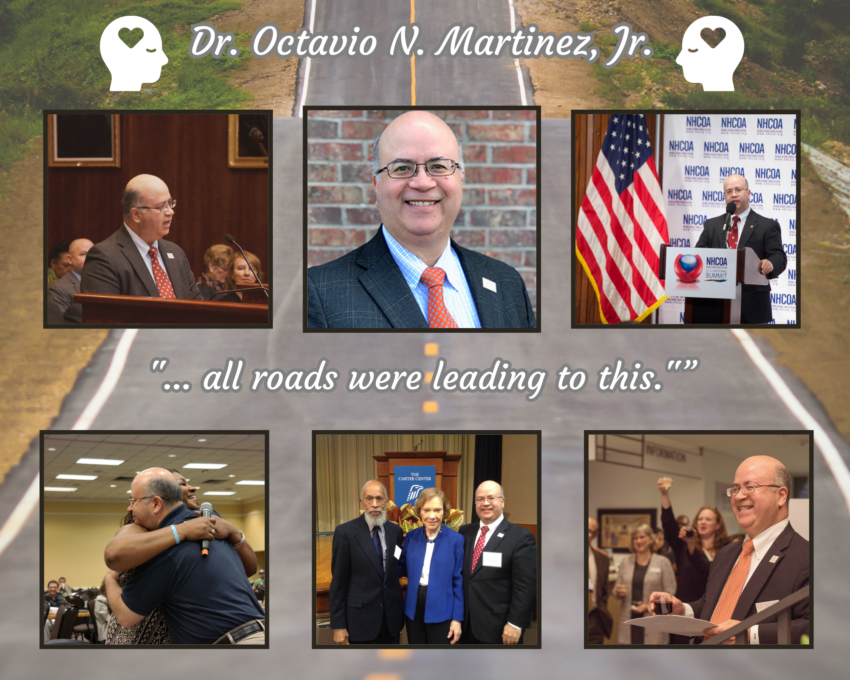
“Now remember, you must return your books on time,” said the librarian at the local public library in Austin, Texas. She peered down at 6-year-old Octavio N. Martinez, Jr., who eagerly nodded in agreement. She smiled and handed the child his first library card. From there, Octavio fell in love. Hard. He loved books and became a ferocious reader. With each page turn, his passion for learning grew. By the time he reached sixth grade, he knew he was destined for college and had even earned the nickname “professor” among his friends. Now a grown man, Dr. Octavio N. Martinez, Jr. has since earned four college degrees, including a Doctor of Medicine and Master of Public Health. He is also one of the nation’s top mental health leaders and philanthropists, a ...
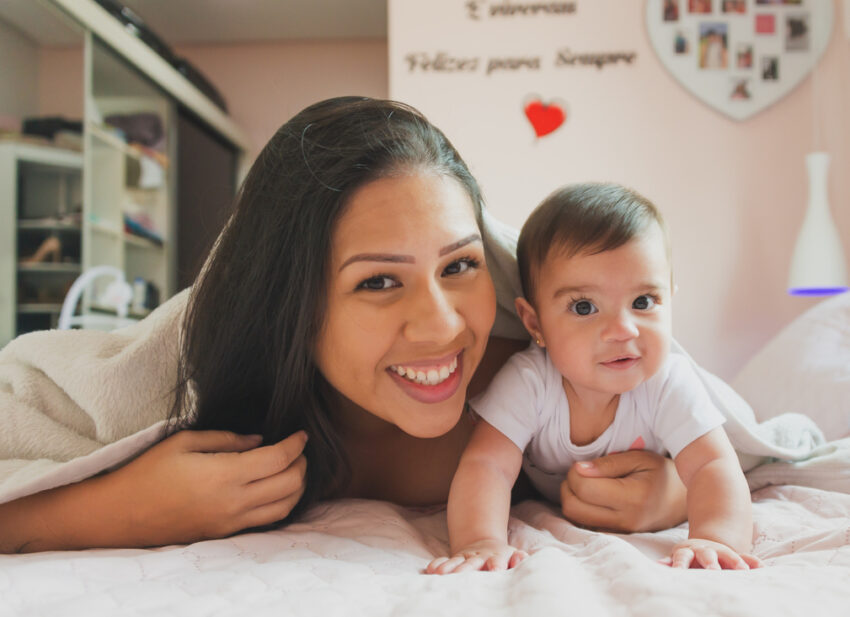
June 16, 2023 was a big win for low-income Texas families. Gov. Greg Abbot signed House Bill 12, which extends Medicaid health coverage for Texas mothers from just 60 days after giving birth to a full year. This new bill, which is expected to take effect by the end of 2023, has massive potential to improve newborn and maternal health outcomes for Latinas and all mothers statewide. Here are several big-as-Texas reasons to celebrate the signing of House Bill 12!
Improved Access to Prenatal and Postpartum Care
Half of women having babies in Texas get their healthcare coverage through Medicaid, according to data gathered by March of Dimes. Many of these women are low-income Latinas who may not be able to afford another healthcare coverage option. Going without health ...
We have updated our Salud America! Report Card to cover your county’s child opportunity score, environmental justice score, location affordability, and transit access. The Report Card, first launched in 2017, auto-generates Latino and local data with interactive maps and comparative gauges, which can help you visualize and explore local inequities in housing, transit, poverty, health care, food, education, and more. You will see how your county stacks up in these health improvement issues — now including child opportunity, location affordability, and transit access — compared to your state and the nation. Then you can share the Report Card with your local leaders to shift from individualist thinking to advocating for systemic community change for health equity! Get your ...
Amid the COVID-19 pandemic, global conflicts, and an inflated economy, families have been going through a lot lately. Children are no exception. The US is facing an “urgent public health issue” among youth, and it’s not the typical stomach bug or cough usually associated with children – it’s their mental health. In honor of May being Mental Health Awareness Month, we’re highlighting the reasons elementary and middle school-age children worry, how often they worry, and their coping mechanisms, according to a recent report by Nemours KidsHealth. We’ll also touch on what parents can do to help their children through worrisome times.
Why Do Children Worry?
Of the 504 children between ages 9 and 13 who responded to the Nemours survey, worries centered around school ...