by
by 
Share On Social!
Breast cancer patients given information about clinical trials in multiple ways, including a tailored video on breast cancer clinical trials, had much greater awareness of trials than patients who got usual-care information, according to new data.
After receiving the extra information—an interactive video about clinical trials, a bilingual booklet, and access to a patient navigator who can help answer their questions—the proportion of Latina breast cancer patients taking steps toward participating in a clinical trial increased from 38% to 75%, according to the study.
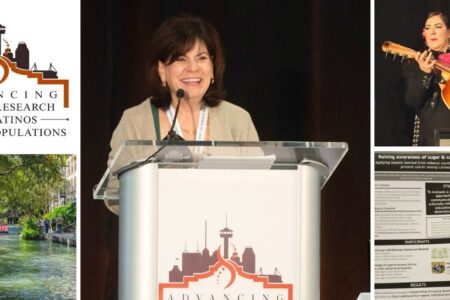
The study was led by researchers from the Institute for Health Promotion Research (IHPR) at UT Health San Antonio and presented at an American Association for Cancer Research (AACR) conference Nov. 9-12, 2014, in San Antonio.
Researchers says this is a potential way to increase participation in clinical trials that better reflects the US population.
“Latinos represent over 19% of the U.S. population but only 5.6% of participants in National Cancer Institute treatment clinical trials,” said Dr. Patricia Chalela, an IHPR researcher who is part of the study team led by IHPR Director Dr. Amelie G. Ramirez. “This limits generalizability of the findings because researchers cannot study how all patients respond to new treatments.”
The study is in its last year of recruitment, with 71 of 112 enrolled so far.
Participants are randomly assigned to usual-care clinical trial information or the additional information.
Compared with patients assigned to usual-care information, patients assigned to additional information had significantly higher awareness of clinical trials, in particular, the purpose of clinical trials, the requirements for enrollment, the benefits and risks of clinical trials, and the potential of clinical trials as an appropriate treatment for a serious disease.
“We hope that tailored computer-based videos will provide an effective strategy to increase breast cancer patients’ knowledge, understanding, and participation in clinical trials, although this needs confirming in larger studies,” Chalela said.
This study was supported by funds from Susan G. Komen and others.
Read a report on the study in the San Antonio Express-News.
By The Numbers
142
Percent
Expected rise in Latino cancer cases in coming years