by
by 
Share On Social!
About 1 in 8 men will be diagnosed with prostate cancer in their lifetime, according to the American Cancer Society (ACS).
September is National Prostate Cancer Awareness Month!
To recognize this observance, we are bringing attention to prostate cancer, reducing the stigma behind it, and talking about ways to prevent it.
Here are the seven things you should know about prostate cancer.
1. Overlooked Communities Have a Higher Burden of Prostate Cancer
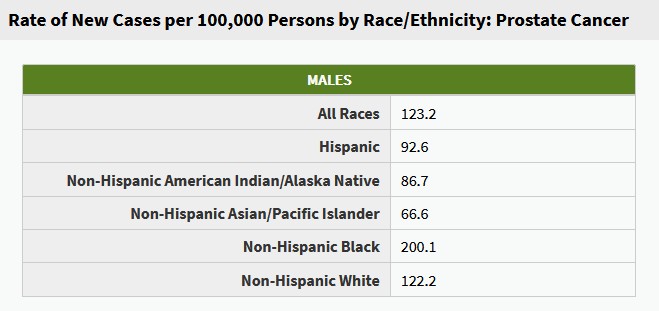
While prostate cancer affects all populations, men from overlooked communities, such as Black and Latino men, suffer a disproportionate number of prostate cases.
The incidence of prostate cancer is highest, at 200.1 per 100,0000 men, in the Black community, according to the National Cancer Institute.
Prostate cancer impacts white men at a rate of 122.2 per 100,000 men, Latino men at a rate of 92.6, Alaska Native men at a rate of 86.7, and Pacific Islander men at a rate of 66.6.
Even though Latino men have lower rates of prostate cancer than their White peers, prostate cancer is the most frequent cancer diagnosed among Latino men.
In Black men, prostate cancer accounts for 44% of all cancer diagnoses, according to Zero Prostate Cancer.
2. Prostate Cancer Cases are on the Rise
Incidence of prostate cancer in men are rising.
Since 2014, prostate cancer cases in the U.S. have risen by 3% annually, according to the ACS.
Before 2014, prostate cancer diagnoses were on the decline, but changes to screening recommendations led to fewer men being screened from 2014 onward.
This trickledown effect caused a sharp increase in late-stage diagnoses among all age groups, health experts say.
3. Prostate Cancer is a Leading Cause of Death in Men
Prostate cancer is the second-leading cause of cancer-related death in men in the U.S., behind only lung cancer, according to ACS.
The disease is projected to cause the deaths of about 36,320 men in 2026.
4. Prostate Cancer Risk Varies by Age
Your chances of developing prostate cancer depend on many factors, including lifestyle, health, chronic disease, weight, and physical activity.
These are known as modifiable risk factors, meaning changes in lifestyle can drastically decrease your risk for prostate cancer.
Another factor that influences cancer risk is age.
Prostate cancer is a lot more common among men older than 65, according to the ACS.
The ACS estimates that 6 in 10 prostate cancer diagnoses are in men 65 or older.
On the opposite end, prostate cancer is a rare occurrence in men under the age of 40.
That’s why the average diagnosis of prostate cancer is about 67.
The percent of prostate cancer deaths is highest among men ages 75-84, according to the National Cancer Institute.
5. Prostate Cancer DeathsHave Declined amid Rising Incidence Rates
While incidences of prostate cancer continue to grow, the number of deaths has dropped significantly.
Now, only 1 in 44 men die of prostate cancer, according to the ACS.
This is due to advancements in science, including early detection and treatment.
However, those who are being diagnosed are being diagnosed with the disease at a much later stage, thus decreasing their chances of survival.
Late-stage diagnoses of prostate cancer are more common in overlooked populations that face barriers to prevention and treatment, including lack of access to care, insurance, and transportation.
6. Early Detection can Prevent Prostate Cancer Deaths
Prostate cancer has a 5-year survival rate greater than 99% when detected early.
These early detection methods consist of prostate-specific antigen blood tests.
Early detection should be discussed with your doctor around age 50 for men who possess an average risk for the disease.
Men with a family history of prostate cancer should discuss prevention between ages 40 and 45.
These tests can detect cancer early when the treatment options are cheaper, less invasive, have a shorter recovery time, and lead to overall better health outcomes.
Understand your risk, get tested.
7. Reduce Prostate Cancer Stigmas by Sharing Your Story
Another reason for the increase in late-stage prostate cancer diagnoses is the stigma associated with prostate cancer.
In many groups, men are seen as a reliable and strong force in the family dynamic.
Having a prostate cancer diagnosis, or any kind of diagnosis, can be seen as a weakness and contribute to feelings of being less manly.
In the Latino community, this is known as machismo.
Machismo is described as a strong sense of masculinity and male pride associated with physical strength and virility among other feelings.
So, how do we break the cycle of these stigmas and improve health outcomes for men with prostate cancer?
One way to reduce stigmas is by not being afraid to speak up about your cancer experience.
Rick Alvarado saw his prostate cancer diagnosis as a way to bring awareness about screening and early detection.
“The earlier you get diagnosed, the more meaningful interventions can be taken, and you can actually…have a better experience with it, as opposed to when it’s too late,” Rick told Salud America!
He uses his background as a teacher to educate men like him that they shouldn’t be ashamed of prostate cancer.
“I wanted to be able to help people, other men, especially, understand that it’s not a bad thing. It shouldn’t be something you’re ashamed of,” Rick said.
Rick is also trying to make a difference in the Latino cancer community in South Texas by sharing his experience with the Avanzando Caminos Hispanic/Latino Cancer Survivorship Study at the Institute for Health Promotion Research at UT Health San Antonio.
By gathering the stories of Latino survivors, the study team hopes to learn more the factors that mark the Hispanic/Latino cancer survivorship journey in South Texas.
Under the management of Dr. Derek Rodriguez, the study team is meeting with 1,500 participants in South Texas over the course of seven study visits spread out over five years in hopes that certain patterns may emerge.
By isolating this data, the study team hopes to address inconsistencies in cancer care related to the non-medical drivers of health and come up with interventions that ultimately go toward bettering the lives of future cancer survivors.
“We want to be able to empower others to share their story as well. And we want to be able to better understand, detect, treat, and prevent cancer in the long run for other future survivors,” Dr. Rodriguez said.
To volunteer for Avanzando Caminos or ask questions, contact Dr. Ramirez’s team at the Institute for Health Promotion Research at UT Health San Antonio at 210-562-6514 or caminos@uthscsa.edu.
Alternatively, visit the Avanzando Caminos website in English or Spanish to fill out a quick eligibility survey and a member of the study team will be in touch!
Explore More:
CancerBy The Numbers
142
Percent
Expected rise in Latino cancer cases in coming years