 by
Share On Social!
Become a politician? Work in a health ministry?
As a young girl growing up in Colombia, Dr. Marcela Mazo Canola wasn’t sure exactly what she wanted to be — but she dreamed of making a difference for people.
Today, Mazo Canola is helping others as a breast medical oncologist at Mays Cancer Center at UT Health San Antonio and contributing to research to improve cancer and health outcomes for Latinos and all populations.
“Although I’m in a different career that I love very much, I guess I still ended up doing something similar to what I was dreaming of when I was a little girl,” she said.
During Hispanic Heritage Month, Salud America! is highlighting heroes in healthcare and throughout the community who strive to make a difference.
Let’s take closer look into Dr. Mazo Canola’s story and how she works to help people in San Antonio and beyond.
Dr. Marcela Mazo Canola – Rooted in Helping Others
In Colombia, Mazo Canola learned the importance of caring for others at a young age.
To help people, she thought about going into politics or health ministry, but eventually found her way into medicine.
“Growing up in a third world country, I was able to see a lot of the differences in how people had access to medical care,” Mazo Canola said.
So Mazo Canola earned her medical degree from CES University in Colombia.
She then moved to the United States and attended UT Health San Antonio, where she completed a year of research, her internship and residency in internal medicine, and then her fellowship training in hematology and medical oncology.
She was awarded Outstanding Resident Medicine Clerkship.
“I tried to do a lot of work that [made] sure that the care that we provide for people is equal in quality,” she said.
Dr. Marcela Mazo Canola – A Calling to Oncology
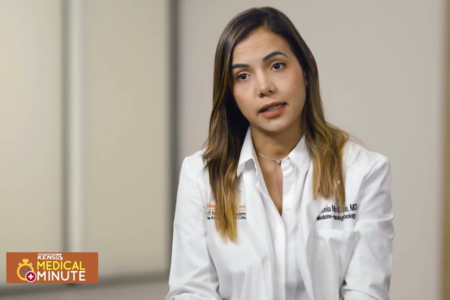
An early experience in her residency would help her understand the importance of culturally relevant patient care and go in the direction of oncology.
“In one of those very first encounters, I noticed how different my patients felt when I was able to communicate with them in Spanish,” Mazo Canola said.
This experience also gave her insight into the challenges like language barriers that patients face, leading to different or even worse health outcomes and lack of access to care.
“In a way that planted a seed in me. It’s inspired me to pursue a career in which no matter what field of work I will do, I will help the Latino population in at my capacity,” Mazo Canola said.
Mazo Canola recalled being an intern working in oncology and seeing the dynamics of the relationship between oncologists and patients, ultimately drawing her into oncology.
“The beauty of that patient-doctor relationship, and obviously the scientific advancement of the field to me was the perfect combination of keeping the very exciting part of medicine, but at the same time serving people,” Mazo Canola said.
Dr. Marcela Mazo Canola – A Passion for Research
Dr. Mazo Canola spent years as a medical oncologist and hematologist in South San Antonio.
In 2021, she returned to UT Health San Antonio to pursue her passion of breast oncology.
In her position, Dr. Mazo Canola sees patients who have been diagnosed with breast cancer or pre-malignant conditions.
“We treat those diseases with either chemotherapy, we work alongside the surgeons and the radiation oncologists,” Mazo Canola said.
She also does a mixture of clinical work, research, and other tasks.
“We have a combination of clinical work with other responsibilities, which is research, and sometimes we also do collaborations with our institutions,” Mazo Canola said.
Currently, Dr. Mazo Canola is working on a project that focuses on germline mutation in Latina women, which are mutations that are part of one’s DNA from a reproductive cell that can be passed from parent to offspring in the womb.
“Some of these increase your risk of lifetime cancer, not just breast cancer, but other types of cancers, and we have seen that in the Latina population, we have certain mutations that have not even been described before,” Mazo Canola said.
Mazo Canola emphasized the importance of this research to better understand the risk that Latinos have when diagnosed with cancer.
As a Latina herself, Mazo Canola is passionate about educating the community and doing the work to improve the outcomes for patients.
“I’m very excited about this one because one, we get to discover new mutations that could affect this population, and two, because we get to educate our patients and the community on the importance of doing this testing, and obviously on the importance of participating in different clinical trials and research,” Mazo Canola said.
While there are many factors that contribute to improving health outcomes for Latinos, Dr. Mazo Canola believes that advancements in research can truly help improve the heavy burden of cancer, especially among Latinos.
“They seem to have a genetic mix in their tumor with a more aggressive biology compared to women that are not from Hispanic ethnicity. So, lots of you know, projects that are hinting at this you know biologic difference,” Mazo Canola said.
Dr. Marcela Mazo Canola – Latina Representation in the Clinical Setting
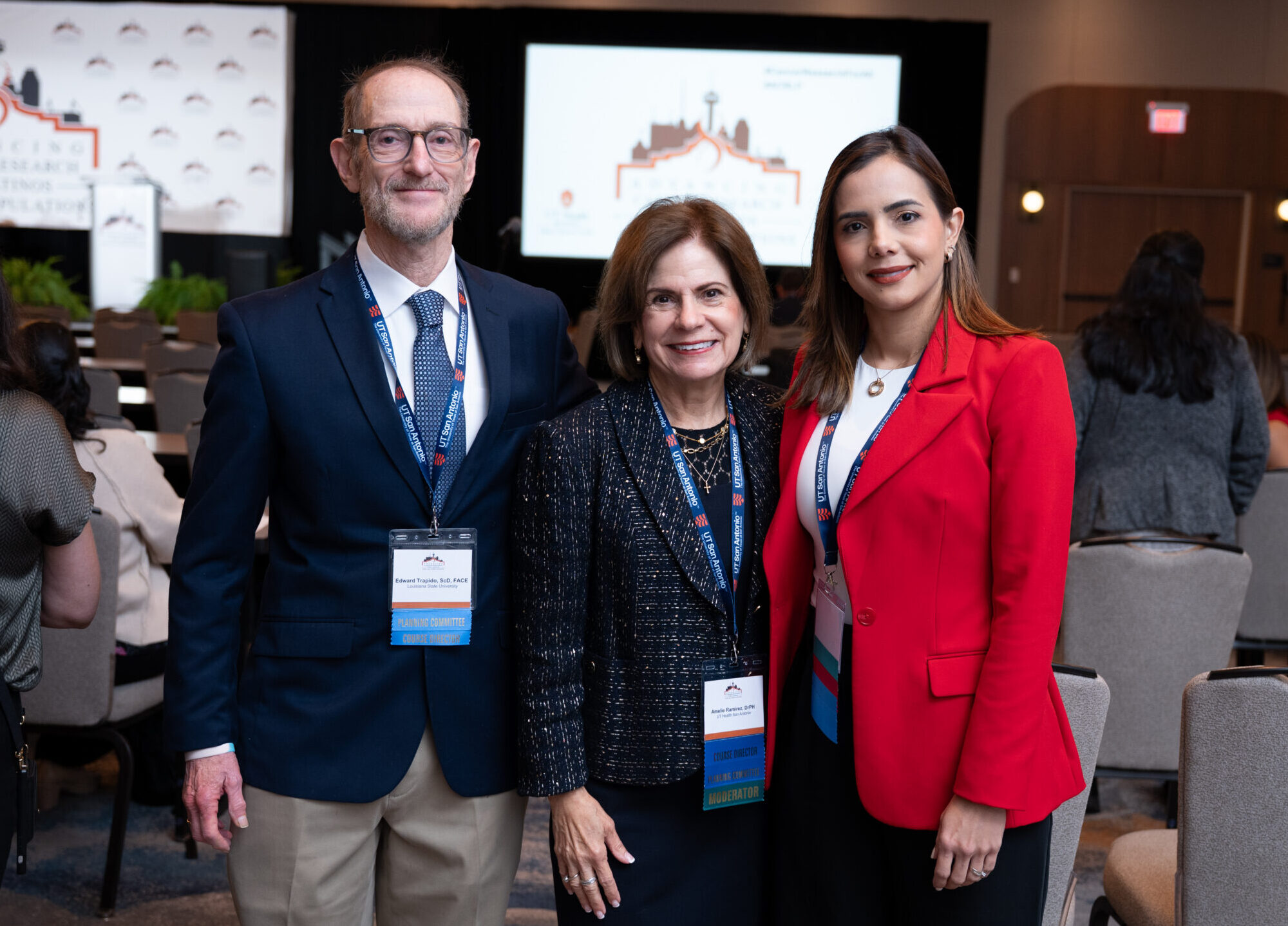
Awareness and representation are important for Dr. Mazo Canola as she does her best to ensure her patients get the care they need.
“There’s data that shows that sometimes patients do feel more comfortable when they’re treated by a physician that looks like them, speaks their language, that shares perhaps some culture with them, so that that is why it’s so important,” Mazo Canola.
While some days can be harder than others, she is grateful for the opportunity to improve research and is motivated greatly by her children.
“Obviously, I want to set up a good example for my boys, for you know, for my family, and to me, is getting to do my dream job every day. That’s honestly the bottom line,” Mazo Canola said.
Additionally, for Mazo Canola, her job is a gift that continues to give.
“The fact that we’re able to make a difference is priceless for me,” she said. “I look forward to having access [to care] for everybody that needs it, I know that’s a big wish because there’s many, I guess, factors in that equation, but that’s a big wish.”
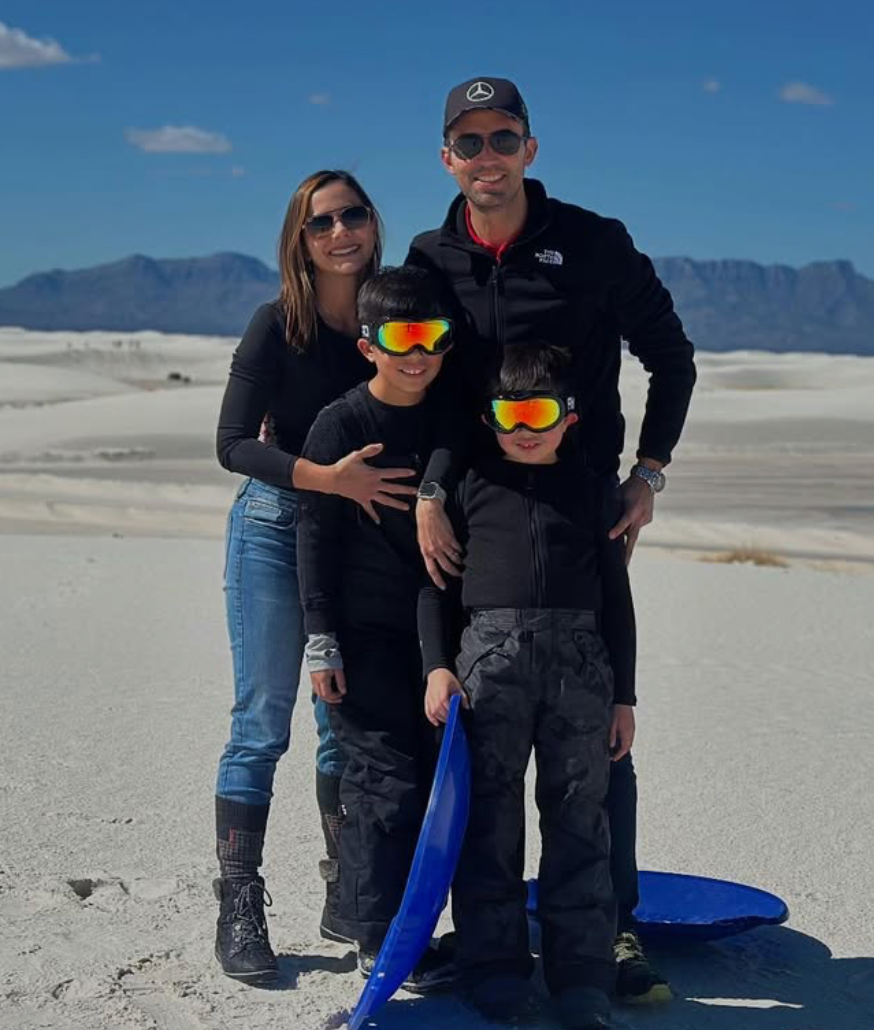
If she isn’t at work, you can most likely catch Dr. Mazo Canola, traveling, cooking, exercising or watching whatever soccer game is on with her husband and two sons.
Dr. Marcela Mazo Canola – Looking to the Future
While she has many great accomplishments under her belt, Dr. Mazo Canola hopes she can continue to make strides in research and improve health for everyone.
“I hope to make a difference in the field of breast oncology, and I hope to really discover what are those biological differences that we see the Latinos, because I’m convinced that down the road that will make a difference,” she said.
As for young Latinos hoping to follow her path, she urges them to put in the work.
“We have to understand that in order to accomplish what we want, we have to work hard. But at the end, it’s a path that is completely worth it,” Mazo Canola said.
Through it all, Dr. Mazo Canola stays motivated to continue her passion in breast cancer care and breast cancer research.
“We get to work at a place that offers all the possible services to whoever is in need. So, if you put all those things together, looking back at what I wanted for me when I was a little girl, every day is a dream come true,” she said.
The Importance of Clinical Research
Clinical research can make a big difference when it comes to health outcomes.
Clinical trials are studies with volunteers that explore ways to find, prevent, and treat diseases. The Salud America! program is uplifting open clinical trials, sharing stories about Latinos who have participated, and more.
“We do clinical trials because we believe that’s the way to move the move the field forward,” said Dr. Mazo Canola.
Those looking for clinical trial opportunities based in San Antonio can search the Mays Cancer Center at UT Health San Antonio’s Find a Clinical Trial database to learn more about available clinical trials and eligibility requirements.
On a national level, visit clinicaltrials.gov to find a clinical trial near you.
By The Numbers
3
Big Excuses
people use to justify discriminatory behavior
This success story was produced by Salud America! with support from the Robert Wood Johnson Foundation.
The stories are intended for educational and informative purposes. References to specific policymakers, individuals, schools, policies, or companies have been included solely to advance these purposes and do not constitute an endorsement, sponsorship, or recommendation. Stories are based on and told by real community members and are the opinions and views of the individuals whose stories are told. Organization and activities described were not supported by Salud America! or the Robert Wood Johnson Foundation and do not necessarily represent the views of Salud America! or the Robert Wood Johnson Foundation.