Salud America!, a national childhood obesity prevention and communication program, has received a one-year, $1.3 million grant from the Robert Wood Johnson Foundation to develop new, tailored educational content that helps people to work toward healthy changes for children and families. Established in 2007, Salud America!, has recruited a national online network of 50,000 parents, school personnel, health professionals, and community leaders who support its mission. Childhood obesity continues to rise in America. The new funding will allow Salud America! to expand its network and engage members with enhanced educational content, including multimedia role model stories, social media events (like the #SaludTues weekly tweetchat), online resources, digital action campaigns, and ...
Teenagers who eat fruits and vegetables high in fiber may significantly lower their risk of developing breast cancer (a leading cause of death among Latinas and other populations), later on in life, according to a new study, CBS News reports. Researchers at Harvard’s T.H Chen School of Public Health analyzed data from 44,000 women. They concluded that those who consumed about 28 grams of fiber a day “had a significantly lower risk of breast cancer before menopause compared with those who said they ate less than 15 grams a day.” "The results of this study emphasize the role of an early life high-fiber diet on prevention of breast cancer in later life. High consumption of foods rich in fiber such as fruits, vegetables and whole grains in early life may help to reduce breast ...
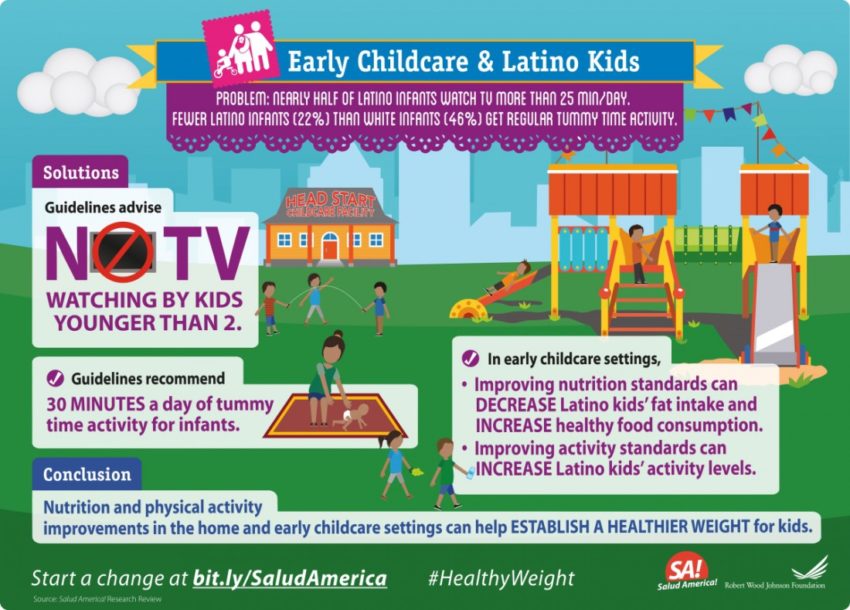
Too many infants watch TV for more than 25 minutes a day and few babies get regular tummy time activity. Guidelines advise no TV watching by kids younger than 2 and 30 minutes a day of tummy time activity for babies, according to our new infographic on early childcare and kids. The infographic is part of the new Salud America! Healthy Weight research package on the latest data and recommendations on how to ensure kids reach a healthy weight by kindergarten. Share this infographic today! Salud America! is a Robert Wood Johnson Foundation-funded national childhood obesity prevention and communication ...
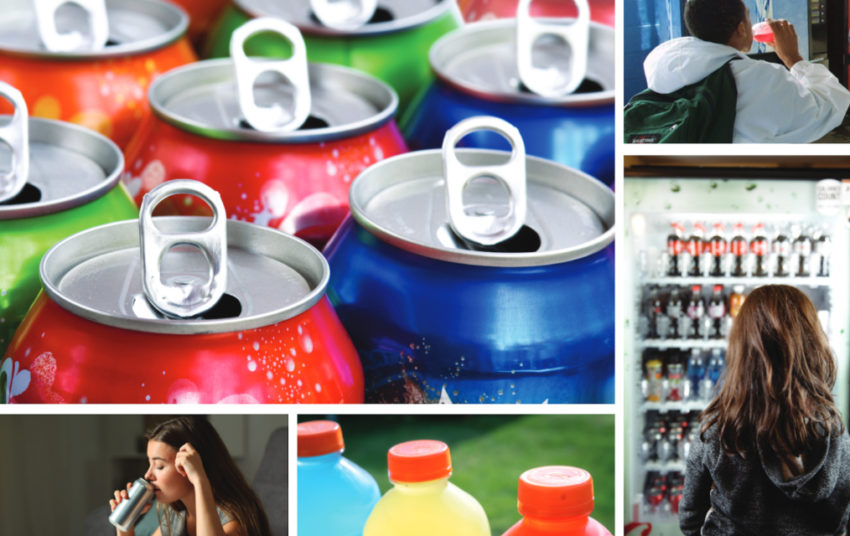
Across America, public health leaders in different states across the nation are pushing for various ways to address a rising childhood obesity epidemic. One big issue is sugary drinks. Sugary beverage consumption on a daily basis has been proven in research to be linked to higher risks of health related diseases. Follow #SaludTues to tweet with us on Feb. 2, 2016, as we unveil the results of a new study focusing on kids and sugary drinks. Participants will discuss problems, solutions, and new studies on sugary beverages and kids. We will share research packages that include helpful infographics. WHAT: #SaludTues Tweetchat: “Sugary Beverages & Kids”
DATE: Tuesday, February 2nd, 2016
TIME: 1-2 p.m. ET (Noon-1 p.m. CT)
WHERE: On Twitter with hashtag ...
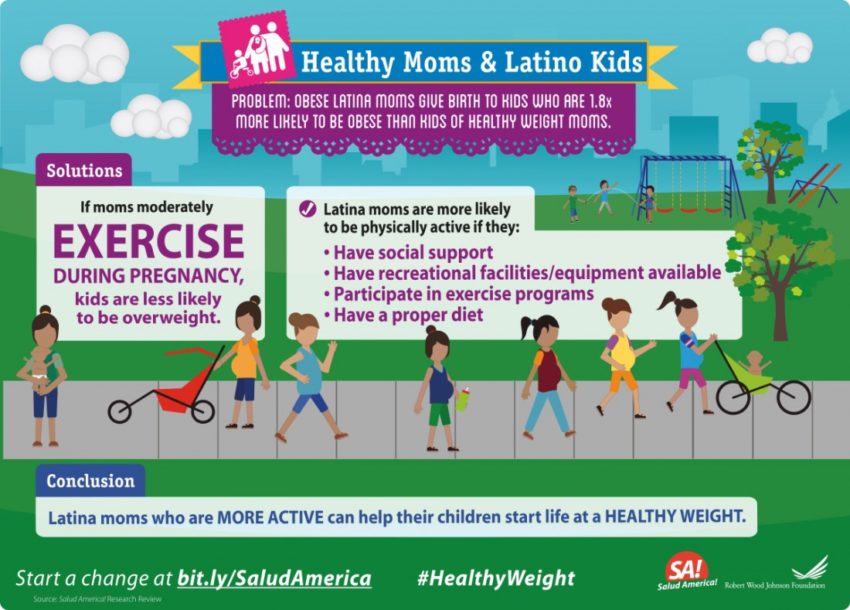
Moms who are obese give birth to kids who are 1.8 times more likely to be obese than kids of healthy weight moms. But, when moms exercise moderately during pregnancy, kids are less likely to be overweight, according to our new infographic on healthy moms and kids. The infographic is part of the new Salud America! Healthy Weight research package on the latest data and recommendations on how to ensure kids reach a healthy weight by kindergarten. Share this infographic today! Salud America! is a Robert Wood Johnson Foundation-funded national childhood obesity prevention and communication ...
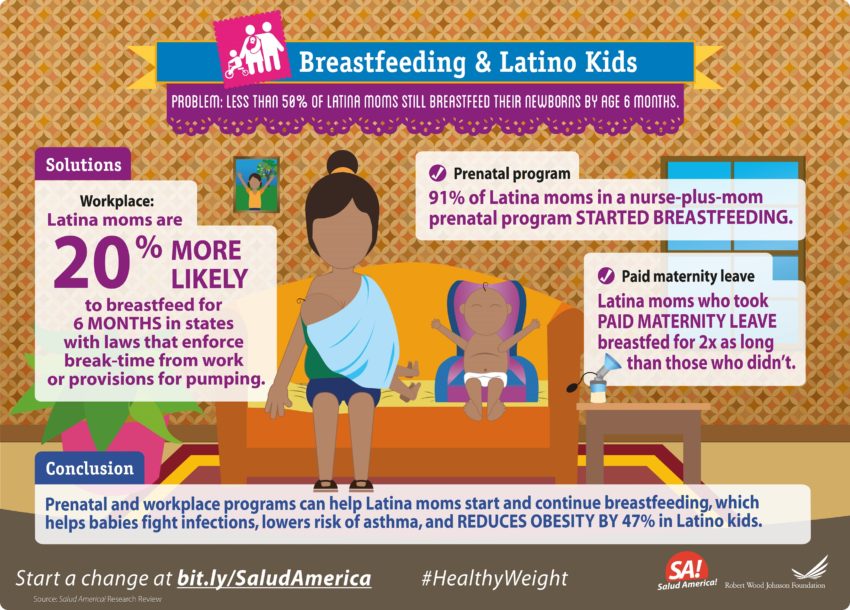
A lot of mothers no longer breastfeed their babies by age 6 months. But when workplaces make it easier for new mothers to breastfeed by providing paid maternity leave, break-time from work or provisions for pumping, mothers are 20% more likely to breastfeed 6 months, according to our new infographic on breastfeeding and kids. The infographic is part of the new Salud America! Healthy Weight research package on the latest data and recommendations on how to ensure kids reach a healthy weight by kindergarten. Share this infographic today! Salud America! is a Robert Wood Johnson Foundation-funded national childhood obesity prevention and communication ...
Two architecture and planning graduate students from the University of Texas San Antonio (UTSA) recognized good fruit from fruit trees were being left to rot in urban areas of San Antonio, Texas, where many families live in need of fresh foods. Working together for a class project, the friends created a blossoming non-profit to make sure families in need can access a variety of fresh fruit.
A Local Healthy Food Problem
Awareness/Learn: In summer 2013, UTSA grad student Melissa Federspill started a class focused on health planning, called “Health in the Built Environment.” Students in the class were advised to visualize solutions to inner-city health problems. The class analyzed a neighborhood close to campus, the Avenue to Guadalupe neighborhood in the West Side of San ...
People younger than age 50, the age at which doctors recommend screening, are being diagnosed with colon cancer, according to a new analysis, Time reports. Colorectal cancer is a common cancer. “Colon cancer has traditionally been thought of as a disease of the elderly," said study lead author Dr. Samantha Hendren, an associate professor of surgery at the University of Michigan in Ann Arbor. The study shows 1 in 7 colon cancer patients is under 50, and “younger patients tend to be in more advanced stages of the disease. “ “This study is really a wake up call to the medical community that a relatively large number of colon cancers are occurring in people under 50,” Hendren said. Healthier diets can help, especially at a young age. Yet fast food and corner ...
Children who lived closer to supermarkets increased fruit and vegetable consumption and reduced their body mass index (BMI), according to a study published in the American Journal of Public Health. Researchers examined about 500 children ages 6-12 with a BMI of or above the 95th percentile. There are other factors still needing further research. The researchers of the study suggest focusing on household income, other non-medical drivers of health, the drive to lose weight, and other factors, which could determine weight loss or gain, too. Having close access to fruits and vegetables has also been shown to assist families and help reduce the BMI of kids, studies show. To learn more about this study, click ...