Gun violence is on the rise in the US. In fact, gun violence was declared a national public health crisis in 2024. Since 2000, gun violence has caused the deaths of more than 800,000 people and led to 2 million injuries in the US, according to a recent JAMA report. Many of these deaths have been among children and adolescents, affecting families across the country. To address this, JAMA gathered 60 leaders for a summit to create a roadmap to address the increase on firearm violence to promote fewer injuries and deaths by 2040. “The vision for 2040 is a country where firearm violence is substantially reduced and where all people and communities report feeling safe from firearm harms,” according to the roadmapreport. Let’s go over the roadmap and its ...
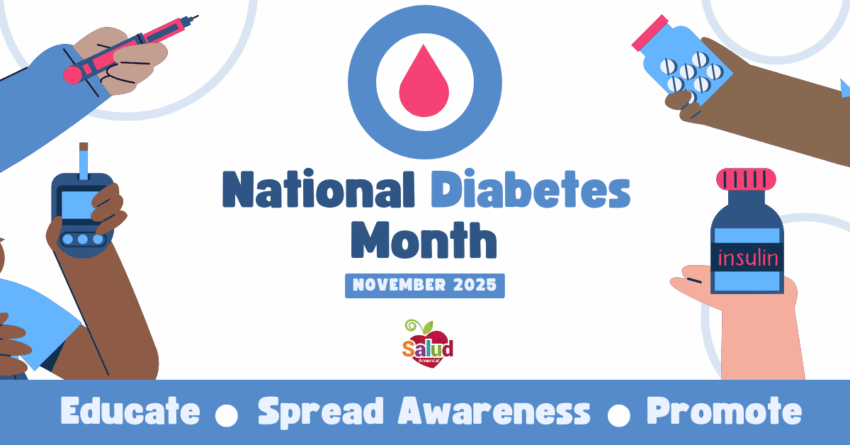
November is recognized as National Diabetes Awareness Month in the U.S. 29.3 million Americans have diagnosed diabetes and 9.7 million adults have undiagnosed diabetes as of 2024, according to the American Heart Association. Diabetes self-management education and support can help people with diabetes gain knowledge, skills, and personalized support. “Adults who receive [diabetes education] follow more recommended preventive care practices,” according to the CDC. With this in mind, we’ve compiled a list of helpful tools and resources to help people explore, manage, and prevent diabetes.
Resources from the American Diabetes Association
For National Diabetes Awareness Month, also known as American Diabetes Month, the American Diabetes Association (ADA) has several ...
Heart disease is a persistent threat for many Americans, including Latinos. As of 2022, heart disease is the leading cause of death of people living in the US, according to the Centers for Disease Control and Prevention (CDC). Many behaviors contribute to an increased risk for heart-related diseases, from lifestyle choices such as smoking, excessive alcohol use, physical activity, poor diet, as well as many health conditions, such as stress, obesity, and diabetes. And researchers are still learning more about these and other risks. In fact, let’s explore six recent studies on the relationship between physical behaviors and the risk of heart disease that you should be aware of.
1. Viral Infections Can Increase Risk for Heart Disease
Viral infections, such as ...
November is National Family Caregivers Month (NFCM)! NFCM is an opportunity to recognize family caregivers across the country and “raise awareness of caregiving issues, educate communities, and increase support for caregivers,” according to the Administration for Community Living. “Being a caregiver can bring joy and purpose, but it can also lead to stress, exhaustion, and worry about mental health for both you and your loved one,” according to Mental Health America. With this in mind, we've compiled a list of where tools and resources for family caregivers can be found.
Latinos and Caregiving
"Family caregivers include parents, friends, neighbors, and even children, and they span across
all ages, races and ethnicities, incomes, and communities," according ...
Latinos continue to be one of the fastest growing groups in the U.S., rising to 20% of the population for the first time this past year, according to the U.S. Census. In addition, Pew Research Center shared these facts: Latinos have played a major role in U.S. population growth.
The sources of Latino population growth have changed in recent years.
S. Latinos trace their roots to many countries.
California and Texas have the nation’s largest Latino populations.
The share of U.S. Latinos with college experience is rising.
The religious affiliation of U.S. Latinos is changing. Let’s dig deeper into these facts and how they can impact others.
Latino Population Growth in the U.S.
The U.S. was home to 340,110,988 people in 2024. Of those, 195 million are ...
Type 2 diabetes has increased at an alarming rate in children, increasing to between 24% and 45% (compared to 1-2% before the mid-1990s), with the average age of diagnosis being around 13 years old, according to research. This can deeply effect young Latinos, as more than 22% of Latino youth and 28.7% of Latino young adults have prediabetes. Many factors contribute to this rise, including childhood obesity, genetics, and diet. Now, researchers from Florida Atlantic University have found that where a child lives can also factor into their risk for type 2 diabetes. Let’s explore this research and see how it impacts children and their communities.
Behind the Research on Diabetes in Children
Researchers for Florida Atlantic University’s ’s Charles E. Schmidt College of ...
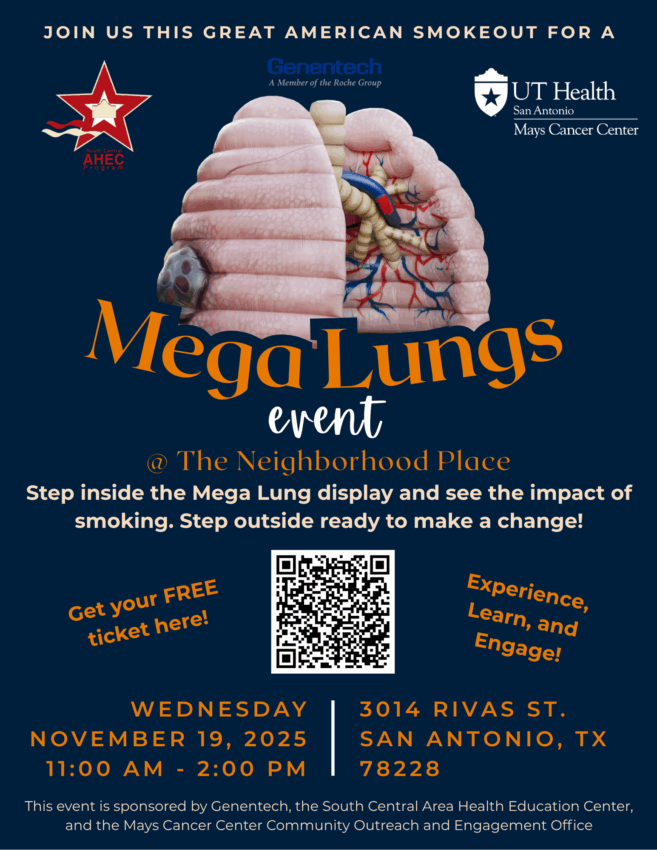
Do you smoke cigarettes and want to quit? On Thursday, Nov. 20, 2025, you can join thousands of people who will begin their smoke-free journey with the Great American Smokeout, an annual quitting event. To get help, enroll in Quitxt, a free English or Spanish texting service that turns your phone into a personal “quit smoking” coach from UT Health San Antonio. To join Quitxt, text “iquit” (for English) or “lodejo” (for Spanish) to 844-332-2058. And, if you’re in the San Antonio area, visit the “Mega Lung,” a giant model of a human lung that shows the importance of the respiratory system’s most vital organ.
Step Inside the Mega Lung
The MEGA Lung is open 11 a.m. to 2 p.m. on Wednesday, Nov. 19, 2025, at the Neighborhood Place cafeteria, 3014 Rivas Street, San ...
We know smokers have an increased risk of dementia. Now new research suggests that quitting smoking, even after later in life, can slow cognitive decline. Researchers from the University College of London collected data from more than 9,000 participants ages 40 and older across 12 countries. “They matched people who had quit smoking with continuing smokers according to their starting cognitive scores and other characteristics, including sex, age, education level and birth country,” according to NPR. Results showed verbal fluency declined at a rate roughly half for those who quit smoking compared to that of their smoking counterparts. For memory, the decline was reduced by 20%. Let’s dive deeper into this study and what this can mean for those who quit smoking.
Why ...
One quarter (25%) of all Latino children live in doubled-up households, according to new data from the National Research Center on Hispanic Children and Families (NRCHCF). Doubled-up households are “those in which children live in households with their parents(s) and with other adults, who can include other relatives (e.g., a grandparent) and those who are unrelated,” according to NRCHCF. Let’s dig deeper into what this means and how it impacts families. Latino Family Households by the Numbers According to NRCHCF research, doubling up with a grandparent is the most common among such arrangements, with 15% of Hispanic/Latino children live with a parent and a grandparent. Additionally, 7% of Latino children live with a parent and some other extended family member, ...