Spending on sugary drink TV advertising aimed at black and Latino youth is up, according to Sugary Drink FACTS 2020, a new report from the Rudd Center for Food Policy & Obesity. Overall, the report found that in 2018 companies spent a whopping $1 billion (26% increase since 2013) in sugary drink advertising. These drinks include regular soda, sports drinks, iced tea, fruit drinks, flavored water, and energy drinks. Pepsi and Coca-Cola accounted for the largest share of sugary drink advertising in 2018. In the report researchers also explored the nutritional value of sugary drinks advertised by large companies. "These analyses of the nutrition content and advertising of sugary drinks and energy drinks demonstrate that beverage company advertising of sugary drinks to young ...
Researchers are finding that population density is not associated with higher death rates from COVID-19. Unfortunately, some people still blame compact housing and transit for pandemic spikes, and use that misinformation to promote sprawling residential development and disinvestment in transit in the name of health. These are the same poor practices that have segregated neighborhoods and contributed to drastic disparities in health and wealth for a century. As city leaders respond to concerns about COVID transmission and develop economic recovery plans, they must challenge the discriminatory status quo, consider transportation expenses, and shift toward equitable, compact (not overcrowded) housing development. “Restoring urban transit networks to full force, expanding their ...
When he was 16, Erine Gray's mother caught the rare brain disease encephalitis, causing permanent damage and memory loss. Gray moved his mother to Austin, Texas, a few years later to help care for her. He was just out of college with an economics degree, doing contract work. She was 57 years old at the time with early-onset dementia, and no income. He struggled helping her with daily tasks and making sure she took her medications. Gray had to find a sitter for her when he left the house. Eventually she required 24-hour care. "Nobody has a road map for these types of situations, I learned that very early on," Gray said in an interview with Salud America! "We didn’t know what services were available to help." That's why, now 28 years after his mother's diagnosis, Gray is ...
In San Bernardino County (50% Latino), the Board of Supervisors voted 5-0 this week to make it California's first county to adopt a resolution to declare racism as a public health crisis, the L.A. Times reports. The resolution recognizes that racism "creates unfair disadvantages to some individuals and communities" and "results in disparities in family stability, health and mental wellness, education, employment, economic development, public safety, criminal justice and housing." In addition, the resolution commits to action, according to the report: Enhance diversity in the county workforce;
Study existing county policies and practices "through a lens of racial equality to promote and support efforts that prioritize health for people of color";
Plan collaborations ...
Many data suggests that older adults are the most vulnerable to the worst effects of the coronavirus outbreak. We still have a lot to understand about dementia and risk for COVID-19. Evidence seems to indicate dementia-related behaviors, increased age, and common health conditions may increase risk. Let’s use #SaludTues on Tuesday, June 30, 2020, to tweet about the latest research about dementia and coronavirus! WHAT: #SaludTues: How Coronavirus Impacts People with Dementia
TIME/DATE: 1-2 p.m. EST (Noon-1 p.m. CST), Tuesday, June 30, 2020
WHERE: On Twitter with hashtag #SaludTues
HOST: @SaludAmerica
CO-HOSTS: @UsA2_Latinos, @AlzheimersLA, @Diversealz, @DiverseElders @WellmedCharitab @CaregiverSOS @PublicHealthMap @VocesenSalud
ADDITIONAL HASHTAGS: #COVID19, ...
Delaying medical care can cause catastrophic health and financial problems. That’s why early in the COVID-19 pandemic, the Centers for Medicare and Medicaid Services temporarily expanded its telehealth coverage so physicians, nurse practitioners, clinical psychologists and licensed clinical social workers would be reimbursed for telehealth services. Other payers followed suit. Unfortunately, not everyone can just hop on a telehealth video call. Many Latinos and other vulnerable populations—older people, people experiencing domestic violence, and families with low income—face insurance, language, health literacy, digital literacy, and digital access barriers to telehealth services. Moreover, telehealth can be challenging for people with autism, intellectual and developmental ...
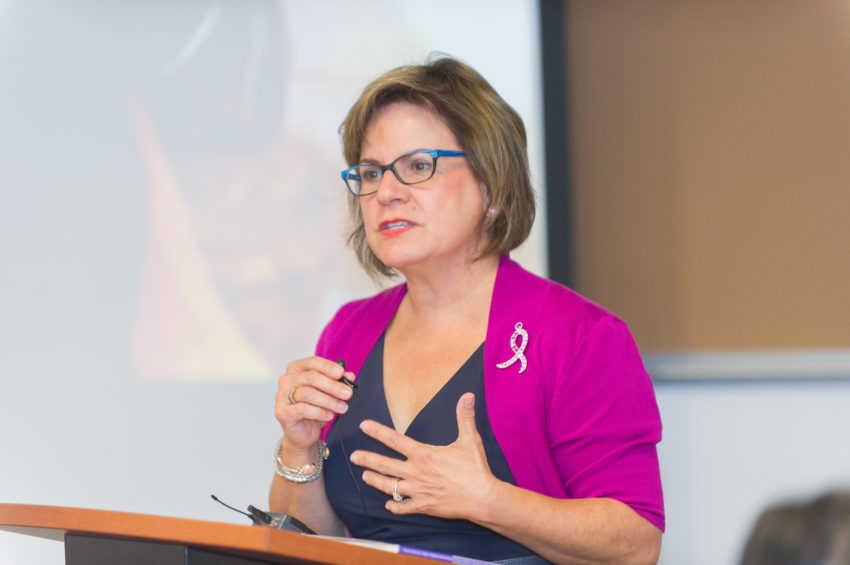
COVID-19 can affect anyone. But the coronavirus pandemic is impacting Latinos and other communities of color more severely. This is why Dr. Amelie G. Ramirez, director of Salud America! at UT Health San Antonio, is joining a webinar to discuss issues and solutions to COVID-19 health disparities. The webinar, "Why Are We Dying? Race, Ethnicity and Health Justice in the COVID-19 Pandemic," is set for 11 a.m. CST Monday, June 29, 2020. The event is sponsored by PanPals.com, a program at the Center for Medical Humanities and Ethics at UT Health San Antonio. Register for the webinar. The webinar features: Amelie Ramirez, DrPH, Professor and Chair, Department of Population Health Sciences and Director, Institute for Health Promotion Research, UT Health San Antonio. Dr. Ramirez ...
Dr. Amelie G. Ramirez, director of Salud America! and the Institute for Health Promotion Research at UT Health San Antonio, has been named one of the "The Cancer Health 25: Change Makers" by Cancer Health magazine. The magazine recognizes individuals who "make a difference every day." "They have each experienced cancer, either personally or through someone they love," according to the magazine. "And it has changed them, made them want to give back and given them a mission to make a difference for others living with cancer." Read about Ramirez and the other 25 change makers here.
Dr. Ramirez & Her Health Promotion Research
Ramirez is an internationally recognized health researcher at UT Health San Antonio. Here, she is professor and chair of the Department of Population ...
As shelter-in-place orders swept the U.S. during the coronavirus pandemic, healthcare providers’ implementation of telehealth expanded rapidly. In telehealth sessions, those seeking routine check-ups, mental health care, or other services can meet with their provider virtually using computers or other smart devices. This novel way of treating patients aims to look for ways to deliver care to patients in their homes to limit the transmission of the novel coronavirus. "The current public health emergency and the resulting accelerated growth potential in telehealth services is an opportunity for providers to enhance their care practices and for insurers and policymakers to recognize the value of telemedicine," a recent report from UCLA's Center for the Study of Latino health and ...