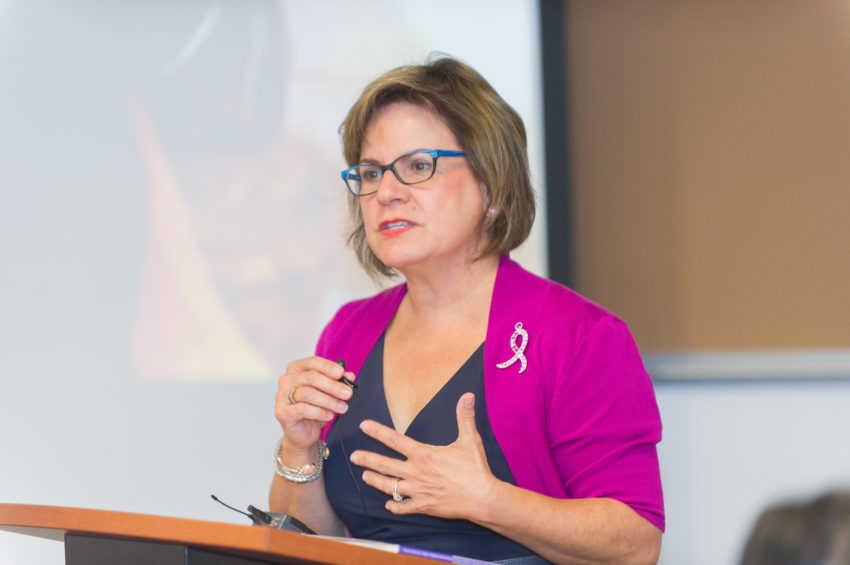
Dr. Amelie G. Ramirez, director of Salud America! and the Institute for Health Promotion Research at UT Health San Antonio, has been named one of the "The Cancer Health 25: Change Makers" by Cancer Health magazine. The magazine recognizes individuals who "make a difference every day." "They have each experienced cancer, either personally or through someone they love," according to the magazine. "And it has changed them, made them want to give back and given them a mission to make a difference for others living with cancer." Read about Ramirez and the other 25 change makers here.
Dr. Ramirez & Her Health Promotion Research
Ramirez is an internationally recognized health researcher at UT Health San Antonio. Here, she is professor and chair of the Department of Population ...
As shelter-in-place orders swept the U.S. during the coronavirus pandemic, healthcare providers’ implementation of telehealth expanded rapidly. In telehealth sessions, those seeking routine check-ups, mental health care, or other services can meet with their provider virtually using computers or other smart devices. This novel way of treating patients aims to look for ways to deliver care to patients in their homes to limit the transmission of the novel coronavirus. "The current public health emergency and the resulting accelerated growth potential in telehealth services is an opportunity for providers to enhance their care practices and for insurers and policymakers to recognize the value of telemedicine," a recent report from UCLA's Center for the Study of Latino health and ...
To minimize exposure to and transmission of COVID-19, providers have rapidly transitioned to telehealth to care for patients at a distance. However, there is an absence of best practices and necessary infrastructure to expand telehealth services, particularly in underserved and Latino communities. Latinos are particularly vulnerable to this disruption in care for many reasons, such as: they have highest uninsured rates of any racial or ethnic group in the U.S.;
they are less likely to have a usual source of health care;
they face barriers related to differences in culture, language and beliefs;
they are less likely to have broadband subscription than whites; and
they face higher rates of COVID-19 due to their jobs in the service industry. Join #SaludTues on June ...
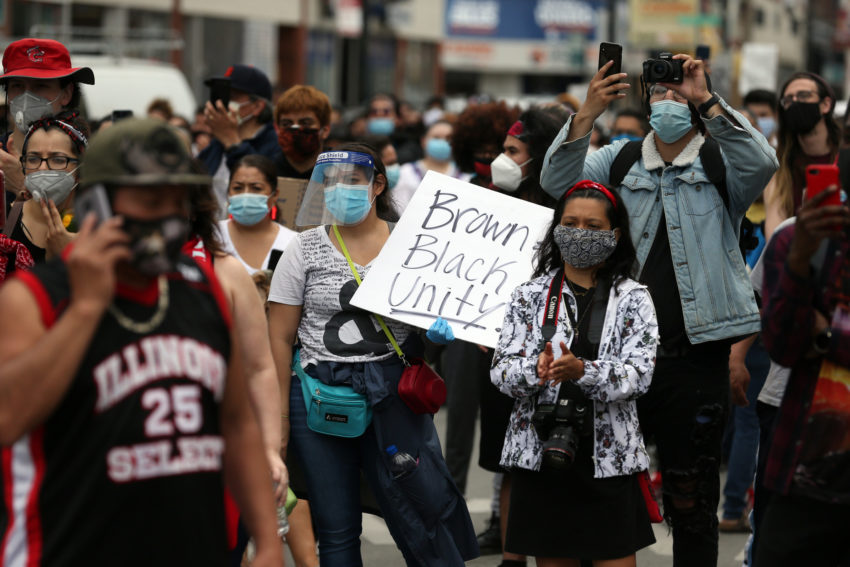
Latinos and Blacks together comprise 55% of coronavirus cases, nearly double their U.S. population makeup, according to new CDC data. Overall, Latinos were 33% of COVID-19 cases and Blacks were 22% in an analysis of 1.3 million lab-confirmed coronavirus cases reported to CDC during January 22-May 30, 2020. These are much higher rates than Latinos and Black representation in the U.S. population (18% and 13%). The new CDC data reinforce the disparate impact of COVID-19 on Latinos amid worsening historical inequities. "As protests against systemic racism in policing take place nationwide following the death of 46-year-old George Floyd while in Minneapolis police custody, the pandemic continues to show similar discrepancies in healthcare and economics," Forbes reports on the CDC ...
Racism is a public health crisis. Decades of racism-infused social, economic, and political systems have led to inequitable communities. These areas face higher burdens of stress, disease, and premature death. Now, amid U.S. protests for racial/ethnic and social justice, city leaders are creating resolutions that declare racism a public health crisis and commit to action. Download the free Salud America! “Get Your City to Declare Racism a Public Health Crisis Action Pack.” The Action Pack will help you get input from local social justice groups and advocates of color, start a conversation with city leaders, and build local support for a resolution to declare racism a public health issue along with a commitment to take action to change policies and practices. GET THE ...
Unlike a pandemic or emergency, there is no epidemiological definition for public health crisis. Experts at the Boston University School of Public Health tried to solve this. They explored the distinction between immediate and important and how politics, perceived risk, and affected groups shape the concept of a crisis. For example, they juxtaposed the number of deaths caused by terrorism and by gun violence with action taken by the U.S. government. Between 2001 and 2013, 3,380 Americans were killed by terrorism and 406,496 Americans were killed by firearms on U.S. soil; yet the U.S. spent trillions on the War on Terror and failed to pass gun control legislation. They conclude that people often confuse the immediate and the important, and that the important often fails to receive ...
Dr. Amelie G. Ramirez, leader of Salud America! and the Institute for Health Promotion Research at UT Health San Antonio, won a "silver award" for promoting health from the Spring 2020 Digital Health Awards! Digital Health Awards are given each spring and fall to recognize the world’s best digital health resources. The awards are given by the Health Information Resource Center. The Center is a national clearinghouse for professionals who work in consumer health fields. Here are the Salud America! award recipients: Silver, Spring 2020 Digital Health Awards, Web-Based Digital Health—Digital Content Curation, Salud America! Health Website, featuring the work of Dr. Ramirez and digital content curators Josh McCormack, Amanda Merck, and Pramod Sukumaran. Dr. Ramirez ...
Systemic racism makes it harder for Latinos and other people of color to get healthcare, housing, transportation, education, employment, healthy food, safe treatment by police, and more. We need solutions to end racial/ethnic injustice. Let’s use #SaludTues on Tuesday, June 16, 2020, to discuss how to address racial/ethnic injustice and discuss clear, measurable strategies and actions to combat racial/ethnic disparities in housing, public health, education, and more! WHAT: #SaludTues Tweetchat: Addressing Racial/Ethnic Injustice
TIME/DATE: 1-2 p.m. ET (Noon-1 p.m. CT), Tuesday, June 16, 2020
WHERE: On Twitter with hashtag #SaludTues
HOST: @SaludAmerica
CO-HOSTS: UnidosUS (@WeAreUnidosUS), America’s Promise Alliance (@AmericasPromise), CommonHealth Action ...
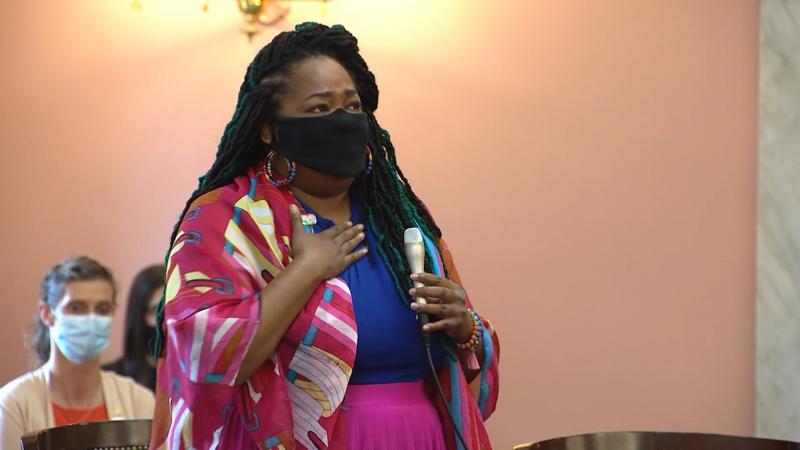
Systemic racism makes it harder for Latinos and other people of color to get healthcare, housing, transportation, education, employment, healthy food, safe treatment by police, and more. How can cities and states take a meaningful step to address racism? Declare racism a public health crisis. That’s what cities and counties in Ohio are doing, with a commitment to: Incorporate educational efforts to dismantle racism.
Review all portions of codified ordinances with a racial/ethnic equity lens.
Prioritize policies that will have the most beneficial health impact on people of color.
Train elected officials, staff, funders and grantees on workplace biases and how to mitigate them. “Through race-conscious policy-making, we’ve got to unwind the generations of ...