About the Author

Author Picture

Amanda Merck

Merck completed her MPH with a concentration in Physical Activity and Health. She curates content for Salud America! (@SaludAmerica), a Latino childhood obesity prevention project based at the Institute for Health Promotion Research at UT Health San Antonio. She focuses on the latest research, resources, and stories related to policy, systems, and environmental changes to enhance equitable access to safe places for kids and families to walk, bike, and play.


Connect with Amanda:
Twitter Link

Articles by Amanda Merck

Happy National Public Health Week


child and adult health

Today is the kick-off of National Public Health Week (April 4-10) and this year's theme is “Healthiest Nation 2030,” with the goal of making the U.S. the healthiest nation in one generation! How can you participate? • Organize a health walk around your office with your co-workers and post it on social media using #NPHW #SaludNPHW. • Promote healthy habits by posting recipes and/or workout routines. You can also join any of the events organized by the American Public Health Association, see their full calendar here. Happy NPHW and together let’s make the U.S. the healthiest nation, free of cancer and ...

Read More

Latinos’ Sources for Healthcare Information


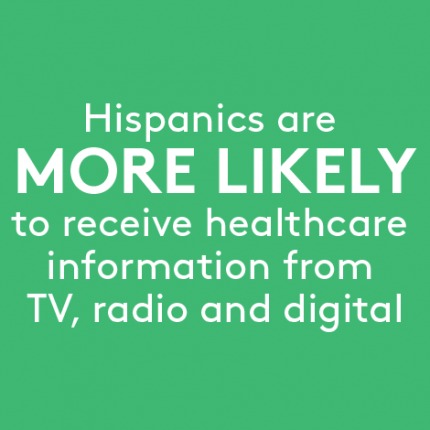
In 2015, Univision and Latinum looked into how Latinos access healthcare information and found that Latinos are listening to, trusting, and reacting to healthcare messages from many sources, and they tend to worry more about the health and wellness of their families than non-Latinos. (78% vs. 59%). Latinos trust the following healthcare information sources significantly more than non-Latinos: Doctors (66% vs. 58%) Clinics (54% vs. 31%) Hospitals (56% vs. 37%) Unfortunately, Latinos face more barriers to access these sources than non-Latinos. However, they are 23% more likely than non-Latinos to say that online, TV or radio healthcare messages “led me to see a doctor or medical professional about a specific drug.” In order to improve Latino health, it is important to ...

Read More

Cultural Insights: Communicating With Hispanics/Latinos


In 2012, the Centers for Disease Control and Prevention (CDC), published Cultural Insights: Communicating with Hispanics/Latinos to help you to communicate more effectively with specific cultures in order to influence their behavior. For example, Latinos have lower mortality rates than the overall population, but are at greater risk for chronic diseases, thus getting diseases is often a bigger concern than dying. The publication addresses: Targeting Health Communication Knowing your Audience Media Habits (i.e. magazines, newspapers, radio, television, and internet) Priority Health Concerns Health-Care Seeking Behaviors Traditional Health Beliefs and Practices Cultural Elements (i.e. material culture, social institutions, belief systems, aesthetics, and ...

Read More

Study: Childhood Obesity Can Be Predicted as Early as 6 Months of Age


Childhood obesity—a condition that affects more than 39% of Latino children, can be predicted as early as 6 months of age using simple body mass index (BMI), a new study reveals. “BMI at 6, 12 or 18 months of age above the 85th percentile on the growth chart can accurately predict children at risk for early childhood obesity," says Allison Smego, MD, a fellow in the division of Endocrinology at Cincinnati Children's Hospital Center and the study's lead author. "These children have a high lifetime risk for persistent obesity and metabolic disease and should be monitored closely at a very young age." For the study researchers studied lean and obese children under the age of 6 and found that the “BMI in children who become severely obese by age 6 began to differ from children who ...

Read More

Watching Videos of Kids Eating Vegetables Increases Preschoolers’ Real-life Vegetable Consumption


According to research conducted by Louisiana State University's Pennington Biomedical Research Center and presented April 1st, 2016, at the Society of Behavioral Medicine's Annual Meeting and Scientific Sessions, when preschoolers watch videos of other children eating vegetables, they're more likely to eat vegetables themselves. “As we work to explore easy-to-use tools to help influence children’s attitudes toward healthy eating and to make it more fun and exciting, this study lays the foundation for interventions that we may be able to translate into home or school settings in the future,” said Amanda Staiano, PhD, lead author on the study and assistant professor of research in Pennington Biomedical’s Pediatric Obesity and Health Behavior Laboratory. Read the Society of ...

Read More

International Study Links Physical Activity and Walkable Features in Urban Neighborhoods


Large differences in adults' physical activity levels may be attributed the features in the urban environment, like street intersections, public transit stops, number of parks, and residential density, according an international study done by researchers at UC San Diego published in the Lancet in April 2016. The purpose of the study was to explore how features in urban neighborhoods are related to physical activity levels.  The authors of this study conclude that changing the built environment is a promising solution to improve physical activity levels, thus health. This will require cross-sector collaboration with non-traditional health partners, like urban planning, transportation, and parks.   Access the full study here.  Copy and Share: Changing city design is ...

Read More

#SaludTues Tweetchat 1p ET 4/5/16: Latina Leaders in Public Health


 It is national public health week!#NPHWchat! #SaludTues! We are excited about Latina Leaders who are driving public health efforts! Latinas are more likely to deal with certain health disparities, and we need your help! Let’s use #SaludTues to tweet about, encourage and say thank you to the #LatinaLeaders in Health & Public Health! We also plan to give tips to anyone interested in being a health leader! Follow #SaludTues to join the conversation. WHAT: #SaludTues Tweetchat: “Latina Leaders in Public Health” DATE: Tuesday, April 5th 2016 TIME: 1-2 p.m. ET (Noon-1 p.m. CT) WHERE: On Twitter with hashtag #SaludTues HOST: @SaludToday CO-HOSTS: Hispanic Heritage Foundation( @HHFoundation), National Hispanic Media Association(@NHMAmd), Latina Researchers ...

Read More

20% of the World Will Be Obese by 2025, Study Suggests


Salud America

Data from a new study suggests that 1 in 5 people (18% of men and 21% of women) will be obese by the year 2025, CNN reports. The study, published in the Lancet, compared body mass index trends from over 200 countries between 1975 and 2015, and concluded that “[in] four decades, global obesity has more than tripled among men and doubled among women.” Other key findings of the study were: More men were obese than underweight in 136 countries and more women were obese than underweight in 165 of them. In 1975, 2.6% of the world's population was obese; in 2014, that number jumped to 8.9%. By 2025, the study estimates that 43% of women and 45% of men in the U.S. will be obese. “We have transitioned from a world in which underweight prevalence was more than double that of ...

Read More

Traffic Safety is a Public Health Issue


Traffic Safety

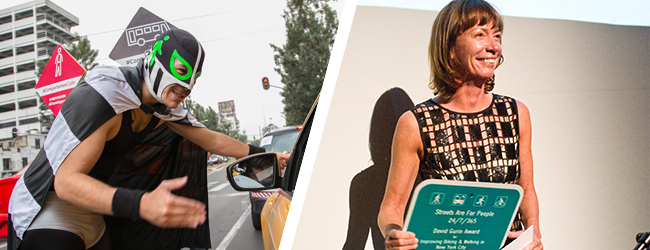
In March 2016, Transportation Alternatives and Families for Safe Streets held the second annual Vision Zero Cities Conference, in New York City, NY (28.6% Latino) for traffic safety experts, advocates, bereaved families, elected officials and the public to exchange ideas and discuss how to implement and enforce best practices to prevent road deaths and serious injuries. Former New York City Transportation Commissioner, Janette Sadik-Kahn believes that when you change the streets, you change the world. Not only are road deaths and serious injuries a public health issue, but unsafe streets are a major hurdle for people trying to be physically active, stay healthy, or to get to work. Thus, traffic safety is a public health issue. When people don't feel safe to walk or bike near ...

Read More