About the Author

Author Picture

Catherine Stewart

Catherine Stewart is a digital content curator for Salud America! and its home base, the Institute for Health Promotion Research at UT Health San Antonio. She is a graduate of the Philip Merrill College of Journalism at the University of Maryland College Park, and hopes to utilize her skills to help people find their voices and inspire change in their communities.

Articles by Catherine Stewart

Salud Talks Podcast Episode 47: Saving Seats at the Table with the Cancer Patient Advocate Training Program


Salud Talks Podcast Episode 47: Saving Seats at the Table with the Cancer Patient Advocate Training Program

Cancer is a rising health threat for all people.  Latinos have a heavy cancer burden due to non-medical drivers, such as a lack of reliable transportation, housing, and food, to challenges with getting screening and care.  Also, too few Latinos are able to push for fair cancer research.   That’s where the Latino Cancer Patient Advocate Training Program comes into play.  Since 2024, the program has turned cancer survivors into patient leaders who are sitting on committees, helping with drug development, and creating materials to help Latinos.  The Salud Talks podcast caught up with some of the former trainees who are putting what they learned into practice.  Podcast host Dr. Amelie G. Ramirez, leader of Salud America! and director of the Institute for Health ...

Read More

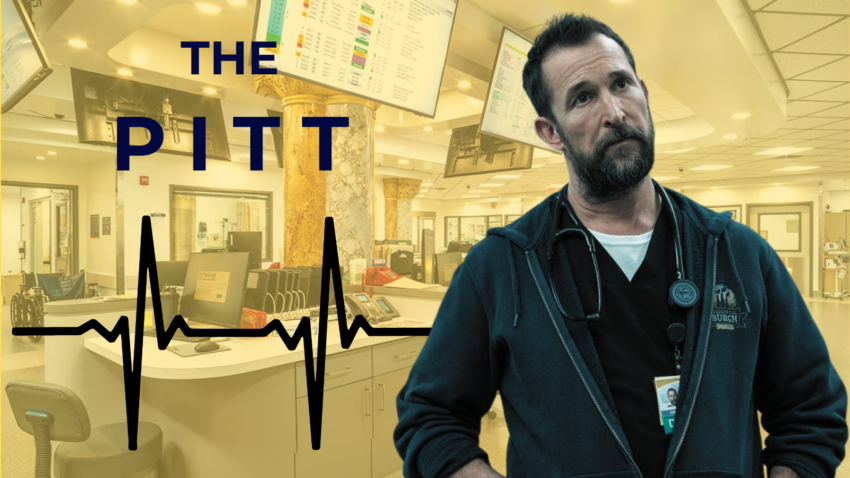
‘The Pitt’ Demonstrates How to Address the Latino Health Care Crisis


HBOs The Pitt

From acute bronchitis to car accidents to overdoses, you never know what is going to come through the doors of an emergency room.   However, the ER isn’t only for severe situations – some use it for primary care.  This is because the ER has an obligation to treat patients despite someone’s insurance or lack of insurance. That’s why it tends to expose cracks in the health care system.  The flaws of health care are mirrored in the HBO TV series The Pitt.   The fictional series, set inside a Pittsburg teaching hospital, primarily caters to low-income individuals, celebrates differences, brings awareness to relevant issues, and provides commentary on the US healthcare crisis.   Here are some of the ways The Pitt shows how to address the Latino health care crisis. ...

Read More

Program Turns Latino Cancer Survivors into Cancer Patient Leaders


In 2024, 15 Latina cancer survivors from across the US and beyond met for the first-ever Latino Cancer Patient Advocate Training Program to become cancer patient leaders. Since then, the survivors-turned-patient leaders, like Marielle Santos McLeod and Andrea Suarez Vargas have been sharing their stories to help cancer patients, elevate their voices among decision-makers, and create new research opportunities for Latinos and all people. However, there is still more work to do. On the heels of the first training, program creators Dr. Barbara Segarra-Vázquez of the University of Puerto Rico and Sandi Stanford of the Alamo Breast Cancer Foundation turned around to do it again. This time the pair welcomed 16 new Latino cancer survivors to participate in the second cohort of Latino Cancer ...

Read More

7 Ways to Celebrate National Minority Cancer Awareness Month


National Minority Cancer Awareness Month

Cancer persists in the US, especially in overlooked communities.   Many of these groups suffer disproportionate cancer rates and worse outcomes, due to long-standing issues that formed differences in education, economic status, access to screening and care, and more.  That’s why April is dedicated to bringing awareness and solutions to the challenges these communities face in areas such as cancer prevention, diagnosis, and treatment.   Here are seven ways to celebrate National Minority Cancer Awareness Month.   1. Learn About Differences in Cancer Outcomes Did you know that where you live can dictate your health and what kind of health care you receive?  Where you live can increase your risk of adverse health effects, such as hypertension and diabetes, that make you ...

Read More

10 Cambios Positivos Para Reducir El Riesgo Del Deterioro Cognitivo


Healthcare, senior woman and caregiver in nursing home, talking and care for elderly patient with Alzheimer. Happy, recovery and old person in bedroom for rehabilitation, smile and bonding with nurse

Según investigadores de la Universidad Columbia en la Ciudad de Nueva York, uno de cada 10 adultos mayores de los 65 años de edad en los Estados Unidos padecerá demencia, y otro 22% presentará algún tipo de deterioro cognitivo leve.  La buena noticia es que usted puede reducir su riesgo de desarrollar la enfermedad de Alzheimer y la demencia.  De acuerdo con la Alzheimer’s Association, aquí le presentamos 10 cambios positivos que pueden realizarse para disminuir el riesgo de deterioro cognitivo y mejorar la salud en general.  1. Protéjase de las lesiones cerebrales Las lesiones cerebrales traumáticas se han vinculado con un mayor riesgo de desarrollo de la demencia. Según un estudio que examinó la relación entre las lesiones y el deterioro cognitivo, un golpe ...

Read More

Poll: Weighing the Financial Burden of Health Care


Patient receiving medical bills, She is desperate about high bills, Doctor showing her patient the cost for the treatment.

In the fictional hospital TV show The Pitt, a Latino family man is rushed to the hospital after passing out at his job.   The cause of his fall?  The man, who has diabetes, had only been taking half of his prescribed insulin dose following a loss in insurance coverage. Despite the threat to his health, he opts out of treatment due to its high cost, his family’s medical debt, and loss of work pay.  He then leaves the hospital without being discharged only to return later the same day — this time on the brink of death.   While this man’s story may be fictional, it represents a reality far too many Latinos and other people encounter — the choice between affording medical care and death.   A recent KFF poll found that half of US adults can’t afford the rising ...

Read More

3 Important Clinical Trials for Alzheimer’s Patients, Caregivers, and Families!


Senior old elderly handicapped disabled patient woman suffering from dementia, headache, migraine complaining about symptoms on doctor`s nurse visit at home hospice.

With so many unknowns when it comes to Alzheimer’s Disease, researchers continue to investigate potential causes, risk factors, and treatments.   Clinical trials are a major tool to help researchers make progress.   These are studies with volunteers that enable advances that can slow, manage, and treat diseases such as cancer and Alzheimer’s for current and future family members.  However, these trials only benefit everyone if they have a pool of participants that look like the rest of the population.   For many reasons, including myths, lack of access to transportation, and time commitments, too few under-researched populations join clinical trials.  But closing the gap on clinical trial participation doesn’t have to be a burden.   Here are 3 clinical ...

Read More

Texas Fails to Make the Grade on Child Health Insurance Coverage


shot of a mature doctor doing a checkup on a little boy at home

As a state that has yet to expand Medicaid, Texas continues to fall behind other states when it comes to healthcare access, including maternal healthcare.  Much of this has to do with the lack of access to affordable health coverage.  According to a new report from UnidosUS, Texas is the country’s worst state when it comes to providing healthcare coverage for children.   The report found that over 1 million children in Texas lacked health coverage in 2024 – a metric that accounts for 14% of the childhood population of the state.   This is compared to the 6% of US children that were uninsured.   What’s more, a staggering 66% of uninsured children in Texas were Latino.  “Being born in Texas more than doubles the likelihood that a child will grow up ...

Read More

10 Positive Changes that Can Minimize Your Risk for Cognitive Decline


Retirement, thinking and old woman in house, sad and depression in living room, mental health and sofa. Contemplating, unhappy and mature person with anxiety, sickness and thoughts of senior care

One in 10 US adults older than 65 will experience dementia, and another 22% will have some form of mild cognitive impairment, according to Columbia University researchers.  The good news is that you can reduce your risk of Alzheimer's Disease and dementia.   Here are 10 positive changes that you can make to lower your risk for cognitive decline and improve your overall health, according to the Alzheimer's Association.   1. Protect Yourself from Brain Injuries  Traumatic brain injuries have been linked to an increased risk for developing dementia.   According to a published study examining the relationship between injury and cognitive decline, traumatic brain injuries can increase dementia risk between 2-and 4-fold.   One of the best ways of preventing traumatic ...

Read More