Volunteering for Thanksgiving, Christmas, and New Year’s helps other people. It gives the volunteer a nice emotional boost, too. So why not volunteer your “digital voice” or “actions”? We at Salud America! invite you to take or start these 14 actions to promote health for Latino and all families this holiday season!
1. Help Prevent Birth Defects: Add a Warning Label on Unfortified Corn Masa Flour
Are the corn masa products you eat fortified with folic acid? Because too many babies in the Latino community suffer from birth defects like spina bifida, UnidosUS and its partners submitted a citizen petition asking the FDA to require a warning label on unfortified corn masa flour and products. The warning would alert consumers when corn masa flour, tortilla chips, ...
Dr. Francisco G. Cigarroa, UT Health San Antonio’s Malú and Carlos Alvarez Center for Transplantation, Hepatobiliary Surgery and Innovation Director, still remembers the greatest gift he’s ever received. It didn’t come in the form of an award, a plaque, certificate, or even a baked good. It came from a 6-year-old patient. Cigarroa was astonished when the girl he had operated on a few months prior opened her mouth to sing a song meant especially for him. He cried. “To this day it’s still the most beautiful gift I’ve ever gotten, and she had the voice of an angel,” Cigarroa recalled. “Sometimes the greatest gifts come in the most unexpected ways.” Cigarroa has held many titles over the course of his illustrious career, including being ...
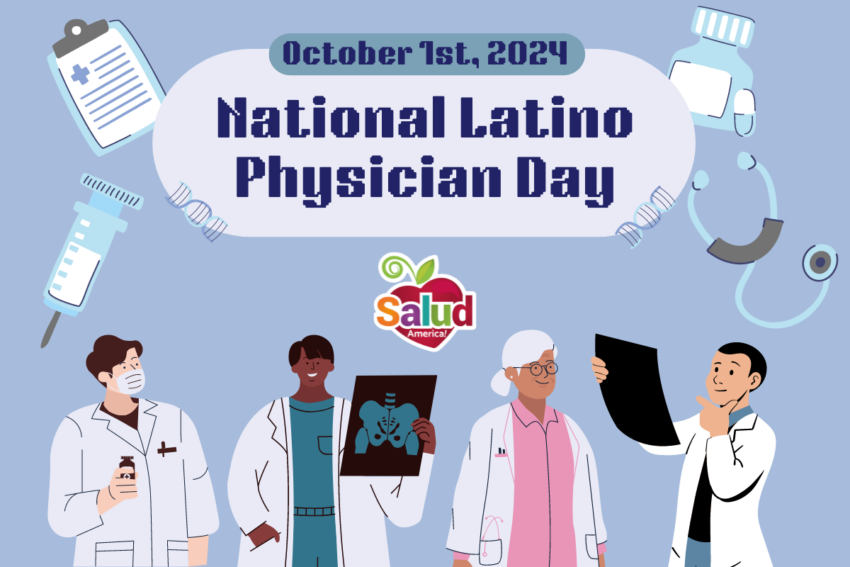
Latinos currently make up 19.5% of the US population. Yet only 7% of physicians are Latino, according to the Association of American Medical Colleges (AAMC). What’s more, only 2% of the 7% are Latina, according to the publication Latina Women in the U.S. Physician Workforce. Having Latinos in medicine is vital to achieve better health outcomes for all patients, including Latinos. This glaring difference can increase instances of mistreatment or negative perceptions, delay preventative care, influence what kind of treatment someone receives, and cause a stronger mistrust of the healthcare system – all of which can disastrously impact Latino health. During Hispanic Heritage Month we are honoring Latino physicians on National Latino Physician Day, Oct. 1, to ...
As temperatures increase to scorching new benchmarks every year, weather experts advise people to avoid prolonged exposure to extreme heat, which can have disastrous health consequences, from heat stroke to death. But not everyone can escape the heat’s harmful effects. Heat can create hazardous working conditions for workers in labor-heavy outdoor industries, such as construction, maritime, and agriculture, which employs many Latinos. To protect outdoor workers from extreme heat, the Department of Labor and the Occupational Safety and Health Administration (OSHA) are proposing a new rule to require employers to implement a heat emergency response and planning procedure, which includes providing water, shaded areas, and rest breaks. “Workers all over the country ...
Every month the Salud America! team at the Institute of Health Promotion Research (IHPR) at UT Health San Antonio showcases the latest health news, clinical trials, research study results, and stories impacting the Latino community. Salud America! is led by Dr. Amelie G. Ramirez. “Our mission is to inspire people to drive change for health improvement for Latino and all families,” said Ramirez, professor and director of the IHPR at UT Health San Antonio. In August, Salud America! helped celebrate an achievement in collaboration with Genentech, shared back to school resources, covered inequities in Latino healthcare and chronic diseases, and much more! Let’s take a deeper dive into some of the topics, news, and stories published in July that are ...
Cancer continues to be a leading cause of death in Latinos. Long-standing mistreatment of vulnerable populations have led to a higher exposure to risk factors for cancer, such as obesity, diabetes, and stress. These risk factors are compounded by the non-medical drivers of health (NMDoH) such as access to healthy foods, transportation, and health insurance that many Latinos face, making it difficult to seek healthcare, culminating in worse health outcomes. Another big factor is driving worse health for Latinos – a lack of preventative care. 64% of Latinos skipped recommended health screenings, such as colonoscopies, pap smears, mammograms, and more, according to a news release about the second annual Wellness Matters Survey published by Aflac. Let’s ...
An estimated 795,000 Americans suffer a stroke each year, amounting to one stroke every 40 seconds, according to the Stroke Awareness Foundation. Every 4 minutes, someone dies from a stroke, according to the American Stroke Association. Due to background differences that affect many Latinos, stroke is the fourth-leading cause of death in Latino men and the third for Latina women. Stroke is also a top cause of serious, long-term mental or physical challenge. The Stroke Awareness Foundation found that within 5 years of a first stroke, 25% of survivors will face another, complicating health for more than 7 million survivors. This makes access to care critical, especially for Latinos, who often lack health insurance. However, Latinos were less likely than ...
Latinos make up 19.5% of the US population, which equates to 65 million people. As of 2023, about 75% of Latinos living in the US speak Spanish, 17% speak English, and over half (54%) of the Latino population in the US fall somewhere on the bilingual spectrum. Despite Spanish being the second-most spoken language in the US, a new report by the Pew Research Center found that found that 54% Latino adults get their news in English. Let’s explore the news media habits of US Latinos further.
Latino News Consumption by Language
While 54% of US adult Latinos receive news in English, the rest consume news in mostly Spanish (21%) or in both languages (23%), according to the report. When it comes to preferability, 51% of Latino adults prefer news in English, 24% ...
Latinos continue to be one of the fastest growing populations in the US. Between 2022 and 2023, Latinos accounted for 71% of the population growth in the US, according to new data from the US Census Bureau. Latinos now make up 19.5% of the country’s population. The rise, occurring at an annual growth of 1.8% and attributed to a large number of births, makes Latinos the second largest group in the US. Let’s unpack some of the statistics and what they mean for the future of Latinos.
US Latino Population Growth
In 2023, the Latino population grew by 1.16 million for a total of 65 million. Latinos contributed significantly to the overall population growth in the US, which increased by 1.64 million. “The Hispanic population is expanding at a ...