For the last few years, the National Institutes of Health’s All of Us Research Program has mounted an unprecedented effort to collect health data from 1 million people of all ages and ethnicities across the country for use in impactful scientific research.
In fact, the data has led researchers to a shocking discovery — 275 million previously unknown genetic variants, according to a recent news release.
Nearly 4 million of the variants are in areas that may be connected to risk for disease.
The variants, uncovered using data shared by nearly 250,000 All of Us participants, put researchers in a position to better understand genetic influences on health and disease, especially in communities often left out of research.
NIH reported that half the genomic data came from Latino, ...
The Healthy Americas Foundation (HAF) is giving a few scholars funding to research chronic diseases in Latino communities with help from the All of Us Research Program.
The new funding builds on HAF’s effort to improve Latino health by supporting researchers.
In 2022-2023, Healthy Americas Research Consortium awarded $10,000 each to 10 scholars to help understand cervical cancer screening issues, experiences with accessing screening, and ways to increase Pap and HPV screening in Latino and other underserved communities.
Projects utilized data from the National Institutes of Health’s (NIH) All of Us Research Hub.
NIH’s All of Us Research Program is a national campaign to collect and study data from 1 million or more Americans to help inform studies and accelerate research that ...
This year, over 2 million American will get a cancer diagnosis, including many Latinos.
As one of the leading causes of death in Latinos in the U.S., one in five men and one in seven women who are Latino will die from the disease.
Cancer also takes a heavy financial toll on patients, whose survival is dependent upon a variety of factors, including access to quality, often costly, healthcare treatments.
Let’s explore the cost burden of cancer, and what to do about it. The Cost Burden of Cancer
In 2018, patients and their families paid $5.6 billion out of pocket for cancer treatments, such as surgery, radiation, and chemotherapy drugs, according to the American Cancer Society (ACS). Americans spent a total of $183 billion on cancer-related healthcare in 2015 - an amount ...
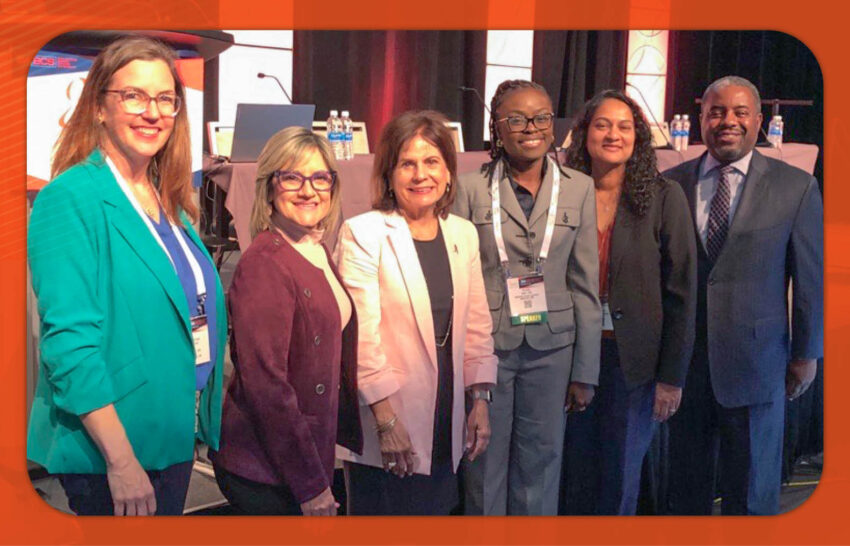
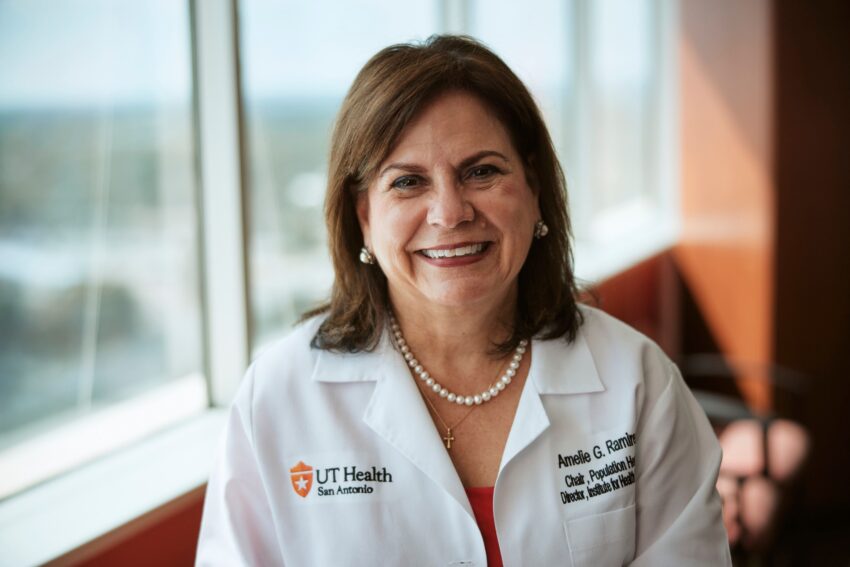
Where you live can have a big impact on your health. In fact, our health is influenced by a variety of non-medical drivers, such as the conditions in which we are born, grow, live, work, and age. These conditions are known as the non-medical drivers of health (NMDoH). Addressing NMDoH is key to improving health for Latinos and all people, said Dr. Amelie Ramirez, leader of Salud America! and the Institute for Health Promotion Research at UT Health San Antonio, in a panel presentation on Dec. 5, 2023, at the San Antonio Breast Cancer Symposium. "What we’re finding is that [issues with NMDoH can] negatively impact our health," Ramirez said.
Screening for Non-Medical Drivers of Health (NMDoH)
Studies suggest that NMDoH accounts for between 30-55% of health outcomes. NMDoH ...
Individual health is influenced by a variety of non-medical factors, like where people are born, live, learn, work, play, worship, and age. These conditions are known as Non-Medical Drivers of Health (NMDoH). To help improve health and wellbeing through NMDoH, the White House and U.S. Department of Health and Human Services (HHS) have released new resources, including the first-ever U.S. Playbook to Address Non-Medical Drivers of Health. “It is clear that the health of our people does not exist in a vacuum, but it is affected by our access to stable housing, healthy food, and clean air to breathe,” said HHS Secretary Xavier Becerra. “It is crucial for HHS to tackle health care and public health holistically by addressing patients’ social ...
Latinos make up more than 19% of the total US population, but account for only 6% of US physicians. In fact, less than one in four Latino adults report sharing a language or background with their physician. This lack of Latinos in medicine negatively affects Latino patient health. For example, studies show that a lack of variety in healthcare workers contributes to health differences, such as higher rates of maternal health issues in Latinas and worse health outcomes for Latino cancer patients. Additionally, a lack of Latinos in healthcare adds additional challenges for Latino patients to obtain background-significant and linguistically concordant care. In response to this critical shortage of Latino physicians, Drs. Michael Galvez and Cesar Padilla are leading a ...
Dr. Amelie Ramirez, leader of Salud America! at UT Health San Antonio, has won the 2023 Association of American Cancer Institutes (AACI) Cancer Health Award. The award recognizes exceptional leadership in promoting health improvement and promoting health and fairness for people of all backgrounds at a cancer center. Past winners are Dr. Robert A. Winn of the VCU Massey Cancer Center and Dr. Electra D. Paskett of Ohio State University. Ramirez, nominated by the award by former Mays Cancer Center Director Dr. Ruben Mesa, will be recognized at AACI's annual meeting Oct. 2, 2023. "I am honored to receive the AACI Cancer Health Award. It recognizes the hard work we do at the Mays Cancer Center at UT Health San Antonio to promote health, study new approaches to reduce health issues, ...
Latinos and all people face many challenges to good health. Access to healthcare is often out of reach. Unfair treatment is a reality for many, along with financial toxicity, limited health food, and unstable housing, transportation, and childcare. But we have an opportunity to create healthy changes. Let’s use #SaludTues on Tuesday, Sept. 5, 2023, to share how everyone – from healthcare to schools to local decision-makers – can get involved in building healthier communities for Latinos and all people as we near Hispanic Heritage Month (Sept. 15 to Oct. 15)! WHAT: #SaludTues Tweetchat: Building a Healthier Future for Latinos
TIME/DATE: 1-2 p.m. ET (Noon-1 p.m. CT), Tuesday, Sept. 5, 2023
WHERE: On Twitter with hashtag #SaludTues
HOST: @SaludAmerica
...
Latinos face inequities in non-medical drivers of health (NMDoH), from housing to healthcare, making it harder to achieve health fairness. Watch the UT Health San Antonio webinar — “How to Address Non-Medical Drivers of Health in Our Clinics and Systems” — which was held at 11 a.m. CST on Wednesday, Sept. 20, 2023, to explore how healthcare settings can care for patients' medical and NMDoH needs. Panelists from UT Health San Antonio, Nemours Children's Health, HOPE Clinic in Houston, the American Cancer Society, and Genentech unpacked NMDoH screening, a strategy that clinics, hospitals, and healthcare systems can use to check patients for social needs and connect them to needed resources. This is a part of a webinar of a series, “Let’s Improve Health in South Texas ...