Without paid sick leave, too many Latinos are forced to choose between financial security and health. After all, just a few days of lost pay due to illness is the same as losing an entire month’s worth of groceries for some families, which fare worse during a pandemic like COVID-19. “For a typical Latino family without paid sick days, losing an average of 3.3 days due to sickness is equivalent to a family’s entire monthly health care budget or its monthly grocery budget,” according to a joint fact sheet from UnidosUS and National Partnership for Women & Families. This situation won’t just fix itself after the pandemic, either. “Lives are at stake when policies are not put in place from the top down to prevent the spread of disease or create healthy living ...
Half of workers with the lowest wages and more than half of Latinos are unable to earn a single paid sick day through their jobs. Without paid sick leave, these workers are forced to choose between the financial consequences of staying home without pay and the health risks of both ignoring health problems and exposing others to contagious disease. Afterall, just a few days of lost pay due to illness is the same as losing an entire month’s grocery budget for some families. Workers everywhere should be able to earn paid sick leave, particularly as our country focuses on economic recovery after COVID-19. Join #SaludTues on May 19, 2020, at 1:00 PM EST to tweet about why it is so important to for all workers to be able to earn paid sick leave. WHAT: #SaludTuesTweetchat: ...
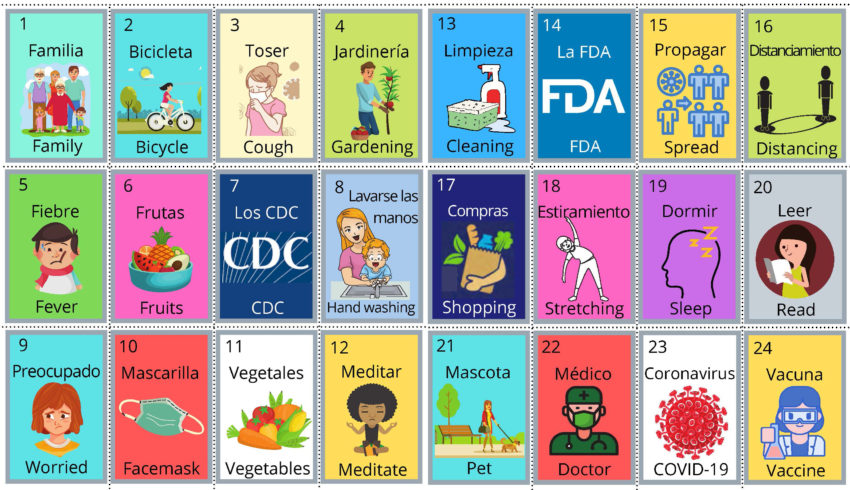
Use La Loteria to talk about health with your family amid COVID-19! La Loteria, a traditional game in Latino families, is a version of Bingo using pictures on cards instead of numbers. The National Alliance for Hispanic Health has created COVID-19 Bingo (La Loteria). The family game has pictures of social distancing, hand-washing, video calls, physical activity, healthy food, faith, hope, and more. "My daughter and I were playing La Loteria and we thought it might be a great way to help other kids understand COVID-19," said Edgar Gil Rico of the National Alliance for Hispanic Health. "So it became a family project resulting in a new version of Bingo (La Loteria) with tips for parents to use the game to discuss COVID-19 and what families can do to stay well and healthy." La ...
Millions of unauthorized, taxpaying immigrants will not receive any financial support from the U.S. government through its recent stimulus package. The Coronavirus Aid, Relief, and Economic Security (CARES) Act provided most Americans with $1,200—as well as an additional $500 for each child under 17—to provide some economic security in the wake of the pandemic. Still, undocumented residents who pay taxes using a taxpayer identification number did not receive any help. Worse, children in that household, whether they are American citizens or not, won't receive aide either — and these families are suing the government over this issue. "The refusal to distribute this benefit to U.S. citizen children undermines the CARES Act's goals of providing assistance to Americans in need, ...
Life as a Latino immigrant is stressful. Migration is difficult. Changing immigration rules make it hard to get health-promoting assets. Fear of deportation and family separation add anxiety. Now the COVID-19 pandemic is worsening social and environmental inequities. Who is looking out for the mental health of Latino immigrants? Informed Immigrant, Immigrants Rising, and FWD.us have a 10-step guide to help mental health care providers respond to the distress of immigrants whose status is in flux due to ongoing changes to the Deferred Action for Childhood Arrivals (DACA) program, amid coronavirus. "In addition to managing the stress and uncertainty surrounding the Coronavirus (COVID-19) pandemic, there are around 700,000 immigrant youth who may also be worried and distressed ...
How is your neighbor doing during the coronavirus pandemic? In the Boston area, Anna Kaplan, Jessie Norriss, Sophia Grogan, Miriam Priven, Hannah Freedman, and other neighbors saw their neighbors lose jobs, with no money for bills or groceries. They saw college students and non-English speakers get no support. They each wanted to help their neighbors. So, together, they helped create Mutual Aid Medford and Somerville (MAMAS), an on-the-fly mix of multilingual online documents, Google maps, social media, and text-message threads where neighbors can offer to help, and/or ask for help with grocery deliveries, filing for unemployment, emotional support, and more. Since March 12, 2020, MAMAS has connected over 1,000 neighbors to each other and raised over $90,000 to meet ...
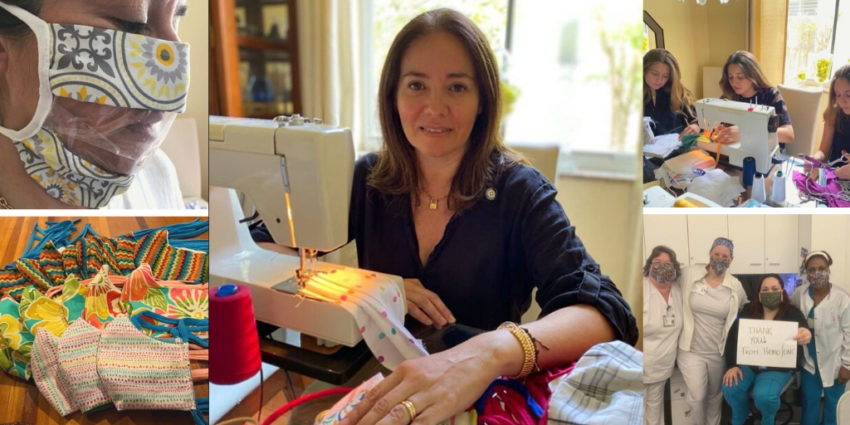
You might call Maria Pia Sanchez la reina de las mascarillas (the queen of face masks). Sanchez, a native of Chile who lives in Florida, worked with a few friends to sew masks to donate to front-line medical workers when the COVID-19 pandemic hit. But they didn’t just sew. Sanchez also created the Para Todos Mask Initiative Facebook page, which has generated a worldwide network of Chilean, Mexican, Guatemalan, Colombian, Venezuelan, and other Latino volunteers to create over 7,000 masks for those who need them most. Update 8/24/20: They've made over 14,000 masks! How did this small sewing group impact the world?!
Coronavirus Pandemic Spurs Sanchez into Action
COVID-19 swept across the United States quickly in March 2020. By April 2020, experts said Latinos and other ...
As the U.S. Government continues to push back against the economic downturn and the spread of COVID-19, disadvantaged groups—such as Latinos—aren't receiving an equitable share. The recently passed $484 billion stimulus package will give millions of Americans and U.S. businesses with economic relief, in combination with past relief legislation. However, the money isn't reaching workers who need it the most, like Latino immigrants. "The survey only confirms what we already know, that the Paycheck Protection Program money went to Wall Street billionaires and very little of it trickled to the mom-and-pop shops and small businesses of America," LULAC National President Domingo García told NBC. "Lupita's taqueria or Juana's quinceañera shop didn't get money while Ruth's Chris ...
Health equity is where everyone has a fair and just opportunity to live their healthiest life possible. But health inequity remains. Now the COVID-19 pandemic is worsening historical inequities, and disproportionately affecting and killing Latinos and other people of color. So what can we do? We need both immediate focus to ease the coronavirus pandemic and its impact on Latinos and people of color, as well as long-term strides to address underlying inequities that are aggravated during this time. It won't be easy, or fast. But here's few ways to push for health equity.
1. Understand the Need for Heath Equity During COVID-19 and After
Where you live matters for your health. Even before COVID-19, inequitable city planning, historic discriminatory practices like ...