Texas Latinos and other communities of color are among the hardest hit by medical debt, according to a new report. The report, from the Center for Public Policy Priorities, shows that 1 in 4 Texans (23%) has medical debt. In communities of color, that rises to nearly 1 in 3 Texans (29%). These rates are higher than in other states and the nation. "When people can’t pay their medical bills, costs turn into mounting medical debt," according to the report. "[This medical debt] compromises patients’ health and financial security, harms their credit scores, and can even limit a patient’s housing, job, and health opportunities."
Alarming Medical Debt among Texans of Color
The median medical debt in collections owed in Texas is $850. Texans of color owe slightly more at $875. ...
Inequities in pay follow women from job to job. Employers that request an applicant’s salary history─a long-time standard practice to set compensation for new-hires─perpetuate these gender pay inequities. “Relying on salary history allows a new employer to continue underpaying a woman who faced a pay gap and lost wages due to bias or discrimination at a previous job,” according to a 2018 report from the American Association of University Women (AAUW). One method to close the gender pay gap is to ban employers from relying on previous or current salary information when setting pay for new employees. Closing the gender pay gap is good for physical, mental and social health. However, less than half of states have such bans. Find out which places have banned salary ...
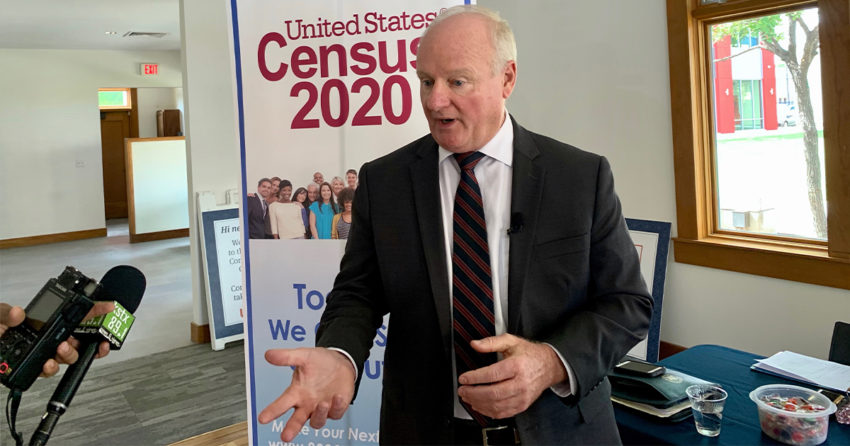
Abiding by the constitution’s directive to number the population once a decade, the U.S. Census Bureau is in full swing preparing for the 2020 survey. Area offices across the country are opening to begin recruiting census takers, establish community partnerships, and inform every person of why they should participate. Additionally, this is the first time the census will be available online for every person in America—regardless of citizenship status—to complete. This survey is too important to overlook, primarily because it influences funding and lawmaking, according to Lloyd Doggett, U.S. Representative for Texas’ 35th District, who spoke at the grand opening of the San Antonio (64% Latino) Census Area Offices on Thursday. “Based on the census count, the federal ...
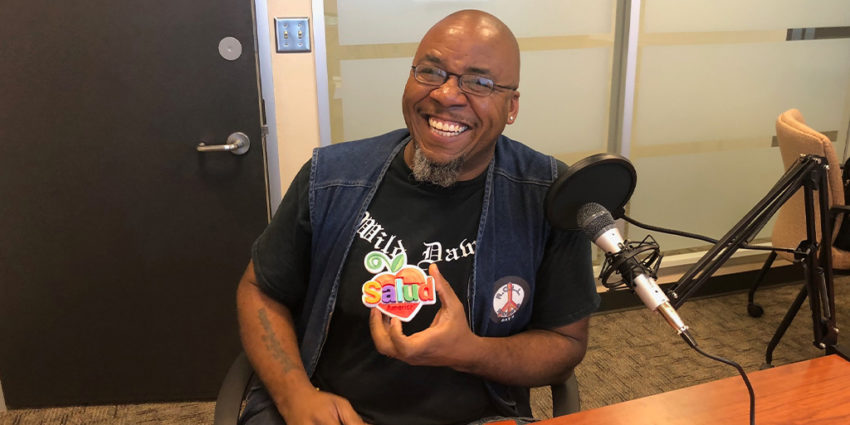
Kindness, empathy, and compassion are all things most can agree are good for the world. Yet, how are people practicing these virtues in everyday life? Dante Jones, the founder of San Antonio’s Roll Models SATX program, joins Salud Talks to discuss how we all can treat each other better. Check out this discussion on the #SaludTalks Podcast, Episode Six, "Equity in Kindness"! WHAT: A #SaludTalks discussion on how we treat each other
GUESTS: Dante Jones, the founder of San Antonio’s Roll Models SATX youth-mentorship program
WHERE: Available wherever fine podcasts are downloaded, including Apple Podcasts, Spotify, SoundCloud, Tune In, and others
WHEN: The episode went live at 6 a.m., Oct. 9, 2019 In this episode, we explored questions such as: Why is ...
Politics is a word that carries many connotations — positive and negative. Still, it is too important to overlook or ignore. It influences the lives of every citizen and can make huge differences in the lives of underserved groups, including Latinos. In this wee's episode of the Salud Talks podcast, we discuss voting, political participation, and other aspects of civic engagement. Check out this discussion on the #SaludTalks Podcast, Episode Five, "Don't Boo, Vote"! WHAT: A #SaludTalks discussion on civic engagement
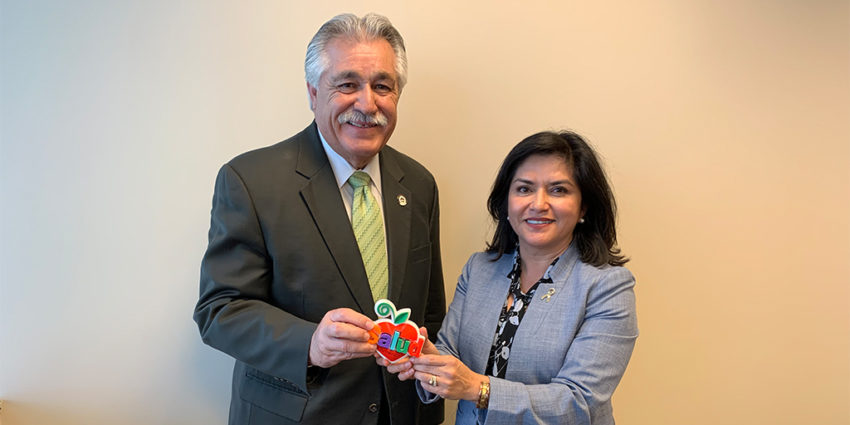
GUESTS: Texas State Repetitive Ray Lopez, who serves the 125th congressional district, and Lourdes Castro Ramírez, former San Antonio Housing Chief and current President of the University Health System Foundation
WHERE: Available wherever fine ...
Latino-owned businesses struggle with bias and racism when it comes to securing financing, according to a report published by the Stanford Latino Entrepreneurship Initiative (SLEI). The State of Latino Entrepreneurship report examines national trends underlying Latino business growth. Lack of business funding—due to bias—is the report's prime concern. “It’s easy to slip into the notion that everyone is a racist, and that’s wrong,” said Jerry I. Porras, who leads the SLEI at Stanford Graduate School of Business, in a press release. “But there’s a lot of unconscious racial bias — not intended, if you will, but a product of our socialization. Over time, if you’re able to recognize how this bias is creeping into our culture, you can consciously make the ...
Hispanic Heritage Month is here! This annual U.S. observance, from Sept. 15 to Oct. 15, celebrates the histories, cultures and contributions of American citizens whose ancestors came from Spain, Mexico, the Caribbean and Central and South America. We at Salud America! invite you to think outside the box and celebrate Hispanic Heritage Month in these awesome ways.
1. Find Out How Hispanic Heritage Month Started
U.S. Congressmen Edward R. Roybal of Los Angeles and Henry B. Gonzales were among those who introduced legislation on the topic in 1968. President Lyndon Johnson implemented the observance as Hispanic Heritage Week that year. U.S. Rep. Esteban E. Torres of Pico Rivera proposed the observance be expanded to cover its current 30-day period. President Ronald Reagan ...
Latinos and blacks are more likely to be taken by ambulance to safety-net hospital emergency rooms, and not always the closest hospital, according to a new study. National guidelines require EMS transportation to the nearest suitable hospital. However, the study, led by researchers at Boston University School of Medicine, found large racial/ethnic differences for where emergency patients are taken. Latinos and blacks were more likely than whites to be taken to a safety-net hospital—one with a legal obligation or mission to give health care regardless of insurance status. This suggests "ambulance diversion" bias, where ambulances don't take certain patients to the nearest suitable hospital. "The cause for this observed pattern is unknown and needs to be further studied to ...
An undercount of Latinos in the 2020 Census could cost 37 states hundreds of millions in federal funding. For example, a Latino undercount could cost Texas up to $14 billion of federal money for housing, child and foster care, and other family aid programs, according to a new brief from Child Trends. “The impact of any Census undercount will be felt in state budgets and communities throughout the country,” according to the Child Trends report. “At stake is federal funding for programs that help states improve the well-being of their residents, and their children especially.”
Why Is a Latino Undercount Expected?
Historically, the Census has undercounted Latinos. For the 2020 Census, even without a citizenship question, officials expect a 3% or more undercount of Latinos, ...