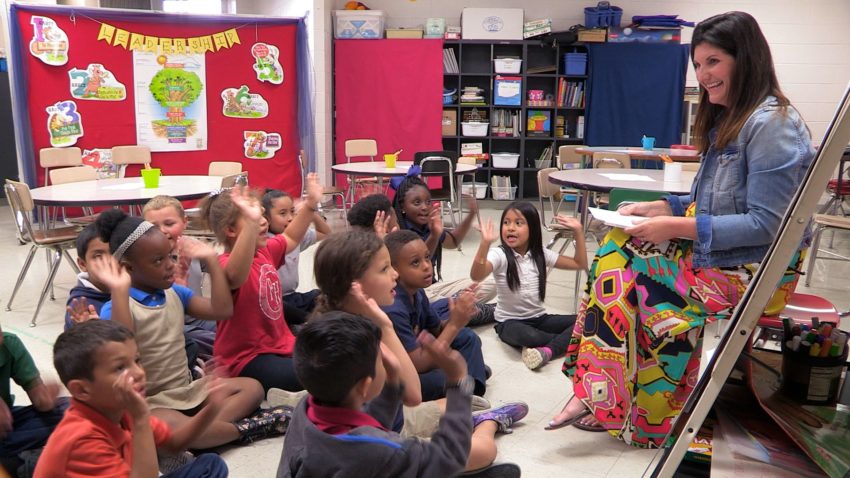
How can school leaders address early-life trauma among their students, improve academic and behavioral outcomes, and reduce harsh disciplinary action? Check out Nashville’s trauma-sensitive revolution. Metro Nashville Public Schools (MNPS) (23% Latino) has spent the past six years integrating trauma-informed practices, such as social and emotional learning and restorative discipline, to help students feel supported and understood, Edutopia reports. They even hired a full-time trauma-informed coordinator. “Our ability to accelerate achievement in the future is dependent on meeting the social and emotional learning needs of our students,” MNPS Director of Schools Shawn Joseph told The Tennessean. “We expect it, and the students deserve it.”
The Need to Address Trauma ...
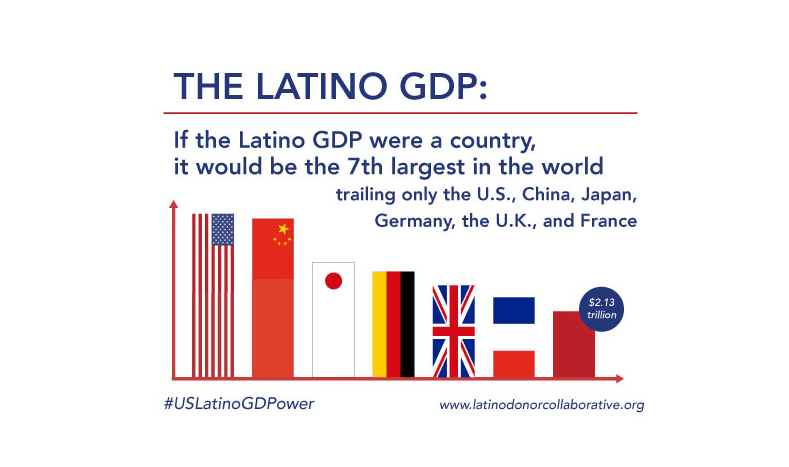
Don't think Latinos add much to the U.S. economy? Think again. If U.S. Latinos were their own nation, they would have the world's seventh-largest gross domestic product (GDP), at $2.13 trillion, according to a report by the Latino Donor Collaborative. That is a higher GDP than India, Brazil, and Italy. This means American Latinos are driving growth of the U.S. workforce and economy. This is contrary to political and popular rhetoric about Latinos, which hurts Latinos. The Latino GDP is growing 70% faster than the U.S. GDP. "If these rates are sustained, Latinos will contribute nearly one quarter of all U.S. GDP growth between 2019 and 2020," according to NGL Collective on the Latino Donor Collaborative report.
How Latinos Impact the Economy
By 2020, U.S. Latino purchasing ...
Diana Centeno knows kids exposed to traumatic events don’t get the support they need at school. Doug Greene knows police come across kids at crime scenes but feel unable to help them cope. So, they teamed up to start a project where patrol officers send a notification to the district if a child was present at a traumatic incident, enabling monitoring and support for the child. Centeno, a student support leader at San Antonio Independent School District (SAISD), is passionate about providing wrap-around, social-emotional services, particularly for children facing adverse childhood experiences (ACEs). Kids exposed to ACEs often act out in class, miss school, and fall behind, increasing their risk of dropping out, getting into criminal activities, and suffering from poor ...
Steve Long knows the mission of the Children's Museum of the East End is to spark imagination, play, and learning for all children in Bridgehampton, N.Y. (21% Latino). But the museum has risen to a new level under Long's leadership as executive director. It has become a Latino community hub. Long and the museum leaders host an afterschool science program for Spanish-speaking students. They partnered to host "safe space" workshops for Latino immigrants. They helped start an eight-week music program to enhance Spanish-speakers' literacy skills. They even added a mini-golf course with science-based facts in English and Spanish. "[The museum] is having a lifelong impact on the development of Latino children and their families through these programs," Long said.
The ...
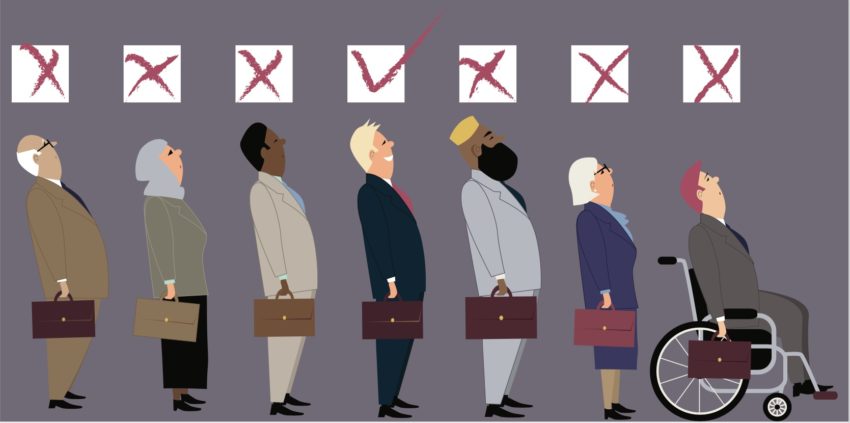
The appalling bias against Latinos and Blacks hasn’t changed much in the last 25 years, according to a recent study by researchers at Northwestern University, Harvard University, and the Institute of Social Research in Norway. This study is evidence for one of the many reasons Latinos and Blacks suffer a wealth divide. Additionally, hiring bias also contributes to the enormous Latina pay gap, in which Latinas who have bachelor’s degrees earn 35% less compared to white men with the same degree. "The truth, based on lots of data over years, is that if you're Black or Latino in the U.S., you get far from an equal shake. Your efforts have to be longer, stronger, and chances are you still will be treated worse. The deck gets stacked against you even as you try mightily and then ...
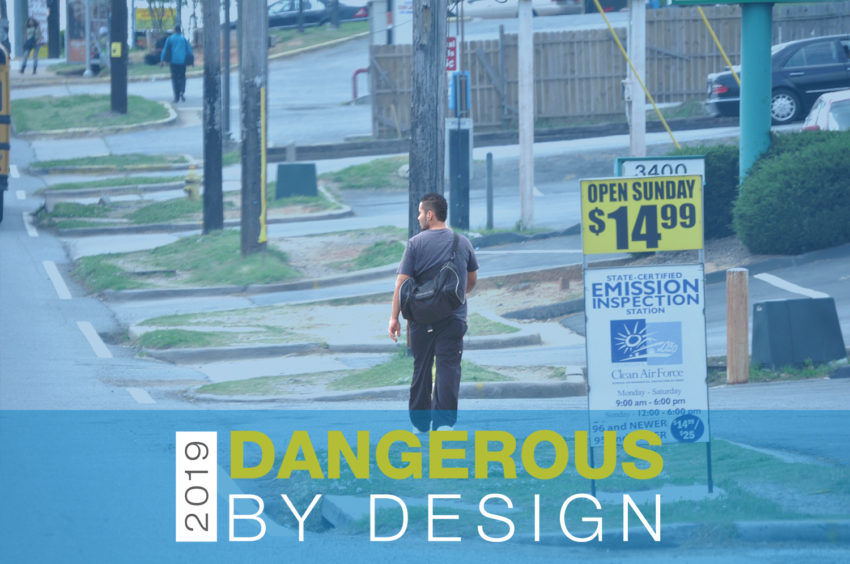
The number of U.S. pedestrians struck and killed by drivers rose 35% in the past decade, with higher rates in lower-income than high-income neighborhoods, according to the new Dangerous by Design report from Smart Growth America and the National Complete Streets Coalition. More people walking were killed in 2017 than any year on record since 1990. Why? Our streets aren’t getting safer. We continue to design streets that are dangerous for pedestrians, particularly for older adults, Latinos and other people of color, and those in low-income communities. “To reverse this trend and save lives, we need to protect all users of the transportation system through our policies, programs, and funding,” according to the Dangerous by Design report.
The Most Dangerous Places to ...
The overall U.S. cancer death rate fell 27% from 1991 to 2016, according to a recent study by the American Cancer Society. Good news, right? Not so fast. The report revealed a disturbing trend: a growing gap in cancer death rates based on wealth. "It was surprising to see that the disparities by socioeconomic status are actually widening," Rebecca Siegel, first author of the study and strategic director of surveillance information at the American Cancer Society, told CNN. "Wealth causes differences in exposure to risk factors and also access to high-quality cancer prevention, early detection and treatment." Cancer is the leading cause of death among U.S. Latinos. They are more likely to receive a cancer diagnoses in later, less curable cancer stages.
The Bad News
This is ...
Latinos are more likely than their peers to have mental health issues, which usually go unaddressed and untreated, according to a Salud America! research review. And with today’s anti-immigrant climate, the mental health of Latinos continues to suffer. Fear of deportation, mainly those in immigrant communities, is one of the main reasons mental health goes untreated. But there’s good news! Researchers at Massachusetts General Hospital's Disparities Research Unit have tested a novel preventive intervention designed to provide tailored treatment for Latino immigrants with both mental health and substance misuse symptoms, according to a press release. This research is a collaboration between teams in Spain, U.S. and Puerto Rico. "We know that Latino patients benefit when ...
Latinos make up nearly 18% of the U.S. population and are the largest ethnic minority. Even 1 in 4 U.S. kids is Latino, mostly U.S.-born citizens. Yet with the current political climate of inflammatory rhetoric, parental separation, and tear-gassing of migrants along the border, many Latinos feel the burden of an anti-immigrant climate, according to a research report. “Current discourse about immigrants and immigration tends to be dehumanizing,” Dr. R. Gabriela Barajas-Gonzalez, assistant professor of Population Health at NYU’s School of Medicine and lead author of the study, told HuffPost. “Dehumanization is never healthy.”
The Alarming Study Findings
This appalling rhetoric is harmful for Latinos, regardless of their immigration status, according to the new ...