Latinos continue to be a growing population in the US. However, at 19.5% of the population, Latinos only comprise 6% of all physicians, according to the Association of American Medical Colleges (AAMC). Fewer Latino physicians to meet the growing population can lead to worse health outcomes for Latinos, who rely on physicians that look and sound like them to build trusting patient-doctor relationships. To shine a light on this issue, National Latino Physician Day occurs every Oct. 1 during Hispanic Heritage Month to honor Latino physicians and share the need for more. Let’s go over how National Latino Physician Day came to be and why Latino physicians are integral for closing the gap on health differences for Latinos and all people.
How Did National Latino ...
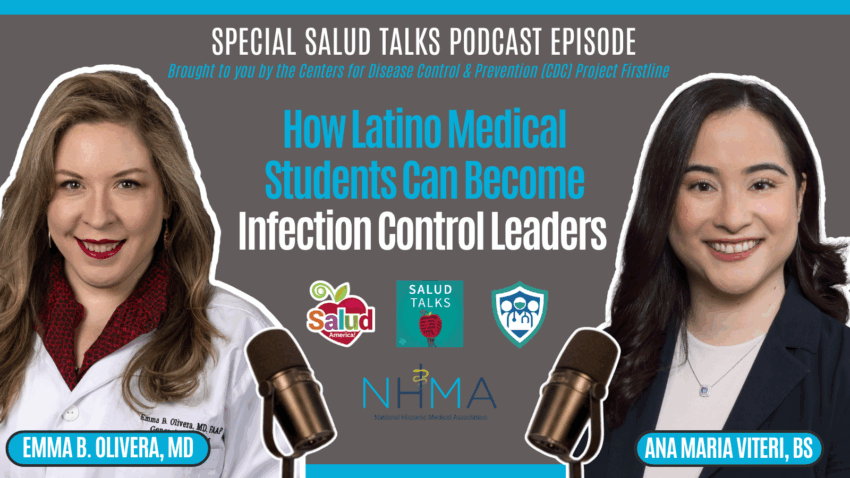
Easy-to-use, informative, bilingual tools on infection control practices in the healthcare setting are essential for all healthcare workers. With this in mind, the U.S. Centers for Disease Control and Prevention (CDC) launched Project Firstline, a training and education collaborative that ensures all healthcare workers, no matter their role or educational background, have the infection control knowledge and understanding they need and deserve to protect themselves, patients, and coworkers. As part of Project Firstline, Salud America! and the National Hispanic Medical Association (NHMA) are bringing you a Salud Talks Podcast series to explore infection control in healthcare. Episode 45 of the Salud Talks Podcast covers the need to bring infection control education to medical ...
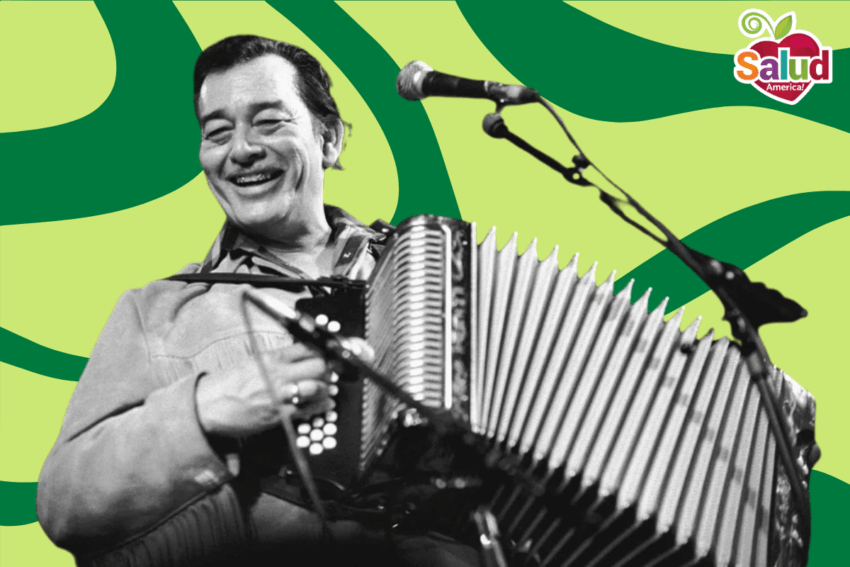
During Hispanic Heritage Month, Salud America! is celebrating Latino trailblazers, historical figures, and inspirational stories. This year we recognize Leonardo “Flaco” Jiménez, a conjunto and Tejano music icon. Before his recent passing in July 2025, Jiménez dazzled audiences for decades as one of the most well-known Tex-Mex musicians. Jiménez helped popularize conjunto music, a genre “developed by Texas-Mexican working-class musicians, who adopted the accordion—the main instrument in conjunto music—and the polka from nineteenth-century German settlers in northern Mexico,” according to the Texas State Historical Commission.
What Was Early Life Like for Flaco Jiménez?
Flaco Jiménez was born in San Antonio, Texas, on March 11, 1939. He came from a very ...
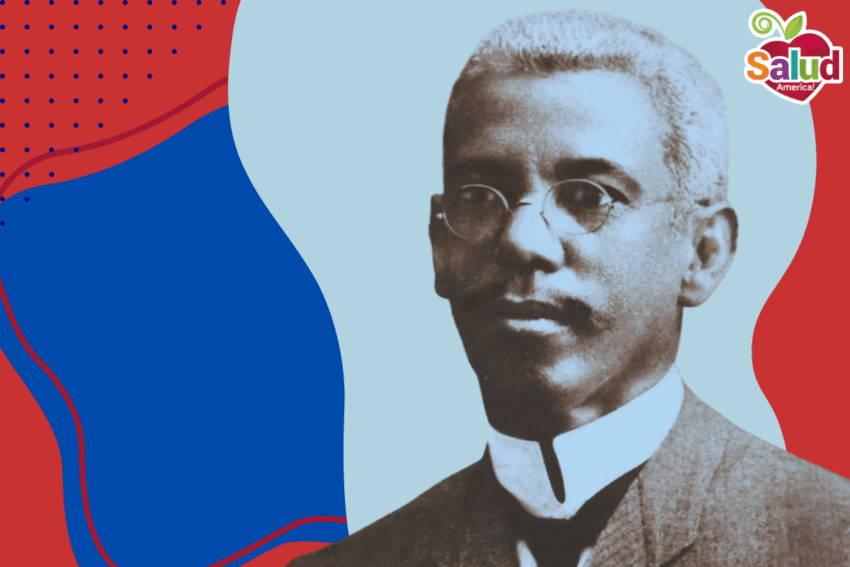
Did you know that over 65,000 U.S. physicians identify as Latino? As the number of physicians and healthcare professionals of different backgrounds continues to increase, it’s important to reflect on those who have paved the way. During Hispanic Heritage Month, we want to spotlight important figures throughout history and making a difference today. Let’s recognize Dr. José Celso Barbosa, the first Afro-Latino to obtain a medical degree in the United States.
Early Life in Puerto Rico
Dr. José Celso Barbosa Alcalá, also known as José Celso Barbosa, was born on July 27, 1857, in Bayamón, Puerto Rico, to his parents Carmen Alcalá and Hermógenes Barbosa. “Barbosa’s life traversed significant periods: Spanish colonization; Grito de Lares; slavery, abolition and ...
For over 70 years, Rita Moreno has dazzled audiences with charm, wit, and humor on the stage and big and small screens. But Rita is so much more than the characters she portrays. The only thing film gets right is that Rita is as larger-than-life as her characters. But before she was Rita Moreno, the actress sashaying on the set of the movie musical West Side Story, she was Rosa Dolores Alverío, a young Puerto Rican girl with dreams of making it into movies. “Nobody said I was going to be a star someday. Especially not in this country. I was just a Puerto Rican child. But I knew I was going to be very active in show business. I loved it,” she told TIME.
From Puerto Rico to New York City
Born in 1931, Rita had an upbringing that many immigrants could relate ...
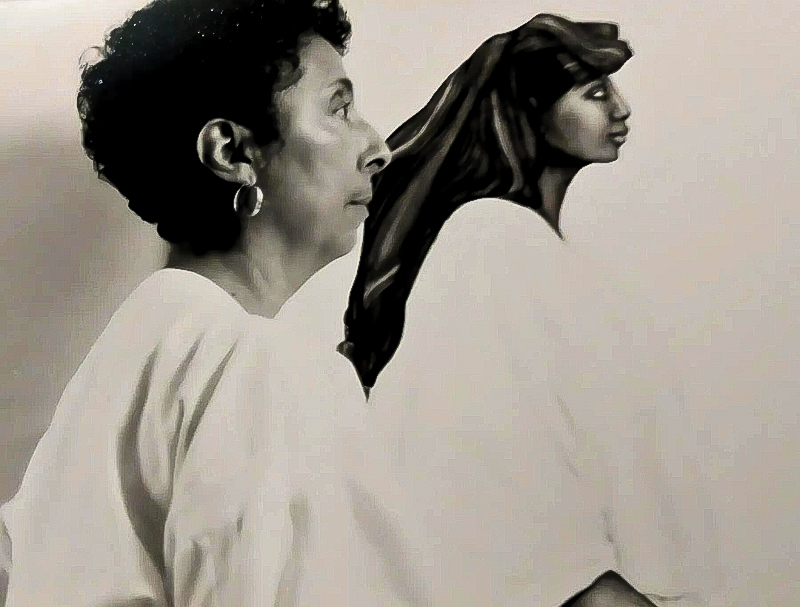
Ya fuera con pintura sobre lienzo o con una charla amistosa en persona, la artista de San Antonio, Mary Louise Lopez, siempre transmitía amor y mostraba la belleza del espíritu humano. Mary Louise fue una artista de talento en dibujo, pintura, escultura y batik. Los temas de muchas de sus pinturas fueron las comunidades nativas de Texas, México, Centroamérica y Sudamérica, lugares a los que viajaba con frecuencia y donde iniciaba fácilmente amistad con muchas personas locales. Mary Louise, quien falleció en noviembre de 2022, de cáncer de páncreas, retrató el orgullo y la fortaleza de los latinos nativos con gran cariño y cuidado, dijo Irene Peche, una amiga cercana de la familia. “Ella buscaba capturar su dignidad y la ética de trabajo con la que vivían. Hay ...
Stomach cancer accounts for about 1.5% of all new cancers diagnosed in the US each year, and Latinos have a high risk, according to the American Cancer Society. With this in mind, it’s important for communities to learn about stomach cancer risk and have resources and tools to support themselves or loved ones experiencing this issue. To raise awareness about stomach cancer, Debbie’s Dream Foundation: Curing Stomach Cancer will host the first-ever Gut Check for Stomach Cancer 5K Run & 1 Mile Walk from 9 a.m. to noon on Saturday, Nov. 8, 2025 at Greenline Park in San Antonio, Texas. The event will include activities, such as health and wellness booths, local medical resources, a DJ and music, youth dance teams, face painting, and more. Register here for the ...
A recent study from the University of Michigan found that extended family members, such as siblings, cousins and grandparents, are the most influential mentors for Latino emerging adults and can simultaneously empower and constrain young people's efforts to create social change. “It is essential to understand how adults can partner with youth to create social change,” the study states. Let’s dig deeper into this study and what the results mean for families and communities.
The Impact of Extended Family
“Our research reveals that adults play complex, multifaceted roles in these young people’s civic development,” said Wendy de los Reyes, U-M postdoctoral research fellow in the Combined Program in Education and Psychology.” For the study, de los Reyes and her ...
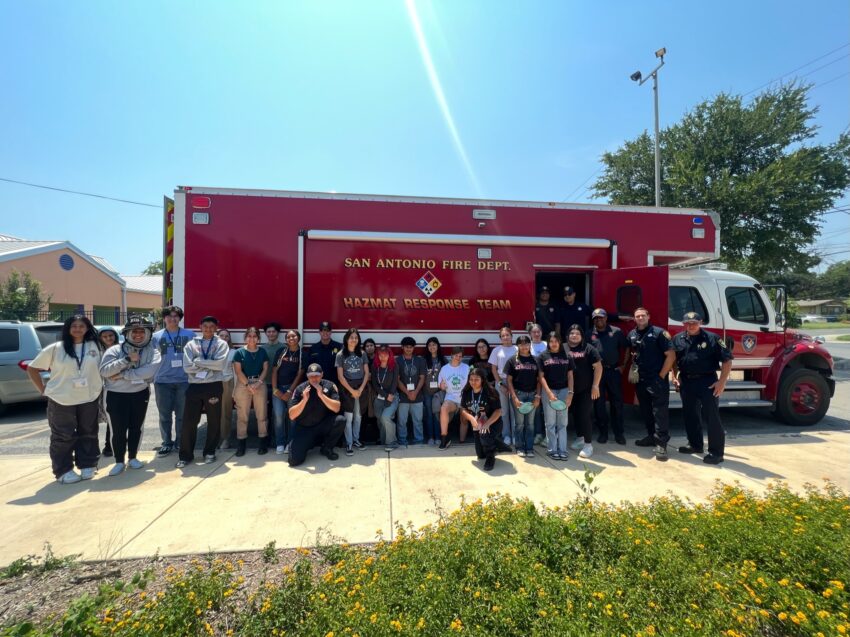
Calling all aspiring young public health leaders in The Alamo City!
UT Health San Antonio is giving teens in the 11th and 12th grades the chance to expand their horizons and learn what it truly means to devote yourself to the public health field by hosting a free summer camp.
Since 2011, the camp, which is free to attend and runs from June 23-27, 2025, in San Antonio, seeks to open the world of public health to students interested in careers like epidemiology, nutrition, researcher, and occupational health and safety.
“The goal of the camp is to increase the future public health and biomedical workforce capacity by building student awareness and knowledge of population health-related professions,” according to the camp announcement.
APPLY HERE! About the Public Health Camp
For ...