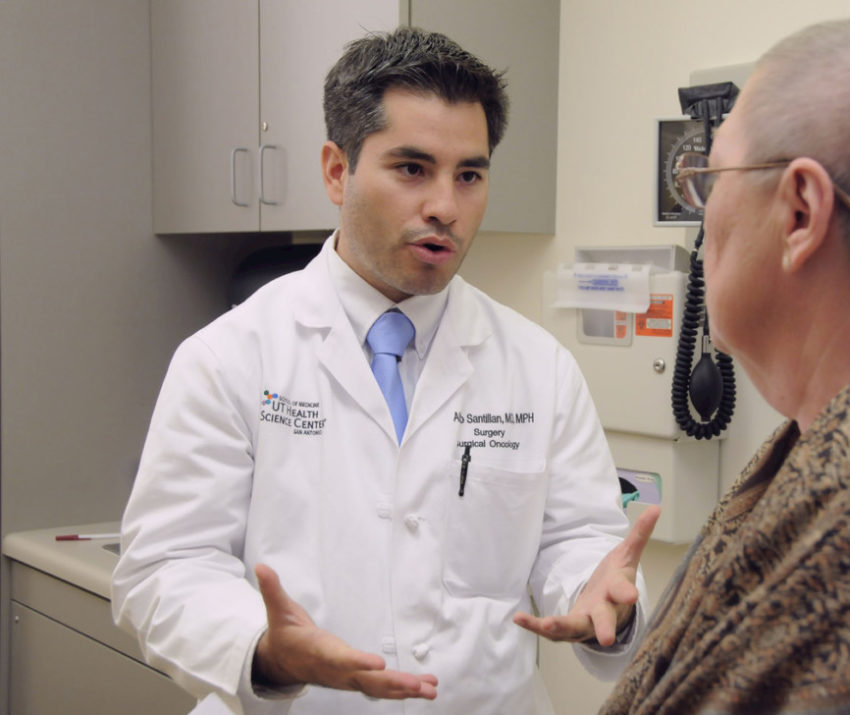
Only 5% percent of Latinos participate in federal clinical trials, far less than their 19.5% makeup of the US population. This gives researchers fewer chances to find new cancer treatments for this population, which can benefit all people. What can a health agency do to get more people into clinical trials? A new guide, Clinical Trials Outreach: Program Replication Manual, developed by researchers at the Institute for Health Promotion Research (IHPR) at UT Health San Antonio, was created to help health agencies reach into communities and increase participation in cancer clinical trials to better reflect the US population. With the guide, a health agency can: Learn about cancer clinical trials;
Learn about donation of biospecimens (human materials such as skin, hair, and ...
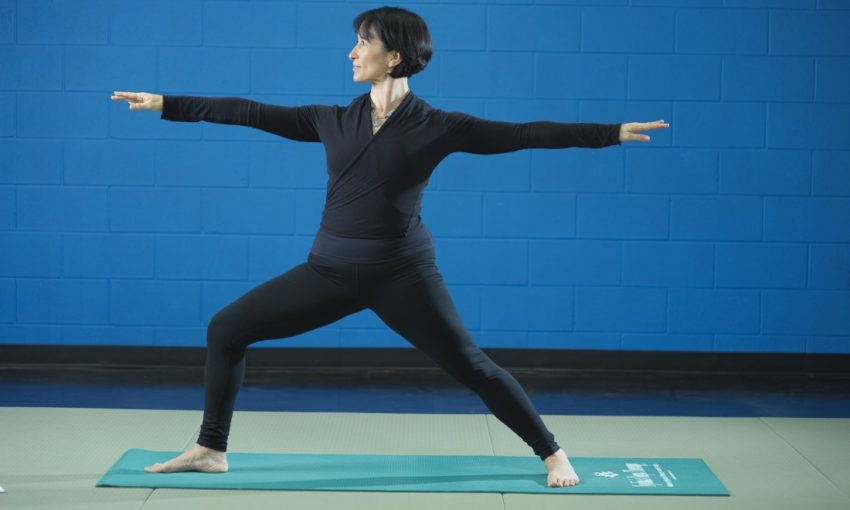
Yoga can help cancer survivors get active and improve their current and future health. That's the idea behind a new $500 mini-grant for the Institute for Health Promotion Research (IHPR) at UT Health San Antonio to start a yoga therapy program for Support Lending for Emotional Well-Being (SLEW), a non-profit wellness center for women who have been diagnosed with cancer. The grant, from the Center for Medical Humanities & Ethics at the UT Health San Antonio, will allow the team to develop an “Exercise for Cancer Survivors” educational presentation and a yoga program/curriculum that will gradually introduce participants to yoga and be sustainable for SLEW to continuing using upon the grant’s end. The project leader at the IHPR is Rose A. Treviño-Whitaker and the project ...
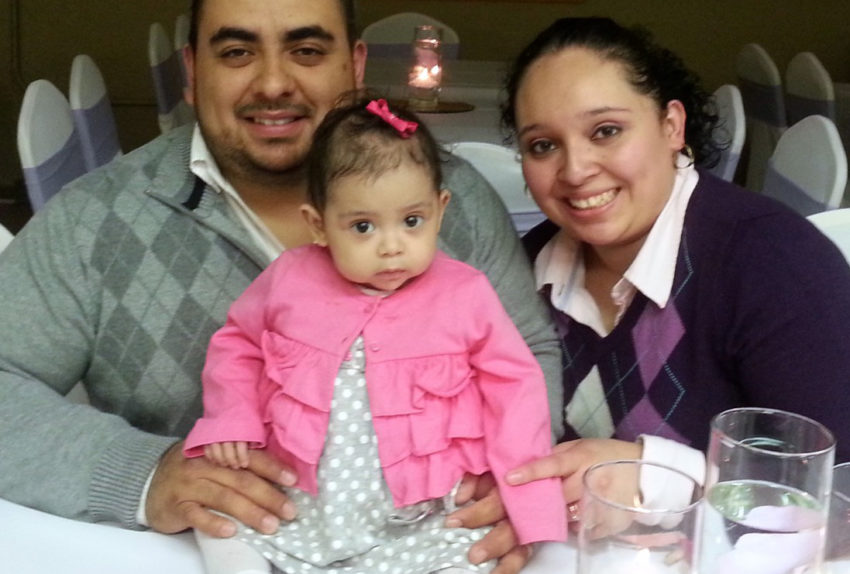
Jade Hércules, was born in July 2012 in Guatamala, where she was diagnosed with terminal liver disease. She needed a donor. Jade's condition deteriorated over the next year to the point where her parents thought, as she celebrated her first birthday in July 2013, she wasn't far from her final moments on earth. Then doctors at University of Chicago Hospital, where her family had come to seek treatment, told her parents a liver donor was found. “We were grateful to God for the parents who had the courage to donate their little boy’s organs because thanks to them our little girl is alive. We always think about the parents who made this miracle possible because it is truly a blessing that a year later although she is not yet walking, Jade can stand and is such a happy ...
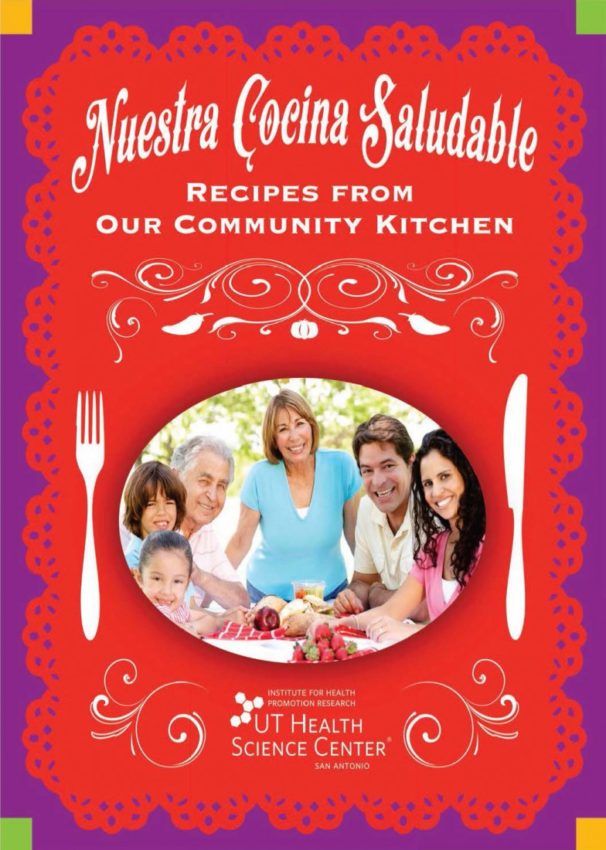
Eating the right food can help fight cancer. But what foods are right? Are there such things as healthy—and tasty—traditional dishes? Check out a new bilingual cookbook, Nuestra Cocina Saludable: Recipes from Our Community Kitchen, to guide you and your family to eat healthy and help protect against cancer and other chronic diseases. The cookbook is from the Institute for Health Promotion Research (IHPR) and the Mays Cancer Center (formerly the Cancer Therapy and Research Center) at UT Health San Antonio. Download the free cookbook in English or Spanish. Inside are 46 recipes for healthy, delicious foods straight from real kitchens in South Texas. The cookbook originated when people from across South Texas shared their mouth-watering recipes—like Aurora Rodriguez of ...
I recently had the privilege of attending and presenting my Susan G. Komen-funded research on boosting breast cancer survivorship through Patient Navigation at the 5th International Cancer Control Congress (ICCC) on Nov. 3-6, 2013, in Lima, Peru. As a member of Komen’s Scientific Advisory Board, I was excited to be among the more than 400 health researchers and community leaders from throughout the world came together for this important meeting. Dr. Simon Sutcliffe of Vancouver, Canada, president of the ICCC and chair of the international steering committee, cited five key drivers for the group: improving human development;
mobilizing a societal response to reduce cancer and other non-communicable diseases;
improving population health;
improving cancer treatment, ...
Amy Cleveland, fresh out of college and just starting a career in marketing, discovered a coarse lump in her breast while putting on some tanning oil. Only age 22, she was diagnosed with breast cancer. “It was a struggle for me because I was young and there was no one my own age I could relate to or confide in about having cancer. People always say, ‘My mom had that,’ or, ‘My grandma had that.’ But it’s tough for young people,” Cleveland said. Fortunately, Cleveland—now age 28 and free of cancer—found some “Breast Friends Forever,” thanks to a unique support group for young breast cancer survivors in San Antonio (63% Latino) developed by the Institute for Health Promotion Research (IHPR) at the UT Health San Antonio and Susan G. Komen San Antonio. The ...
Diabetes and obesity are the two most significant health threats in South Texas, according to a new report published online in Springer Open Books by the Institute for Health Promotion Research (IHPR) in the School of Medicine at UT Health San Antonio. The South Texas Health Status Review, originally self-published in 2008, was updated this year to study more than 35 health conditions and risk factors and how people in South Texas are affected compared to those in the rest of Texas or nation. The Review, in addition to singling out diabetes and obesity, also indicates that the South Texas region faces higher rates than the rest of Texas or nation for: Cervical, liver, stomach and gallbladder cancers
Child and adolescent leukemia
Neural tube defects
Other birth ...
By Joan Treviño Lawhon I think women are blessed with a sixth sense. Recently, during a show on breast cancer survivors, several said they knew immediately that something was wrong. I could definitely relate. My basic tests were within normal limits, but I had what I can only describe as a “gut feeling.” I had some very supportive doctors who followed through on my instincts. It took five tests to confirm a malignancy. Within an hour of my diagnosis, I was at Barnes & Noble buying layman’s books on breast cancer. We can freeze and let the disease consume us, or we can fight. My choice was to fight. I was going to make sure my choice was an informed one. My husband Garey had lost his valiant battle to pancreatic cancer the year before. I lost a brother to kidney cancer. ...
Latinas who have an abnormal mammogram result take 33 days longer to reach definitive diagnosis of breast cancer than non-Hispanic white women, according to a new study by the Institute for Health Promotion Research (IHPR) at the University of Texas Health Science Center at San Antonio. Such a time delay can have a critical impact on tumor size, stage at diagnosis, treatment, prognosis, and survival of subsequent breast cancer. For this study, published online in SpringerPlus in March 2013, IHPR researchers worked with partners in the federally funded Redes En Acción program to evaluate the differences in time to diagnosis of breast cancer among 186 Latinas and 74 non-Hispanic whites who received an abnormal mammogram result in six U.S. cities. Analysis showed that Latinas’ ...