Latinos are a dynamic, diverse, rising population. But cancer threatens the future health of the U.S. Latino population. This is why our Salud America! team at the Institute for Health Promotion Research (IHPR) at UT Health San Antonio created a new video, "Latino Cancer: ¿Sabía Usted? (Did You Know?)," to describe the state of Latino cancer disparities and highlight the inequities behind them. The video debuted at the 2022 Advancing the Science of Cancer in Latinos conference. "The conference helped focus on a key underlying issue – health equity. Health equity is where everyone has a fair, just opportunity to be their healthiest," said Dr. Amelie G. Ramirez, leader of the conference and director of Salud America! and the IHPR. "True change starts when we focus on solving ...
Clinical trials have led to the development of better treatments, life-saving medicines, and new prevention strategies for many cancer types. Still, historically, clinical trials have low representation among some groups. To promote clinical trials, let’s use #SaludTues on Tuesday, April 5, 2022, to discuss cancer clinical trials, why they are so important, and how we all can step up to increase participation in cancer research. WHAT: #SaludTues Tweetchat: How to Encourage and Achieve Participation in Cancer Clinical Trials
TIME/DATE: 1-2 p.m. ET (Noon-1 p.m. CT), Tuesday, April 5, 2022
WHERE: On Twitter with hashtag #SaludTues
HOST: @SaludAmerica
CO-HOSTS: Susan G. Komen (@SusanGKomen); Dr. Enrique Diaz, Mays Cancer Center, UT Health San Antonio ...
With 1 in 3 Latinos facing a cancer diagnosis in their lifetime, UT Health San Antonio is hosting the 2022 Advancing the Science of Cancer in Latinos in-person conference on Feb. 23-25 at the Westin Riverwalk, 420 W. Market St, in San Antonio, Texas. The biennial conference is expected to draw 200 researchers, oncologists, physicians, community leaders, and students for an open dialogue on research advancements and actions to translate basic research into clinical best practices, effective community interventions, system-change advocacy, and professional training to eliminate cancer disparities in Latinos. The first Advancing the Science of Cancer in Latinos conferences in 2018 and 2020 united 80 guest speakers and over 600 attendees from 25 states, from D.C and New York to ...
By Robyn Towt
Breast Cancer Survivor in San Antonio My name is Robyn Towt. I am a three-time cancer survivor, most recently diagnosed with breast cancer in 2017 at the age of 44. I had stage one IDC that was found during my routine mammogram and ultrasound. I did not have any treatment, only a bilateral mastectomy and reconstruction with Mentor silicone breast implants. The implants caused an array of debilitating health issues, something that none of my doctors told me could happen. I had symptoms ranging from chronic migraines, rashes and extreme fatigue to debilitating insomnia, burning pain, heart palpitations, hair loss, difficulty breathing, difficulty swallowing and muscle pain. I had the implants removed after just four months and all of my symptoms completely ...
Many cancer patients in South Texas and beyond experience challenges in access to health care, insurance, immigration, affordable housing, transportation, education, as well as background and linguistic barriers. This can dramatically impact their cancer outcomes. To address this issue, you’re invited to join us for “Targeting Needs in Efforts to Prevent and Reduce Cancer” at 1 p.m. CST on Feb. 10, 2022. This is the second webinar of a new series, “Let’s Improve Health in South Texas and Beyond.” This Zoom webinar will show how health care leaders can participate in speaking up for policy and other changes that address these health differences, beyond providing more sensitive care and/or research. “This webinar will help doctors, nurses, researchers and other ...
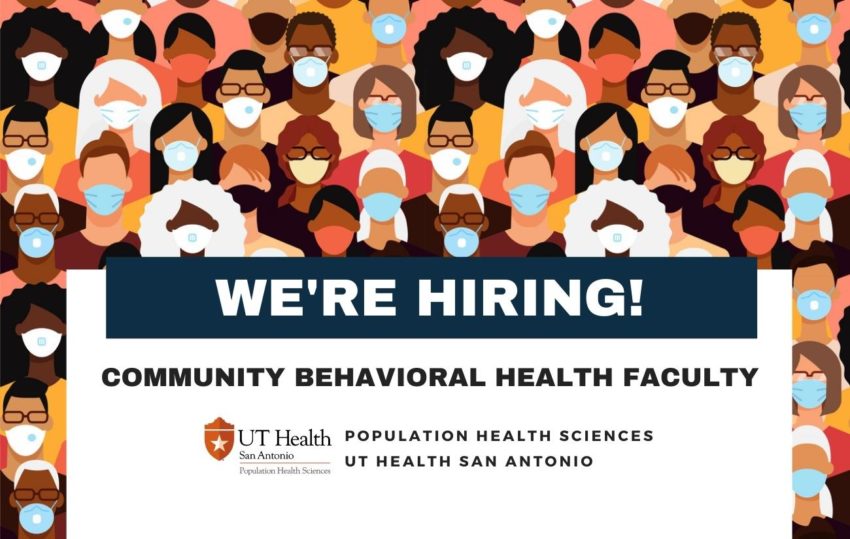
The Department of Population Health Sciences at UT Health San Antonio — home to the Salud America! program in the Institute for Health Promotion Research — is seeking two applicants for open-rank faculty positions in community behavioral health and biostatistics. The two positions will also serve in the Population Science and Prevention research program at the Mays Cancer Center, a National Cancer Institute-designated cancer center at UT Health San Antonio. Go here to apply or learn more about the community behavioral health position. Go here to apply or learn more about the biostatistician position. "Our goal is to recruit two faculty members who will establish meaningful community-based and community-engaged research in our 38-county catchment area of South Texas," said ...
Cancer and Alzheimer’s hurt many of our abuelos, moms, dads, and others we love. Clinical trials help us fight for our familia. Clinical trials are studies that help researchers learn more to help slow, manage, and treat Alzheimer’s and cancer for current and future family members. But without Latino volunteers for clinical trials, the benefits may miss this group. Visit our clinical trials page to find a clinical trial, read about hero volunteers, and more! Share your story with us! “Latinos in clinical trials are not only helping themselves, but they’re also building a future with better treatments that can help their families in the future,” said Dr. Amelie Ramirez, director of the Institute for Health Promotion Research and Salud America! at UT Health San ...
When it comes to triple negative breast cancer, Ricki Fairley is a veteran on the battlefield. “I am a 10-year survivor of triple negative breast cancer. My doctor gave me two years to live, and I'm on 10,” Fairley said. Fairley is the CEO and co-founder of TOUCH—the Black Breast Cancer Alliance. She is determined to diversify clinical trials, which can help find better therapies for Black, Latino, and other people of color. “I'm really on a path, a mission to eradicate Black breast cancer and really change the game on how we talk to Black women about clinical trials. And right now, we only have 3% participation in clinical trials. So, the drugs that are currently on the market and the ...
Each year, more than 14,000 people are diagnosed with cervical cancer in the United States. This cancer is especially hurting communities of color, with Latinas at a high risk of a diagnosis. But cervical cancer is preventable. Stopping cervical cancer for Latinas and all communities means equitable education about the causes, prevention, and treatment of HPV and cervical cancer. Join #SaludTues at 1 p.m. EST on Jan. 4, 2022, to tweet about how we can stop cervical cancer in celebration of Cervical Cancer Awareness Month in January. WHAT: #SaludTues Tweetchat: “What Can We Do to Stop Cervical Cancer?”
DATE: Tuesday, Jan. 4, 2022
TIME: 1:00-2:00 p.m. EST (10:00-11:00 p.m. PST)
WHERE: On Twitter with hashtag #SaludTues
HOST: @SaludAmerica
CO-HOSTS: ...