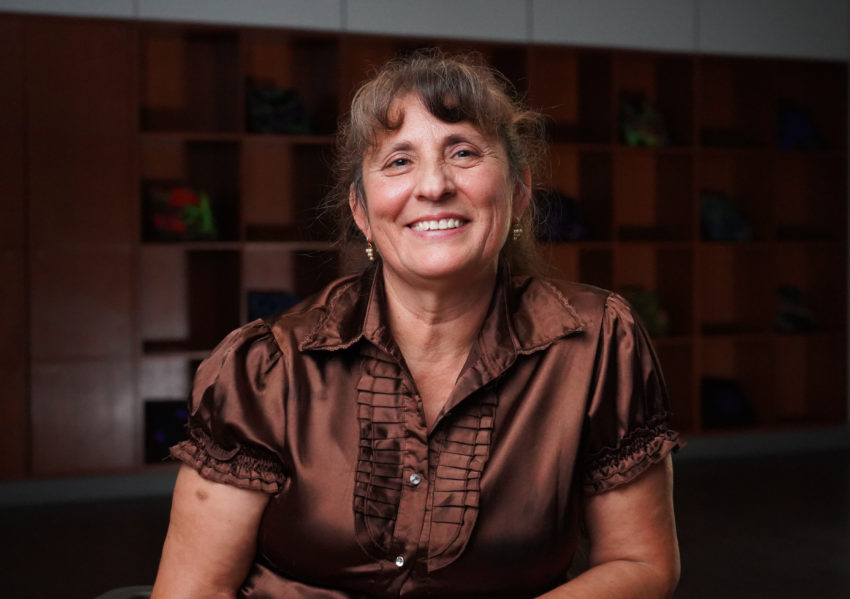
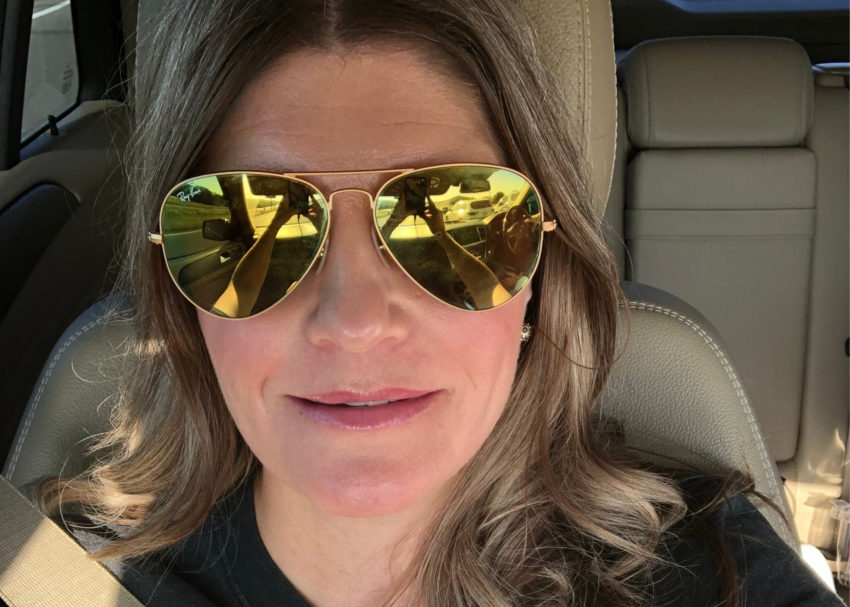
Breast cancer is the top cause of death for Latinas. But Alma Lopez has been a breast cancer survivor for more than 15 years. She believes participating in a clinical trial at UT Health San Antonio helped her get better treatment and better long-term health in her survivorship journey. “Clinical trials are great for finding new treatments that help people,” Lopez said. “And it helps the scientists. It gives opportunity to better medication for all populations. It builds a better future.”
Lopez Chooses a Breast Cancer Clinical Trial
About 15 years ago, Lopez was diagnosed with breast cancer. Lopez began weighing her treatment options. At first, she had doubts about whether to volunteer for a clinical trial. She thought it might take too much time, or cause ...
El cáncer de Seno es la causa principal de muerte en las latinas. Pero Alma López ha sido una sobreviviente de cáncer de seno por más de 15 años. Ella cree que su participación en un estudio clínico de UT Health San Antonio la ayudó a tener un mejor tratamiento y a largo plazo una mejor salud en su camino de supervivencia. "Los estudios clínicos pueden encontrar tratamientos nuevos que ayudan a las personas", dijo López. "Y ayudan a los científicos. Ofrecen la oportunidad de tratamientos mejores para todas las poblaciones. Construyen un futuro mejor".
López Decidió Participar en un Estudio Clínico de Cáncer de Seno
Aproximadamente hace 15 años, López fue diagnosticada con cáncer de seno. López comenzó a considerar sus opciones de tratamiento. Al ...
Simple logistics—availability, childcare, and time—stop some Latinas and other women of color from volunteering for breast cancer clinical trials, according to a new survey. The survey, led by For The Breast of Us, an online breast cancer survivor community, and Sommer Consulting, found that the anticipated time demands of a clinical trial may appear "too intimidating." Most women of color struggle with multiple demands in their lives. The perceived or real logistics of participating in a clinical trial could make it harder. One respondent said: “You still have to worry about how am I going to run my household, especially as a woman of color, who typically a lot of times are single-family or single-parent households." "The results of this survey demonstrate how ...
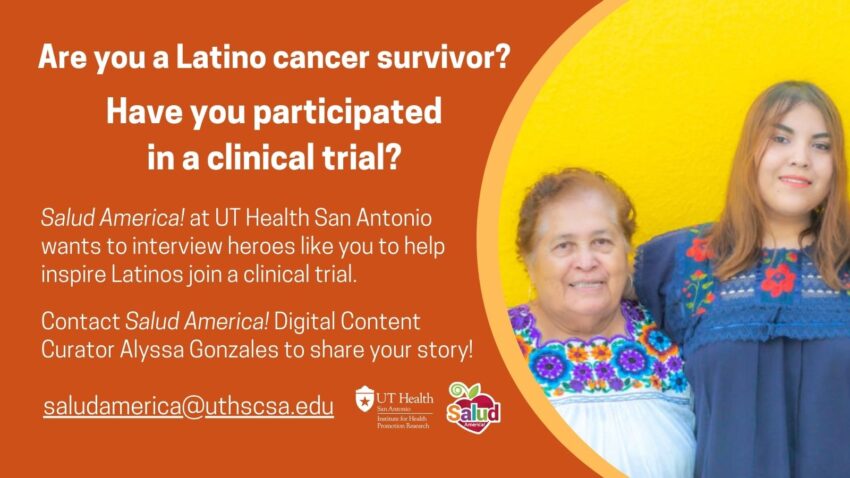
Are you Latino? Have you participated in a clinical trial related to cancer, Alzheimer’s, or another condition? If so, we want to talk with you and share your story! Salud America! is looking to interview and write stories about heroes like you — Latinos who have participated in a clinical trial — to showcase the benefits of volunteering to inspire other Latinos to volunteer, too. Dr. Amelie G. Ramirez’s Salud America! program at UT Health San Antonio is sharing the stories of clinical trial heroes with the support of Genentech, a member of the Roche Group. “Clinical trials are studies that help researchers learn more and more to help slow, manage, and treat Alzheimer's and cancer,” Ramirez said. “Clinical trials help us fight for our familia.” To share ...
Breast cancer is the leading cause of death in Latinas. Systemic health inequities contribute to lower rates of breast cancer screening among Latinos, which leads to cancer diagnoses at later disease stages. This is why we're sharing Susan G. Komen’s 2021 ongoing webinar series on metastatic breast cancer (MBC)! The next two webinars, "MBC in the Hispanic/Latino Community," are set for 6 p.m. CT Sept. 23, 2021, in English and 6 p.m. CT Sept. 30, 2021, in Spanish. Panelists are: Dr. Filipa Lynce, Dana-Farber Cancer Institute, Director, Inflammatory Breast Center, Harvard Medical School.
Dr. Jose Pablo Leone, Dana-Farber Cancer Institute, Director, Program for Breast Cancer in Men, Harvard Medical School Panelists will foster a safe, collaborative space to discuss ...
In the next 20 years, Latinos could face a 142% rise in cancer rates. Latinos also experience cancer differently—from genetics to healthcare access to survivorship. This is why Dr. Amelie Ramirez, director of Salud America! at UT Health San Antonio, is hosting the Advancing the Science of Cancer in Latinos 2022 conference on Feb. 23-25, 2022 in San Antonio! "Our vision is to unite researchers, physicians, healthcare professionals, patient advocates and students from across the nation to discuss research advancements, identify gaps, and create action to translate basic research into clinical best practices, effective community interventions, and professional training programs to eliminate cancer disparities in Latinos," said Ramirez, whose Institute for Health Promotion Research ...
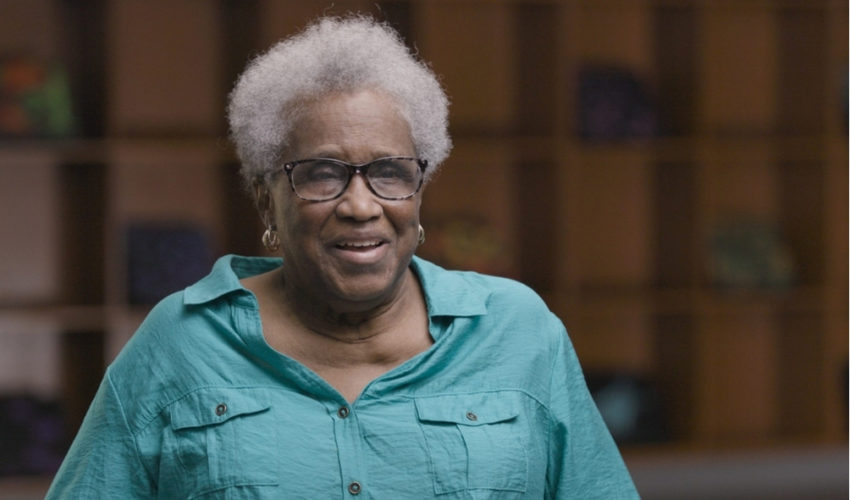
El cáncer es un camino difícil, miedoso y peligroso para la vida, especialmente para las mujeres de color. Por esto es que los investigadores realizan estudios clínicos, que son estudios para encontrar tratamientos más efectivos o para lograr un mejor entendimiento del cáncer de seno y la supervivencia en las minorías. Pero, para progresar, los estudios clínicos necesitan voluntarios diversos, como Elsada Wilson. Wilson participó en un estudio clínico del Mays Cancer Center de UT Health San Antonio y encontró esperanza para ella, su familia y el futuro. "Sentí que estaba ayudando a avanzar los estudios y el conocimiento", dijo. "Si me ayuda, entonces podré ayudar a mi familia y ayudar a otras personas que necesitan ayuda. Quería ayudar a los demás. Me dije a mí ...
By Andrea Reichl
Breast Cancer Survivor in San Antonio On June 8, 2015 I got the dreaded call that would change my my world as I knew it. I had only been 38 for one month and cancer never even crossed my mind as a possibility. I previously have had a mammogram and ultrasound annually due to a lump that was being monitored since my early 20s. Six months after my last mammogram my nipple became red and itchy. My gynecologist sent me to a breast specialist, who rudely told me it was because I didn’t have babies. It was devastating to hear that because she was unaware that for over 10 years my husband and I tried to have kids, unsuccessfully. She prescribed me a cream that didn’t work. I decided to go back to my gynecologist as things just didn’t feel right, and I ...
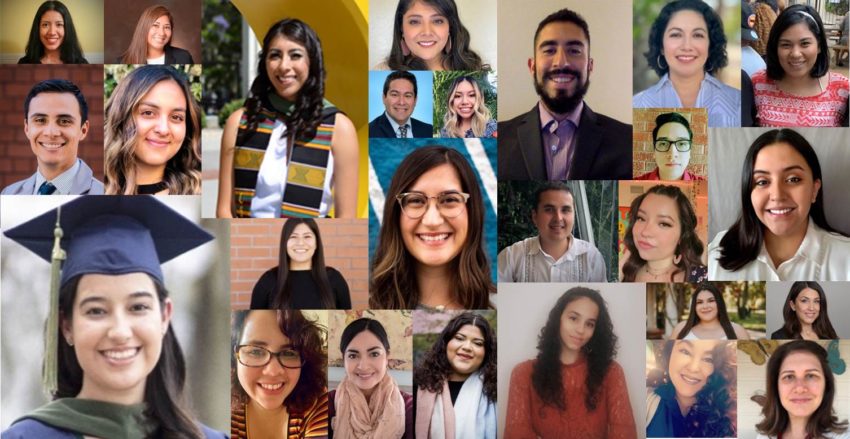
Program leaders have selected 26 aspiring Latino researchers from across the nation to join the 2021 cohort of Éxito! Latino Cancer Research Leadership Training at UT Health San Antonio. Each year, Éxito! recruits U.S. master’s level students and professionals to participate in a five-day, culturally tailored Éxito! summer institute to promote pursuit of a doctoral degree and cancer research. The 26 new participants were selected from a deep pool of applicants. Each participant now will join the Éxito! summer institute on June 7-11, 2021 in San Antonio. They will interact with Latino researchers and doctoral experts to learn about Latino cancer, succeeding in a doctoral program, and the diversity of research careers.
Meet the 2021 Éxito! Ccohort Leslie Aragon, ...