This content is from the "Advancing the Science of Cancer in Latinos: 2024 Conference Proceedings."
Residence in a Latino Enclave and Clinical Outcomes in Texas Children with Acute Lymphoblastic Leukemia
Dr. Jeremy Schraw is an Assistant Professor in the Division of Hematology-Oncology, Department of Pediatrics, at Baylor College of Medicine. Dr. Schraw began by pointing out the higher incidence of acute lymphoblastic leukemia (ALL) among Latino children, and the poorer overall survival (OS) following diagnosis. Non-medical drivers of health (NMDoH) likely contribute to these inconsistencies. In fact, children living in Latino enclaves, defined as neighborhoods with a high proportion of Latino residents, recent immigrants, and linguistically isolated households, have poorer OS after ...
This content is from the "Advancing the Science of Cancer in Latinos: 2024 Conference Proceedings."
Latino Cancer Survivors’ Quality of Life and Survivorship Care
Dr. Kristi D. Graves is a tenured Professor of Oncology, Cancer Prevention and Control Program leader at the Lombardi Comprehensive Cancer Center, and Associate Dean for Faculty Development at Georgetown University Medical Center. Latino cancer survivorship Dr. Graves’s presentation began by discussing cancer survivorship across the cancer continuum. The National Cancer Institute’s (NCI) Office of Cancer Survivorship states that “an individual is considered a cancer survivor from the time of diagnosis through the balance of life. There are many types of survivors, including those living with cancer and those ...
This content is from the "Advancing the Science of Cancer in Latinos: 2024 Conference Proceedings."
Adapting NCI’s Clinical Trials System to a Changed Clinical Research Environment
Dr. James H. Doroshow is Deputy Director for Clinical and Translational Research at the National Cancer Institute (NCI). This plenary session occurred at 8:30 am., Thursday, Feb. 22, 2024, at the 4th biennial Advancing the Science of Cancer in Latinos conference. COVID’s impact on cancer clinical trials Dr. Doroshow’s presentation began by discussing the initial and continuing effects of the pandemic environment on cancer clinical trials. From the start of the pandemic, several aspects of clinical trials were altered, including informed consent and in-person study activities. One major ...
This content is from the "Advancing the Science of Cancer in Latinos: 2024 Conference Proceedings."
The NCI Community Oncology Research Program: Opportunities to Increase Latino Participation in Clinical Trials
Dr. Brenda Adjei is Associate Director of the HDRP at the National Cancer Institute (NCI) Center for Cancer Research. The NCI Community Oncology Research Program Dr. Adjei’s presentation began with a discussion of Latino participation in cancer clinical trials. Variety in clinical trials is critically important because it generates biomedical knowledge relevant to all, builds trust and trustworthiness, and contributes to reductions in health gaps and fair research participation. Current limits in clinical research is due to multilevel hurdles and requires tailored, ...
This content is from the "Advancing the Science of Cancer in Latinos: 2024 Conference Proceedings."
Conclusion
To eliminate gaps in cancer care in Latino populations, Advancing the Science of Cancer in Latinos brought together researchers, scientists, physicians, healthcare professionals, patient navigators, and students from across the US and Latin America. These presenters shared research advancements, identified gaps, developed actionable goals, updated clinical best practices, described effective community interventions, and detailed professional training programs aimed at addressing inequity. In the process, most of the speakers made recommendations, either specific to their field of study or more broadly. The following are some key recommendations abstracted from their conference ...
This content is from the "Advancing the Science of Cancer in Latinos: 2024 Conference Proceedings."
Healthcare Gaps in the Latino Community
The Latino population both within and outside the US has significant heterogeneity. [Velazquez-Villarreal] After all, Latin America has been a melting pot of mixed populations for 500 years, with over 20 heritage groups recognized by the Hispanic Community Health Study/Study of Latinos. These groups are distinct, with unique backgrounds, language, and US influence, but are also connected by more similarities than differences. [Perez-Stable] Latino individuals are the largest and youngest overlooked community in the US and are projected to account for more than half of the overall growth through 2060. Compared to non-Hispanic White individuals, ...
Dr. Patricia Chalela, a researcher at the Institute for Health Promotion Research (IHPR) at UT Health San Antonio, has been named the IBC Foundation Endowed Professorship in Health Promotion Research. The International Bancshares Corporation (IBC) Foundation is a private foundation affiliated with IBC and its subsidiary banks. It is dedicated to supporting charities that enrich the community and improve the health and wellness of people in Texas and Oklahoma. The foundation made a $2 million donation that established four endowed professorships at UT Health San Antonio. Dr. Chalela's endowment, which is for $500,000, aims to help her advance novel research in health promotion. "I am deeply honored and sincerely grateful to be nominated as the recipient of the IBC Foundation ...
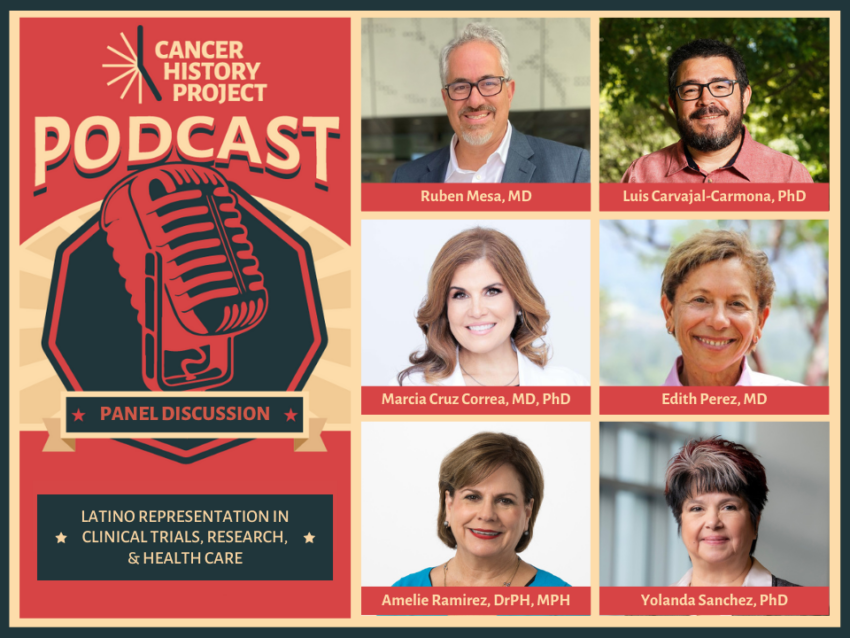
Dr. Amelie G. Ramirez, leader of Salud America! at UT Health San Antonio, joined other cancer experts to discuss participation in clinical trials, research, and healthcare on a podcast episode for the Cancer History Project by The Cancer Letter. The episode features: Dr. Ramirez
Dr. Luis Carvajal-Carmona, University of California, Davis
Dr. Edith Perez, Mayo Clinic
Dr. Marcia Cruz-Correa, University of Puerto Rico Comprehensive Cancer Center
Dr. Yolanda Sanchez, University of New Mexico Comprehensive Cancer Center
Dr. Ruben Mesa, Atrium Health Wake Forest Baptist Comprehensive Cancer Center (moderator) The group explores cancer and clinical care among people with different backgrounds. “The pipeline issue continues to be a huge issue for us,” said Ramirez, ...
Physical activity can have many benefits for cancer survivors, from improving their quality of life to potentially making it less likely that their disease will come back. Yet studies have shown that many cancer survivors struggle to get the recommended levels of physical activity, particularly those affected by health differences. Now, according to the results of a new study, a program in Texas has shown it can get these cancer survivors moving more by supporting them in the communities where they live, and by getting their caregivers to become more active as well. The cancer survivors and caregivers, who were mostly Latino, were participants in a 12-week program called Active Living After Cancer. After completing the program, the percentage of survivors getting recommended ...