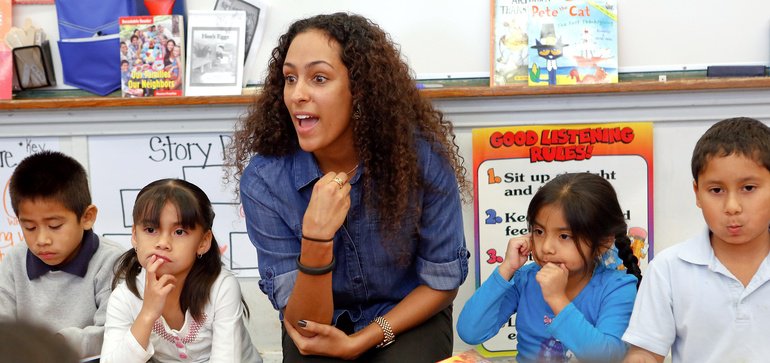
Currently, 1 in 4 kindergartners nationwide are Latino. By 2050, that number will be 1 in 3. Latinos are the fastest-growing population in the country and they are also becoming the youngest. However, many disparities in education exist between Latinos and other races and ethnicities. A new report from the Child Trends’ Hispanic Institute uncovered some alarming findings regarding Latino kindergartners and their math skills. According to the report, Latino students, on average show up to their first days of school three months behind their white peers when it comes to their mathematics abilities. While they “make up ground” throughout the school year, the achievement gap remains because they start so far behind. “One of the best ways to not be behind the starting gate at ...
Physical activity. Proper nutrition. Shayda Dioun is not shy about trumpeting these two big ways to prevent cancer. Dioun, a public health student at the University of Texas Health Science Center at Houston, is already making an effort to push nutrition and activity as an intern for the San Antonio Mayor’s Fitness Council. She also mentors kids from low-income families. Dioun is interested in applying for a PhD program and applying nutritional and fitness concepts to cancer prevention, especially among minority populations. That’s why she applied for the Éxito! Latino Cancer Research Leadership Training program, which recruits 25 master’s-level students and professionals for a five-day Summer Institute to promote doctoral degrees and careers studying Latino cancer. ...
Jackeline Ruiz of Los Angeles has a big heart. She learned compassion from her mother, who instilled strong faith on her and served as an example by always working hard to make friends and family feel welcome and loved. Ruiz’s compassion spills over into the tremendous effort she’s made as a health worker to improve the health of immigrant families. After receiving a bachelor’s degree in political science at Santa Clara University, Ruiz spent two years living in community and working with a community clinic as a referral coordinator, patient navigator and health educator. Ruiz is interested in working more with Latinos who face chronic health conditions, especially those who struggle with healthcare access and preventive care. To increase her training, she applied for ...
After United Way's Young Leaders Society, the Robla School District and the Health Education Council helped raise over $25,000 dollars to provide hydration stations at each school in the Robla School District (54% Latino), the district went a step further for health, literally. How? In the fall of 2015, after the Health Education Council met with students in their classrooms educating them on sugary beverages, the council also met with a small parent group at Taylor Street Elementary School to teach them about how to "Rethink Your Drink", educating parents on how much sugar is in the average soda, juices, and teas. Parents learned so much from the workshop that they wanted to know what else they could learn about. This conversation led to weekly nutrition workshops provided by ...
When she needed more money to support her own private-school education, Angelika Gutierrez became the youngest teller at a New Jersey bank at age 16. That’s how hard Gutierrez will work to achieve her goals. Now, buoyed by her resilient upbringing by her abuelita (grandma), the Ecuadorian-Puerto Rican went on to become a first-generation college graduate and now is a master-degree public health student at Columbia’s Mailman School of Public Health. Gutierrez has a passion for studying the U.S.-Puerto Rico relationship’s effect on Puerto Rican health disparities, and strengthening the health systems in Latin America. That’s why she applied for the Éxito! Latino Cancer Research Leadership Training program, which recruits 25 master’s-level students and professionals ...
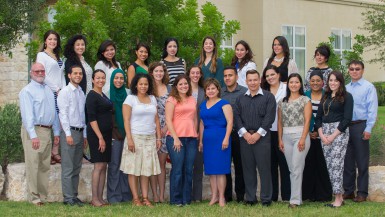
Jose Ramos never gives up. He learned how to persevere from his mother, who survived breast cancer. So, after becoming the first in his family to graduate high school and college, Ramos is aiming high for an MD/PhD. He is currently studying global disease as a master’s student at Columbia University. He has an internship with the Brazilian Health Association to work on community-based cancer and disease research. Last year, he took another big step—he applied for Éxito!. Today Ramos is among two-dozen 2016 grads of the Éxito! Latino Cancer Research Leadership Training program, which annually recruits 25 master’s-level students and professionals for a five-day summer institute and internship opportunities to encourage pursuit of doctoral degrees and careers studying ...
Rosie Salazar has a keepsake L.A. Dodgers apron that reminds her of her mother’s love for family and cooking—and her fight against breast cancer. Even undergoing treatment for cancer, her mom tried hard to cook, clean, and remain strong. Salazar took that lesson of strength and turned it into a positive life outlook and tries to always make people laugh and smile. Now she’s aiming to apply her attitude to solving health and obesity issues. Salazar, who earned a bachelor’s degree in health science at California State University, Long Beach (CSULB) in 2006, worked in the emergency medical field for five years. Treating patients with chronic diseases inspired her to create health promotion programs, and she obtained her master’s degree in public health, too. Salazar ...
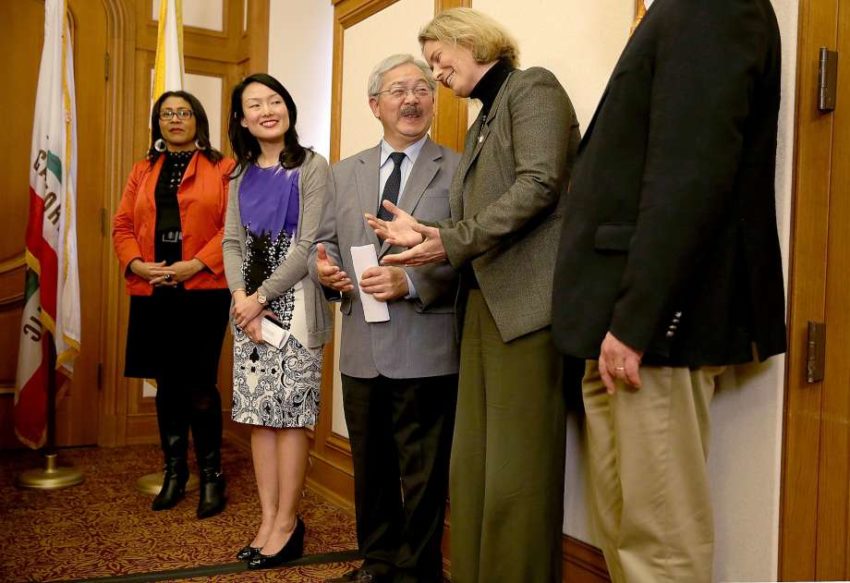
Achieving a quality education is one of the key, fundamental social determiners of health. People with higher education levels have better long-term health. More and more Latinos are enrolling in college. One city in the U.S. is looking to make access to higher education even more available than ever. Mayor Ed Lee of San Francisco (15.3% Latino population) recently announced that the city would make college education free “to all its residents” through the City College of San Francisco. The plan will go into effect in 2018 and was made possible due to a tax on properties sold for at least $5 million. “To California residents who are living in San Francisco, your community college is now free,” Mayor Ed Lee said in an interview with USA Today. In order to ...
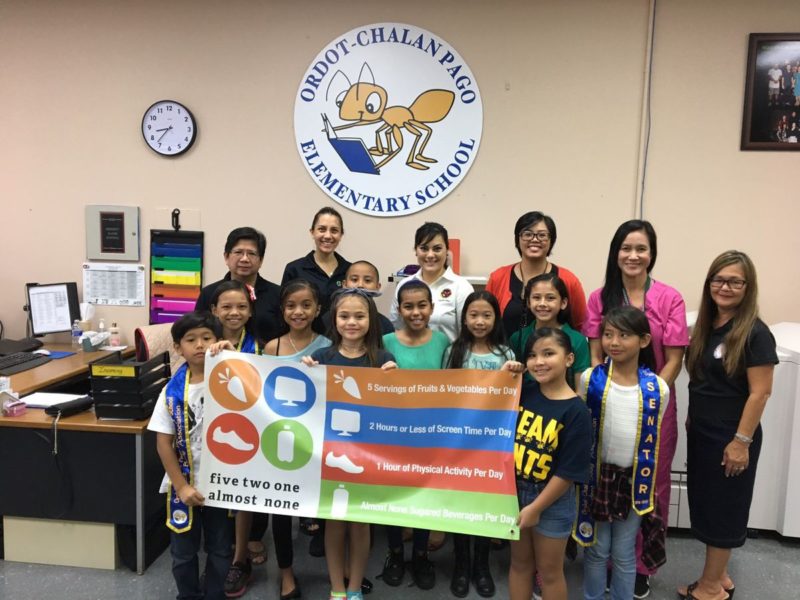
On February third, the Ordot -Chalan Pago Elementary School (OCPES) kicked off the school-wide event for a SNAP-Ed program called "Fit Fridays" to encourage students to have at least one hour of regular physical activity every day. Health champions that helped lead the event were Principal of OCPES, Tricia Moylan and School Nurse, Leah Landstrom. Ordot-Chalan Pago is a pilot village for the program, where schools signed on back in December of 2016, to help roll out many Fit Fridays and become leaders and champions with the 5-2-1-Almost None pledge with SNAP-ED. The campaign for the 5-2-1-Almost None is supported by a partnership between the UOG college of Natural and Applied Sciences and the Department of Public Health and Social Services through SNAP-Ed. To learn more about ...