High blood pressure is a silent killer (el asesino silencioso in Spanish) that can spur heart disease and stroke among Latinos. We addressed heart health at UT Health San Antonio’s webinar, “How to Fight El Asesino Silencioso,” at 11 a.m. Central on Tuesday, Sept. 10, 2024, in advance of Hispanic Heritage Month. This webinar featured experts from UT Health San Antonio, the National Hispanic Medical Association (NHMA), and Genentech to share resources and relevant tools that Latino families and healthcare workers can use to help prevent, treat, and manage high blood pressure, also called hypertension. This is a part of a webinar series, “Let’s Improve Health in South Texas and Beyond." The series is a collaboration of the Salud America! program at the Institute for ...
School supplies, news clothes, and annual check-ups at the doctor are just a few things on a parent’s checklist for the start of a new school year. But don’t let one major part of a child’s health slip out of sight. Vision and eye health!
Advocating for Children’s Eye Health
Uncorrected vision problems can hinder child development, interfere with learning, and even lead to permanent vision loss. That is why Prevent Blindness Texas, an eye health and safety organization, is working to prevent blindness and preserve sight among children and adults by providing support and resources related eye health at all ages. “Early detection and treatment of eye problems are critical,” according to organization. To promote early detection of eye issues among children, ...
Cancer continues to be a leading cause of death in Latinos. Long-standing mistreatment of vulnerable populations have led to a higher exposure to risk factors for cancer, such as obesity, diabetes, and stress. These risk factors are compounded by the non-medical drivers of health (NMDoH) such as access to healthy foods, transportation, and health insurance that many Latinos face, making it difficult to seek healthcare, culminating in worse health outcomes. Another big factor is driving worse health for Latinos – a lack of preventative care. 64% of Latinos skipped recommended health screenings, such as colonoscopies, pap smears, mammograms, and more, according to a news release about the second annual Wellness Matters Survey published by Aflac. Let’s ...
Latinos and other group that experience health differences are frequently left out in spine pain clinical trials, according to an analysis from eight randomized controlled trials (RCTs). The study, published by National Institute of Health and funded by the National Center for Complimentary and Integrative Health, found a lack of participation among vulnerable populations and other overlooked groups. Let’s look further into the data and how it impacts Latinos.
Participation in Clinical Trials on Spinal Pain
The analysis points out that, while RCTs are considered the gold standard study design for evaluating treatment effectiveness, they can suffer from generalizability issues. In other words, the findings of these studies can’t be generalized to the U.S. population because ...
An estimated 795,000 Americans suffer a stroke each year, amounting to one stroke every 40 seconds, according to the Stroke Awareness Foundation. Every 4 minutes, someone dies from a stroke, according to the American Stroke Association. Due to background differences that affect many Latinos, stroke is the fourth-leading cause of death in Latino men and the third for Latina women. Stroke is also a top cause of serious, long-term mental or physical challenge. The Stroke Awareness Foundation found that within 5 years of a first stroke, 25% of survivors will face another, complicating health for more than 7 million survivors. This makes access to care critical, especially for Latinos, who often lack health insurance. However, Latinos were less likely than ...
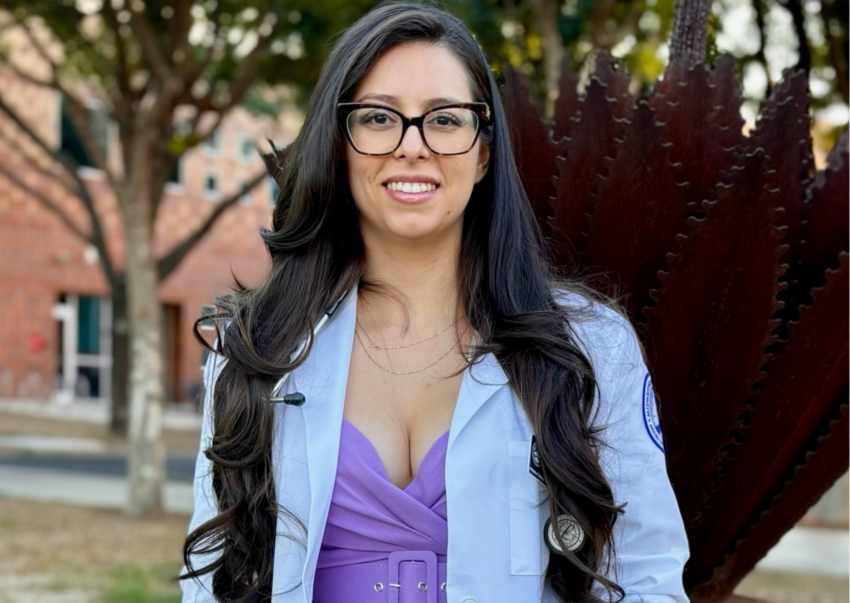
Janette Ramirez was looking for a way to help people. In her search, she walked into the Center for Service Learning, Internships & Civic Engagement (SLICE) at California State University, Dominguez Hills (CSUDH). Ramirez jumped into multiple SLICE programs and helped empower the local community to overcome social challenges and differences in health, education, and economic opportunities – and she left with a passion for serving others. “That’s how I came to find my love for community service and serving others, because, you know, it’s just really important,” Ramirez said. Today, Ramirez is still seeking to help as many people as she can. As a medical student going into her second year at Midwestern University in Arizona and as a Robert A. Winn Diversity in ...
The pandemic took a toll on many families across the country, especially Latino families. Some Latinos lost jobs while others lost the roofs over their heads, and many lost loved ones to the social, health, and economic impacts of COVID-19. To combat some of these hardships, the US government adopted several policies to assist families struggling financially. One such pandemic-era policy was the automatic renewal of Medicaid and Children’s Health Insurance Program (CHIP) coverage making it easier to maintain coverage during a time of economic uncertainty. The policy stretched on for three years until states began the process of screening for eligibility in early 2023. The sudden upheaval of guaranteed medical insurance for low-income families receiving ...
US Latinos and other populations made historic gains in healthcare coverage in the years after the Affordable Care Act (ACA), according to five recent research briefs from the US Office of the Assistant Secretary for Planning and Evaluation (ASPE). In the research brief focused on Latinos, research showed that the uninsured rate for nonelderly Latinos decreased from 32.7% to 18% from 2010 to 2022. However, the brief also found that Latinos are more than twice as likely as non-Latino Whites to be uninsured. Let’s further explore health insurance coverage among Latinos.
Latinos Facing Health Challenges
For Latinos, health outcomes are affected by factors like lack of health insurance, language challenges, and lack of access to care. “Studies show that people without health ...
Heart disease risk is high for U.S. Latinos, data shows. While most Latinos were aware of their cardiovascular risk factors, less than half of the adults in a study of stroke survivors had healthy blood pressure and cholesterol, and only half had healthy blood sugar levels, according to the American Heart Association. “Hispanic adults are more likely than white adults to develop heart failure. But Hispanic adults living with heart failure are less likely to get appropriate care and treatment than white adults living with heart failure,” according to a Close the Gap resource. This emphasizes the importance of targeted prevention programs and resources for Latinos to avoid stroke, heart attack, and other cardiovascular diseases. That’s where Close the Gap comes in to ...