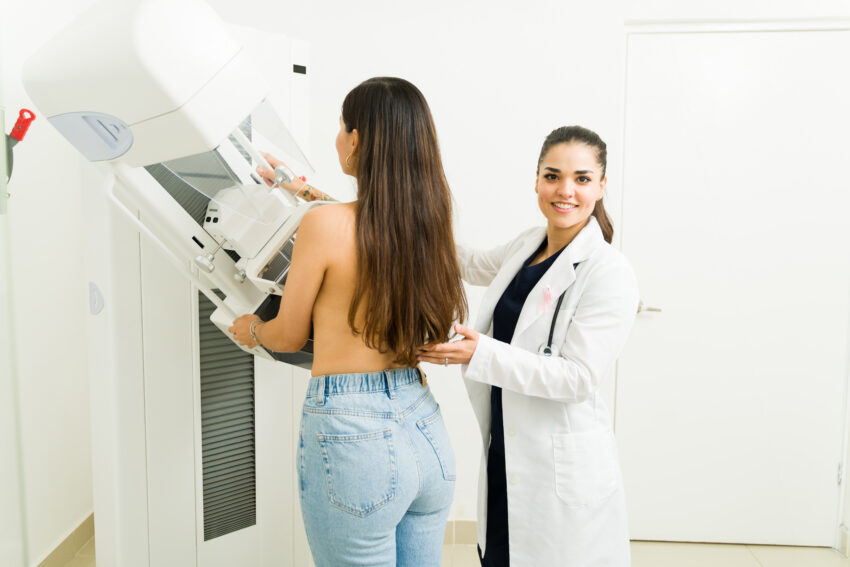
Every year, 240,000 women are diagnosed with breast cancer in the US, according to the Centers for Disease Control and Prevention (CDC). That’s why healthcare providers recommend women ages 50 to 74 get a mammogram – an X-ray of the breast that can help screen and diagnose cancer – every two years. However, only about 3 in 4 women in that age group has had a mammogram in the past two years, as of 2022, according to a new study by the CDC. For women who experience health-related social needs, even fewer haven’t gotten one. This is alarming because, while mammograms can reduce the number of breast cancer deaths by 22%, this cancer is the top cause of death among Latinas. Let’s explore the non-medical drivers of health that are creating challenges to ...
Nearly one of every two people are Latino in Harris County, Texas, which is home to Houston, the nation’s fourth-largest city. As the Latino community rises, equitable health, education, and opportunity is critical. That is why two Houston organizations, Children at Risk and Child Health Policy at the Baker Institute, published the 2024 Latino Child Health Initiative Report to examine the state of Latino child health in Precinct 2, one of four precincts in Harris County. The report identified high rates of type 2 diabetes and obesity among Latino children in Houston, as well as challenges to mental health services and kindergarten readiness. Let’s dive into the report and how it reflects the overall US Latino population.
Latino Children and Risk for Diabetes, Obesity
In ...
Dr. Rebecca Jones of UT Health San Antonio has been approved for a 2-year, $250,000 funding award through the Eugene Washington PCORI Engagement Awards (Engagement Awards) program, an initiative of the Patient-Centered Outcomes Research Institute (PCORI). The funds will support the creation of the Creando Conexiones: Cancer Health Research Agenda, which will outline research priorities identified by South Texas cancer survivors, caregivers, and community members. The coalition is directed by a core team led by Jones and an executive committee led by Jason Massiatte, president and CEO of Ma Hila’s Heart Children's Cancer Foundation. Join the Creando Conexiones coalition! "We know that research has the most impact when guided by voices of cancer survivors and community ...
The Food and Drug Administration (FDA) recently announced its request for $7.2 billion as part of President Joe Biden’s fiscal year (FY) 2025 proposed budget. FDA’s request, which is about 7% higher than last year, covers the agency’s top health priorities. “This funding will allow the agency to enhance food safety and nutrition, advance medical product safety, help support supply chain resiliency, strengthen the agency’s public-health and mission-support capacity, and modernize the FDA’s infrastructure and facilities,” according to an FDA News Release. Let’s dive into what these requests entail and how it can impact Latinos.
Enhancing Food Safety and Nutrition
FDA is requesting $15 million to protect and promote a safe, nutritious U.S. food supply through the ...
We know you care about the health of people in San Antonio. Watch our webinar, “All of Us in Alamo City Matter: Where You Live Impacts Your Health,” at 10-11 a.m. CT, Wednesday, March 20, 2024! The webinar explored the state of non-medical drivers of health in San Antonio and how we can leverage the All of Us Research Program to promote health and health research. Some studies suggest that non-medical drivers of health plays a role in about 30% to 55% of our health outcomes. This means that nearly half of our health issues are a result of our environment and life circumstances. Hear more from our expert panelists, including representatives from South Texas Blood & Tissue, Mexican American Unity Council, and Salud America! at the Institute for Health Promotion Research ...
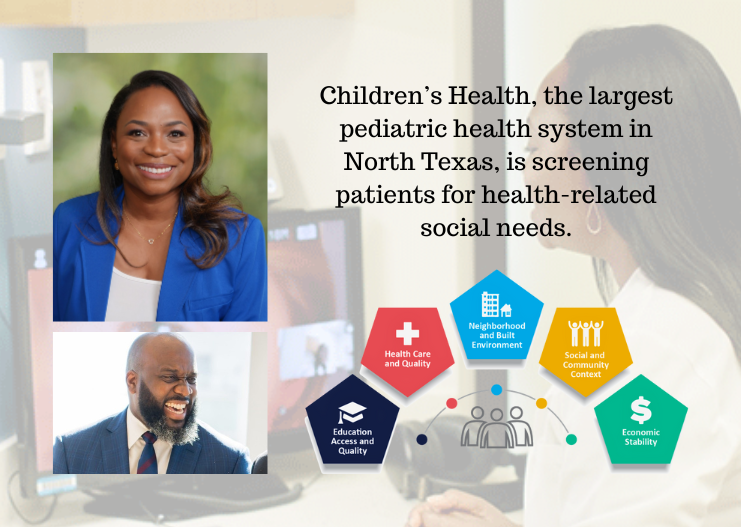
At her annual wellness visit, Dr. Stormee Williams filled out a digital questionnaire that asked about her need for help with housing, transportation, food access, and other non-medical needs. Williams was taking an “Non-Medical Drivers of Health (NMDoH) Screener.” An NMDoH screener is a questionnaire to help healthcare workers identify a patient’s issues with the non-medical drivers of health. These are the conditions in which people are born, grow, work, live, and age, and the wider set of systems that shape life. If a screener finds a patient in need, healthcare workers can then connect the patient to community support and resources. Helping patients address these non-medical needs can help them achieve better health. Williams, fortunately, didn’t have non-medical ...
When COVID-19 hit, it hurt many Latinos who worked in industries and jobs with few benefits and no flexibilities to respond to childcare disruptions. Unfortunately, after the pandemic, that situation remains. The industry and occupational distribution of Latino parents with low incomes remains largely unchanged from pre- to post-pandemic for mothers and fathers, according to a recent study from the National Research Center on Hispanic Children and Families. “We provide the first national portrait of the industries and occupations that employ Latino parents with low incomes in the aftermath of the pandemic, and highlight employment shifts that occurred during the pandemic,” according to the study. Let’s dive into the study finding and how it impacts Latino ...
Challenges in health insurance coverage and healthcare access worsened during the pandemic, according to a new study in the journal Geospatial Health. The study found Latinos and African Americans were the most affected populations. “Our results suggest that loss of insurance coverage and reduced access to health services deepened inequities in an already uneven healthcare landscape, particularly for African American and Hispanic/Latino populations,” according to the study researchers. Let’s dive into what the data found and what this means for Latinos.
How Did COVID-19 Impact Healthcare for Latinos?
Study researchers – from CDC, the U.S. Department of Health and Human Services, and Johns Hopkins University Bloomberg School of Public Health – ...
The time is now to secure medical insurance through Medicaid and the Children’s Health Insurance Program (CHIP). After three years of automatic renewal because of the COVID-19 pandemic, states went back to screening for eligibility in early 2023. As a result, an estimated 15 million people, including 4.6 million Latinos, could lose their medical coverage through these programs over the next few months, depending on what state you live in. To address this, the U.S. Department of Health and Human Services (HHS) is launching a new online resource to help people navigate the renewal and/or healthcare transition processes. “Nobody who is eligible for Medicaid or the Children’s Health Insurance Program should be disenrolled simply because they didn’t have enough ...