By Julie Moser
Military Spouse, Breast Cancer Advocate
Founder, Executive Director, PWATX October 28, 2013, is a date that will always be one that will be remembered without thinking about it. You know, like a birth date or wedding anniversary. October 28, 2013, is the day I became a survivor. When the doctor said the words: “You have cancer." On the early morning of my husband’s third deployment send-off, I noticed a brown line under my left breast after a shower. It looked like I had burned my skin with a curling iron. My husband said that it probably wasn’t a big deal as long as I didn’t feel any lumps. I didn’t tell him I felt something but told him that I would get it checked out later in the day with my primary care physician. My doctor found three ...
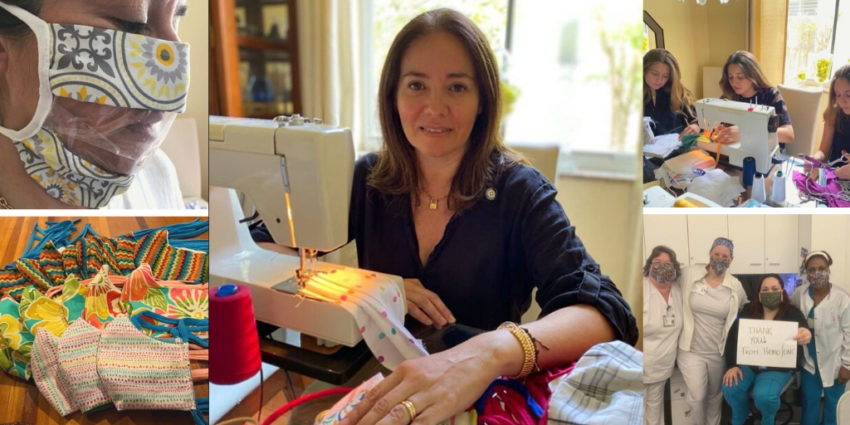
You might call Maria Pia Sanchez la reina de las mascarillas (the queen of face masks). Sanchez, a native of Chile who lives in Florida, worked with a few friends to sew masks to donate to front-line medical workers when the COVID-19 pandemic hit. But they didn’t just sew. Sanchez also created the Para Todos Mask Initiative Facebook page, which has generated a worldwide network of Chilean, Mexican, Guatemalan, Colombian, Venezuelan, and other Latino volunteers to create over 7,000 masks for those who need them most. Update 8/24/20: They've made over 14,000 masks! How did this small sewing group impact the world?!
Coronavirus Pandemic Spurs Sanchez into Action
COVID-19 swept across the United States quickly in March 2020. By April 2020, experts said Latinos and other ...
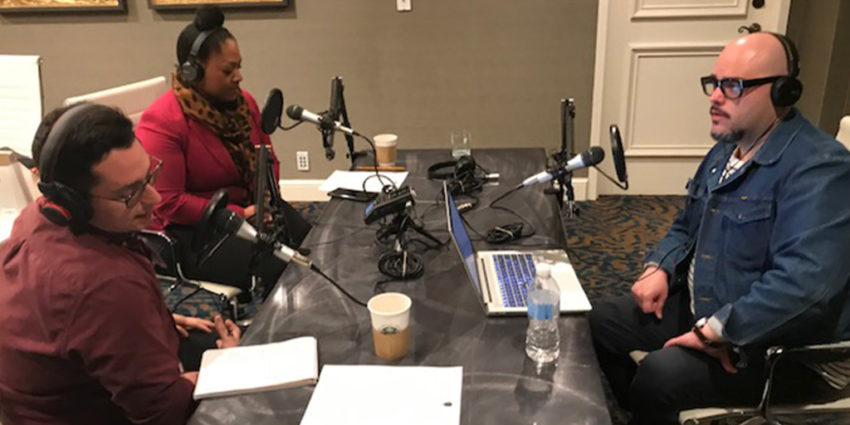
Medical research studies help determine the direction of how doctors treat patients, administer medicine, diagnose sickness, and countless other aspects of treatment. Statistically, Latinos and people of color are vastly underrepresented in these kinds of exploratory efforts. This matters as the knowledge gained and disseminated in these studies could influence whether or not a patient receives adequate care. Dr. Bárbara Segarra-Vázquez, the Dean of the School of Health Professions at the University of Puerto Rico and one of the Principal Investigators of the Hispanic Clinical and Translational Research Education and Career Development program funded by National Institute of Health, joins Salud Talks to discuss this issue, and, her personal experience with it. Check out this ...
Health equity is where everyone has a fair and just opportunity to live their healthiest life possible. But health inequity remains. Now the COVID-19 pandemic is worsening historical inequities, and disproportionately affecting and killing Latinos and other people of color. So what can we do? We need both immediate focus to ease the coronavirus pandemic and its impact on Latinos and people of color, as well as long-term strides to address underlying inequities that are aggravated during this time. It won't be easy, or fast. But here's few ways to push for health equity.
1. Understand the Need for Heath Equity During COVID-19 and After
Where you live matters for your health. Even before COVID-19, inequitable city planning, historic discriminatory practices like ...
As the coronavirus pandemic sweeps throughout the U.S., one personal and political issue is taking center stage for most: the cost of and access to quality healthcare. Statistically, Latinos and other disadvantaged groups experience some of the worst outcomes of those concerns. Moreover, experts say it will only get worse as this outbreak endures. Earlier this year and prior to the spread of COVID-19, Dr. Mateo Benegas, a health services researcher at the Kaiser Permanente Center for Health Research, joined Salud Talks to address these issues and how the healthcare system is serving and not serving all patients equally. Check out this discussion on the Salud Talks Podcast, Episode 26, "Healthcare Access, or Lack Thereof"! WHAT: A #SaludTalks discussion about "Healthcare ...
Fewer than 5% of Latinos participate in federal clinical trials. That gives researchers less chance to find treatments that work for this population. Latinos suffer a heavier burden of coronavirus, obesity, and certain cancers. How are we going to make sure new treatments─such as a COVID-19 vaccine─work as well for Latinos and other people of color? Let’s use #SaludTues on Tuesday, April 28, 2020, to discuss how to ensure diversity and inclusion of people of color in research amid the COVID-19 pandemic! WHAT: #SaludTues Tweetchat: How to Ensure Diversity in Research during Coronavirus
TIME/DATE: 1-2 p.m. ET (Noon-1 p.m. CT), Tuesday, April 28, 2020
WHERE: On Twitter with hashtag #SaludTues
HOST: @SaludAmerica
CO-HOSTS: UnidosUS (@WeAreUnidosUS); League of ...
San Antonio Mayor Ron Nirenberg and Bexar County Judge Nelson Wolff announced the addition of Dr. Amelie G. Ramirez, director of Salud America! and the Institute for Health Promotion Research at UT Health San Antonio, to the COVID-19 Health Transition Team, which is working on a plan to slowly reopen the city economy after physical distancing. Nirenberg and Wolff wrote a joint memo that stay-at-home rules have saved lives. Yet they acknowledge physical distancing isn't permanent. "Our community needs a local strategy to reenter into everyday life," Nirenberg and Wolff wrote. "These decisions have critical implications on our community – including our ability to avoid subsequent outbreaks, ensure we protect our ... populations ... and to identify parameters for transitioning ...
COVID-19 can affect anyone. But, for Latinos, the coronavirus pandemic is worsening health, social, and income inequities, and raising fears of disparities in disease rates, exposure, testing, and prevention. Here is our infographic in English and Spanish on eight of the biggest coronavirus issues facing Latinos:
1. COVID-19 Rates and Latinos
Early reports from hotbed areas, including New York City and Oregon, show higher COVID-19 incidence and death rates among Latinos. In other cities, African Americans show higher rates. RATES
2. COVID-19 Testing and Latinos
People with health insurance get tested for COVID-19 more frequently than those who don’t, even if tests are free, according to researchers. 19% of Latinos are uninsured. This is the worst coverage rate ...
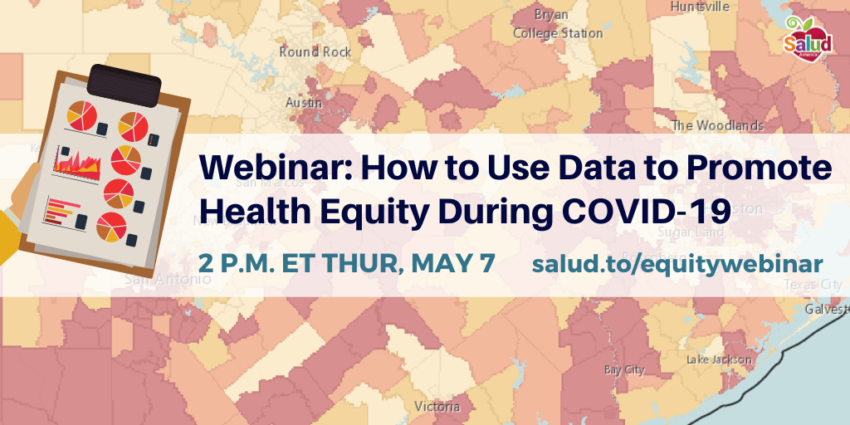
Salud America! led a national webinar to show how our Salud America! Health Equity Report Card can help you visualize and explore place-based health inequities in your county, and build a case toward solutions during these difficult coronavirus times. The webinar, “How to Use Place-Based Data to Promote Health Equity During COVID-19 Pandemic,” took place at 2 p.m. ET Thursday, May 7, 2020. Webinar speakers explored: How inequities in housing, transportation, poverty, healthcare, and access to healthy food and safe places to be active, contribute to disparities in infectious and chronic disease.
How you can use the local data, interactive maps, and comparative gauges in the Salud America! Health Equity Report Card to identify health inequity issues in your county.
...