If you’re like millions of Latino families you’ll most likely be honoring those who served our country with a carne asada, pozole and other delicious, but not so healthy Latino dishes. According to the latest national health report card, Latinos continue to suffer from obesity in the U.S. Let’s do something different this year and celebrate Memorial Day the healthy way. Here are 3 ways to have a fun and healthy Memorial Day: Organize a futbol match in the park: There’s no better way to spend a beautiful day in the park than by playing a short soccer match with tios, tias and primos (as); it will not only be a perfect family bonding time, but it’ll help you burn a few calories. Walking challenge: Challenge your family members to go for a 1 or 2 mile walk! ...
Local governments across the country are realizing the importance of a multimodal transportation network to not only reduce traffic congestion, but to increase road safety, drive economic development, and improve health. "While local officials have historically seen trail networks primarily as a means of recreation, people are increasingly using them as ways to get to work, school, or wherever they need to go," Mayor Patrick Wojahn of College Park, Maryland wrote in a guest post on CitiesSpeak, the official blog of the National League of Cities. Hundreds of thousands of deaths per year could be prevented if residents met the minimum physical activity guideline recommendations of 30 minutes of physical activity per day for five days per week. Considering the growing Latino ...
A new program called Students for Nutrition and Exercise (SNaX) is helping obese students in Southern California have healthier weights for longer periods of time. According to a recent article, SNax combined school-wide environmental changes, encouragement fo healthy eating, healthy foods in cafeterias and peer-led education and marketing to help students change their body mass index (BMI). Over 1,368 students heights and weights were assessed before and after two years of the program in over five schools within the Los Angeles Unified School District where thirty percent of the students were classified as obese at the start of the program. Two years later students showed a "significant decline" in BMI, around nine pounds lower in body weight, according to the article. The ...
As you may have noticed SaludToday has a new look! Our new design is more intuitive, mobile-friendly and more social than ever. Now, you can share our articles from your phone using text message, Whatsapp, Facebook, Twitter, and Email. “With the new design we hope to bring our daily readers a friendlier experience and one that’s more interactive,” Dr. Amelie Ramirez, director of the Institute for Health Promotion Research (IHPR), the team behind SaludToday said. If you haven’t , connect with us today by following SaludToday on Facebook, Twitter, Instagram and ...
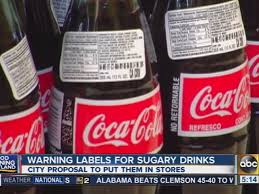
Joining the movement of many health groups, certain groups in Maryland want to label sugar-sweetened beverages. This doesn't come as a surprise, as many cities are starting to discuss soda taxes across the country including three cities in California, with big pushes in various cities in Calif. and in Philadelphia, Illinois. "There's a national movement working to reduce rates of heart disease, tooth decay, diabetes that are directly related to sugary drinks, here in Maryland, particularly in Baltimore, we are focused on education, ... this measure is about transparency, this is really about a consumers the right to know, " said Robi Rawl director of Sugar-Free kids Maryland, in the local news video. About 22 percent of Latino high-school students drink three or more sugary ...
Women with genes that are linked to breast cancer can significantly cut the risk for the disease by following a healthy lifestyle, according to a new study published in the Journal of American Medical Association, ABC News reports. The key lifestyle factors, researchers found to be the most important were: “Maintaining a healthy weight; not smoking; limiting alcohol; and not using hormone therapy after menopause.” “For women in the highest decile of risk owing to non-modifiable factors, those who had low BMI, did not drink or smoke, and did not use MHT [menopause hormone therapy] had risks comparable to an average woman in the general population,” the authors ...
Advocate and parent Theresa Turco wants healthier meals for her student's district. Speaking out and giving ideas, while passing out a menu, Turco explained in a recent news article that meals were too focused on unhealthy items like pizza, mozzarella sticks, and nachos. Turco offered up suggestions at a Board of Education meeting on May 224th, 2016, asking about doing surveys in English and Spanish to help figure out what parents and students would like to see on the school's menu. She also suggested affordable ways to incorporate more fresh foods into the school's food environment through taste-tests, salad and smoothie bars, and working with programs like USDA's Farm to School and Chef to School for resources and training. Turco knows that healthy eating is better for ...
Raising Women’s Voices (RWV), a national initiative working to make sure women’s voices are heard and women’s concerns are addressed as policymakers put healthcare laws into action, has finished preparation of Mi Salud, Mi Voz: Una Guía Paso a Paso Para Mujeres Sobre Cómo Usar el Seguro Médico. This guide is a Spanish translation of many popular health literacy materials. RWV Regional Field Manager Cecilia Saenz Becerra worked with three translators—Tony Macias, Jen Hofer, and Lucy Acevedo to produce the Spanish-language guide. “Working with the team of translators, we used Spanish language that was precise and accurate, while also trying to make it accessible to diverse Spanish-language readers,” she explained. Mi Salud, Mi Voz: Una Guía Paso a Paso Para Mujeres ...
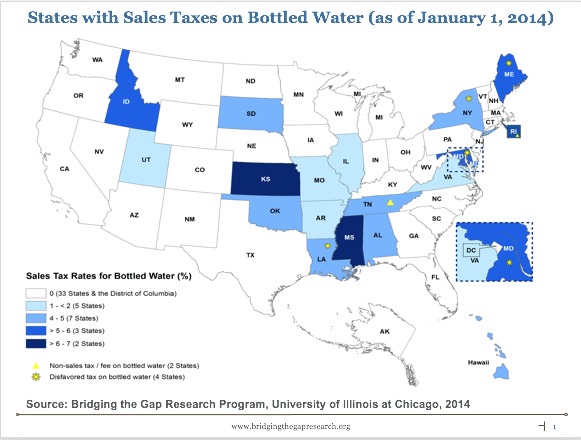
Needing a little research around sugary beverage taxes on soda, water, and snack foods? Learn about state-by-state bottle water tax rates, and soda tax rates from Bridging the Gaps 2014 research briefs and powerpoint maps that show the latest bottled water and soda taxes. Also in the brief, researchers show sales tax rates for each of the 50 states on bottled water, sodas and selected snack products sold through grocers and vending machines. Visit Bridging the Gap's page here to review all briefs and ...