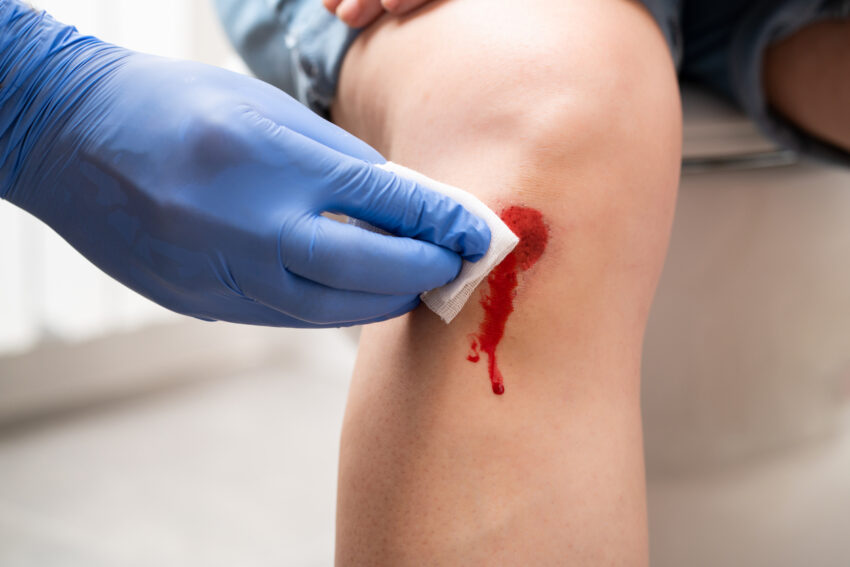
Access to practical and valuable infection control training is crucial for all healthcare workers. That’s why CDC’s Project Firstline developed Infection Control Micro-Learns – a series of guided infection control discussions that can be easily incorporated into team meetings or huddles facilitated by an experienced team member with infection control expertise. These short and easy-to-understand learning opportunities can help healthcare workers recognize and minimize infection control risks to protect themselves, coworkers, and patients from infectious diseases. Let’s explore the Infection Control Micro-Learn on Draining Wounds.
What Should You Do When You See a Patient with a Draining Wound?
A draining wound is a break in the skin or other tissue that has liquid ...
Individual health is influenced by a variety of non-medical factors, like where people are born, live, learn, work, play, worship, and age. These conditions are known as Non-Medical Drivers of Health (NMDoH). To help improve health and wellbeing through NMDoH, the White House and U.S. Department of Health and Human Services (HHS) have released new resources, including the first-ever U.S. Playbook to Address Non-Medical Drivers of Health. “It is clear that the health of our people does not exist in a vacuum, but it is affected by our access to stable housing, healthy food, and clean air to breathe,” said HHS Secretary Xavier Becerra. “It is crucial for HHS to tackle health care and public health holistically by addressing patients’ social ...
Dr. Veronica Ramirez is the first physician in her family. The youngest of four children, Ramirez grew up in Escondido, California, with an interest in service. She watched her parents generously help others and give back to the community. So, when Ramirez’s aunt, who she was very close to, was diagnosed with inflammatory breast cancer in her late 30s, Ramirez was motivated to take her service orientation to a new level – medical school – to help those like her aunt. “Seeing her go through that experience inspired me to want to go into medicine to help others,” Ramirez said. Ramirez has done more than achieve her goal. As an assistant clinical professor at the David Geffen School of Medicine at UCLA, a hospitalist with UCLA Health, and a fellow ...
Did you know 12.1% of men are in fair or poor health? Similarly, the average life expectancy of men in the United States is almost 5 years less than women (76.2 compared to 81). November is National Men’s Health Awareness Month, highlighting the importance of men’s physical and mental health while encouraging support for men facing prostate, testicular, and other cancers. In November (and beyond), here are some ways you can support men’s health!
Latino Men’s Health
Latino men face many health differences when it comes to physical and mental health. For example, while national suicide rates decreased, the rates went up 6% for Latino men, according to a 2022 article from Texas Public Radio. Machismo and other forms of stigma can play a large part ...
Healthcare workers, looking for your next informative – and entertaining – infection control resource?! Look no further, the Washington State Department of Health’s Project Firstline Podcast covers a variety of infection control topics, from healthcare-associated infections to multi-drug-resistant organisms. The podcast is part of the US Centers for Disease Control and Prevention (CDC)’s Project Firstline, which provides all healthcare workers the infection control training and resources they need to protect themselves, their patients, and their coworkers from infectious diseases. With 17 episodes to choose from, you’ll be sure to learn something new. Let’s dive in!
A Glimpse at the Episodes
Dating back to the height of the COVID-19 pandemic, the opening episodes ...
Clinical trials have led to the development of better treatments, life-saving medicines, and new prevention strategies for cancer and other diseases. Still, clinical trials have lacked volunteers who are Latino. We need a variety of participants in clinical trials to ensure health and medical discoveries are fair for all populations. To promote clinical trials, let’s use #SaludTues on Tuesday, Dec. 5, 2023, to discuss reasons why Latinos and all people should consider joining a clinical trial! WHAT: #SaludTues Tweetchat: Why Should You Try a Clinical Trial?
TIME/DATE: 1-2 p.m. ET (Noon-1 p.m. CT), Tuesday, Dec. 5, 2023
WHERE: On Twitter with hashtag #SaludTues
HOST: @SaludAmerica
CO-HOSTS: LatinaStrong Foundation (@LatinaStrongDr); Public Health Maps ...
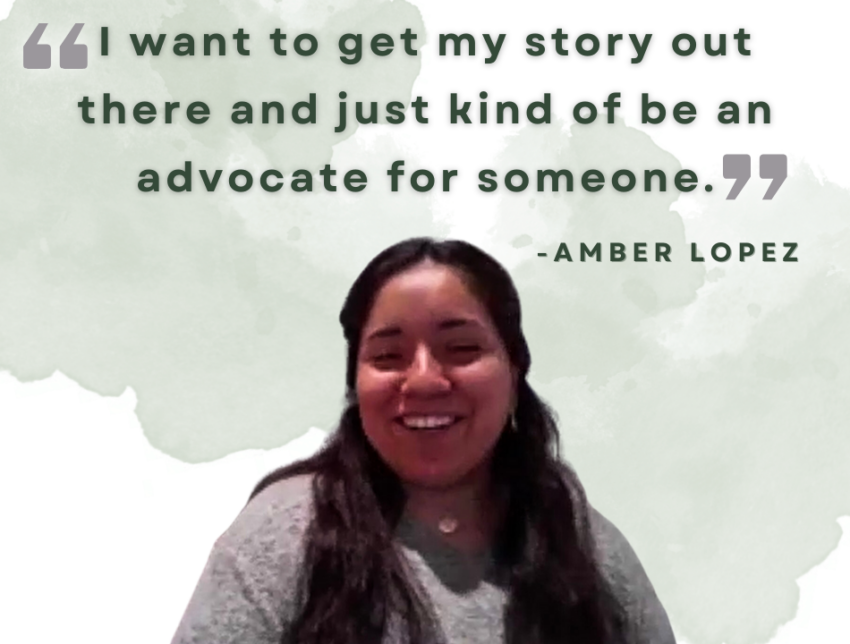
News of a cancer diagnosis is the last thing anyone wants to hear. It can be especially devastating for a teenager with no family history of cancer. That was reality for Amber Lopez. Lopez, a San Antonio resident who began experiencing symptoms around age 14, was eventually diagnosed with cervical cancer a few years later at 18. “When you hear that word cancer, you’re kind of like, 'Oh, my God. OK. So, does that mean like, I’m going to pass away? How does this work?'” Lopez said. Since her diagnosis, Lopez has overcome many challenges in her cancer journey. Now she’s sharing her story through the Avanzando Caminos study at UT Health San Antonio to give hope to other Latino cancer survivors.
Navigating Her Cancer Diagnosis
Latinas ...
Spending on health is rising in America. Yet, ironically, health outcomes are getting worse. In fact, people here experience the worst health outcomes overall of any high-income nation. U.S. residents are more likely to die younger, and from avoidable causes, than residents of peer countries, according to a 2023 report from The Commonwealth Fund. Let’s compare health outcomes with peer countries to provide an important baseline for where we are in health outcomes and set a target for where we could be.
The U.S. and 5 Important Domains of Healthcare Systems
A 2021 study by The Commonwealth Fund compared five performance domains of health care systems across 11 high-income countries. Researchers found the U.S. ranks last on four of five domains: access to care (last)
...
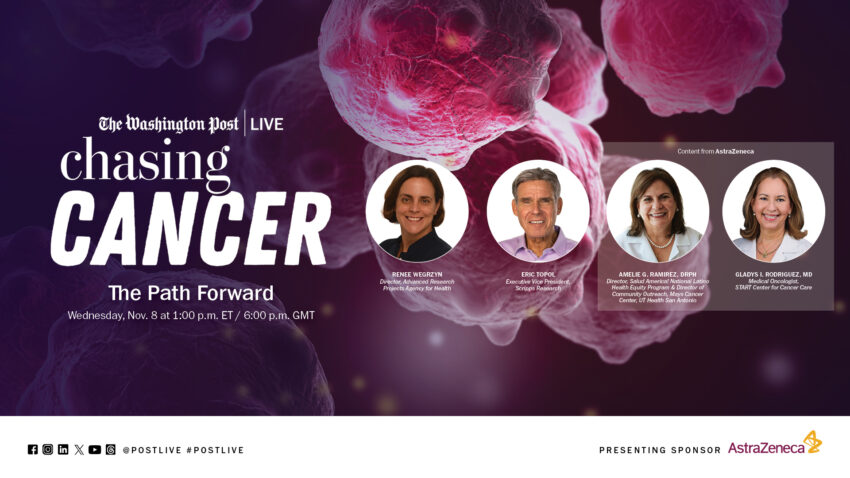
Dr. Amelie G. Ramirez, leader of Salud America! at UT Health San Antonio, joined The Washington Post's live show to share how cancer screening can help patients get diagnosed and treated earlier. The show, "Chasing Cancer: The Path Forward," sponsored by AstraZeneca, took place Nov. 8, 2023. In the first part of of the show, Renee Wegrzyn, director of the Advanced Research Projects Agency for Health (ARPA-H), and Eric Topol, executive vice president of Scripps Research, discussed how technological advancements and AI are changing how cancer is diagnosed and treated. In the second part of the show, Ramirez teamed with Dr. Gladys I. Rodriguez, a medical oncologist with the START Center for Cancer Care, to discuss innovative initiatives make it easier to access early screenings for ...