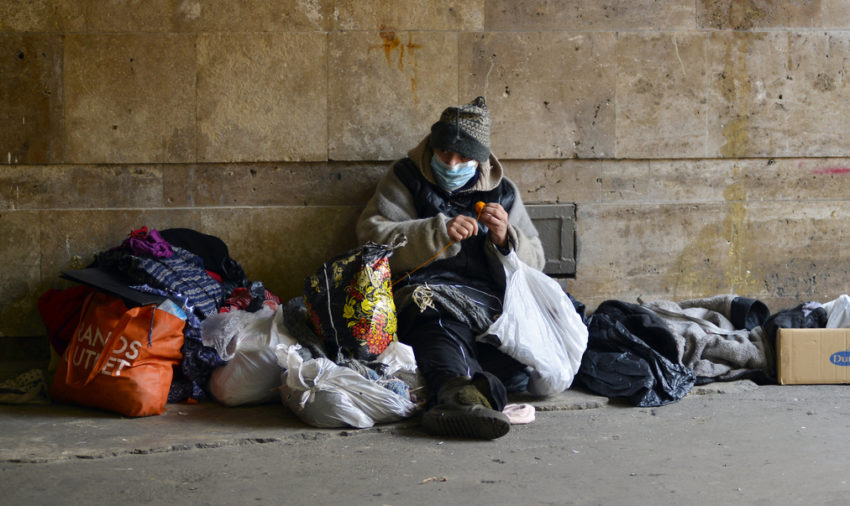
The COVID-19 pandemic is having a devastating impact on homelessness. People who experience homelessness are transient. That makes it harder to detect, track, and prevent disease transmission, and treat those who need care. Now some experts say rising unemployment could spark a 45% rise in homelessness by the end of 2020, leaving 800,000 people with no permanent shelter in the U.S., the L.A. Times reports. "If the projections of unemployment being made now turn out to be accurate, and the relationship between unemployment and homelessness follows the historical pattern, and no other major changes occur, that’s what we can expect to happen," said economist Dr. Brendan O’Flaherty of Columbia University.
Concerns for the Homeless amid Coronavirus
People experiencing ...
The COVID-19 pandemic continues to sicken people and worsen health inequities in income, housing, food, and more. The homeless and housing-unstable are at particular risk. Let’s use #SaludTues on May 12, 2020, to tweetchat about how the coronavirus is affecting homelessness and what we can do about it! WHAT: #SaludTues Tweetchat: “How COVID-19 Impacts Homelessness”
TIME/DATE: 1-2 p.m. EST Tuesday, May, 12, 2020
WHERE: On Twitter with hashtag #SaludTues
HOST: @SaludAmerica
CO-HOSTS: Public Health Maps (@PublicHealthMap) and Enterprise (EnterpriseNow)
OPTIONAL HASHTAGS: #COVID19 We’ll open the floor to research, your experiences, stories, and best practices as we explore: How is the coronavirus outbreak affecting homelessness?
How big is the ...
Salud America! led a national webinar to show how our Salud America! Health Equity Report Card can help you visualize and explore place-based health inequities in your county, and build a case toward solutions during these difficult coronavirus times. The webinar, “How to Use Place-Based Data to Promote Health Equity During COVID-19 Pandemic,” took place at 2 p.m. ET Thursday, May 7, 2020. Webinar speakers explored: How inequities in housing, transportation, poverty, healthcare, and access to healthy food and safe places to be active, contribute to disparities in infectious and chronic disease.
How you can use the local data, interactive maps, and comparative gauges in the Salud America! Health Equity Report Card to identify health inequity issues in your county.
...
The coronavirus outbreak (COVID19) has sickened many and continues to spread around the world. The pandemic is affecting health equity in many ways, including homelessness, evictions, and affordable housing options. Let’s use #SaludTues on April 14, 2020, to tweetchat about the Coronavirus is affecting housing crisis! WHAT: #SaludTues Tweetchat: “How Coronavirus Is Affecting the Housing Crisis!”
TIME/DATE: 1-2 p.m. EST Tuesday, April, 14, 2020
WHERE: On Twitter with hashtag #SaludTues
HOST: @SaludAmerica
CO-HOSTS: Public Health Maps (@PublicHealthMap), Communicate for Health Justice (@_CFHJ), and the Center for Care Innovations (@CCIVoice)
OPTIONAL HASHTAGS: #COVID19 We’ll open the floor to research, your experiences, stories, and best practices ...
The COVID-19 pandemic is affecting health equity in many ways, including homelessness, evictions, and affordable housing options. Low-income workers, the uninsured, those with unstable housing, and immigrant communities will bear the brunt of this crisis. Many U.S. cities were dealing with a homelessness crisis long before this outbreak. Now, the escalating pandemic has created a catastrophe threatening thousands of lives.
Affordable Housing Crisis during COVID-19
Millions of Americans face housing cost burdens. Over half a million sleep on the streets any given night, according to a recent report. Worse, countless people and families pay more than they can afford to keep a roof over their heads every month. The coronavirus outbreak is a public health emergency that will ...
Proposed changes to the Community Reinvestment Act (CRA) could bring back redlining, relax affordable housing definitions, and reduce the number of bank loans, investments, and services in low- and moderate-income communities and those of color, experts say. The CRA was developed in 1977 to curb redlining—discriminatory lending—and push banks to better serve communities. Now, federal agencies are proposing changes to modernize the complex law. But housing advocate Miriam Axel-Lute and others worry it weakens the CRA and is a “clear invitation to return to redlining.” “In addition, some investments in infrastructure and sports stadiums in low- and moderate-income communities would now qualify for CRA credit without any requirement that they primarily benefit low- and ...
The number of children living in single-parent households has grown significantly over the past 50 years. In fact, it has actually doubled — jumping from 13% to 32% in 2017, according to a new Pew Research Center analysis of US Census Bureau data. High cost-of-living, including necessities such as food and transportation, can significantly impact single parents. Worse, it can prohibit their ability to break cycles of poverty or build substantial wealth.
Single Latino Parents
In the US, there about half of each sing-parent race group are white, roughly 15% are Black, about one-fourth are Latino/Hispanic, and a small share are Asian. "These gaps are driven largely by racial differences among the large share of solo parents who are mothers," Gretchen Livingston with PEW ...
Throughout the modern era, single-family zoning and redlining practices institutionalized economic as well as racial segregation in America. Although redlining is now illegal, single-family zoning—which still occurs to this day—reinforces both racial and economic segregation. Moreover, it contributes to the racial wealth gap seen across the country. "The practice of zoning most residential land exclusively for single-family detached homes is a major cause of affordable housing shortages and long commute times," Eric Kober, an adjunct fellow at the Manhattan Institute and former director of housing, economic, and infrastructure planning at the New York City Department of City Planning, writes in a recent CNN Business editorial. "In expensive cities, this policy makes it ...
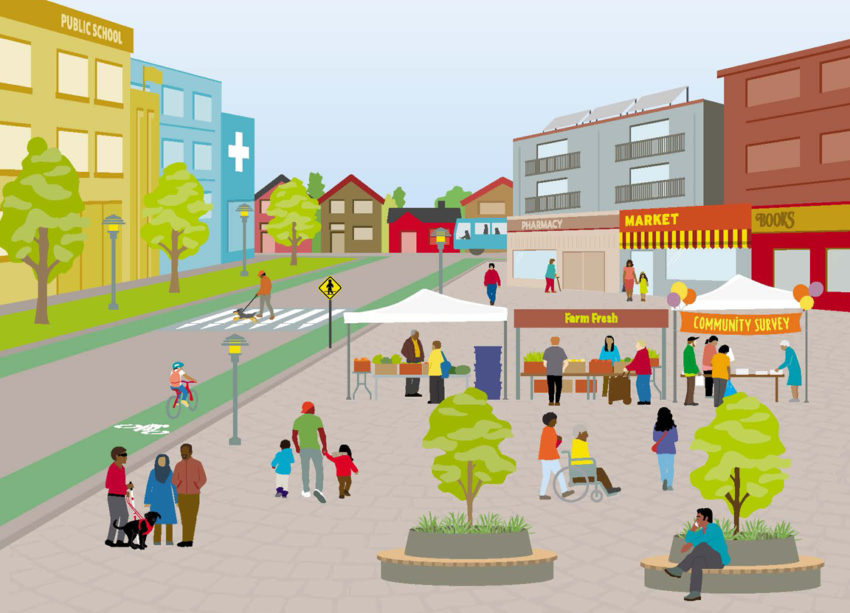
Local planners have the power to help create healthy, fair communities. Unfortunately, common planning practices have contributed to the high percentage of poor people and people of color who live in unhealthy places, widening disparities in health and wealth. That's why our friends at ChangeLab Solutions created Long Range-Planning for Health, Equity & Prosperity: A Primer for Local Governments. This can help planners prioritize health and equity in their work. "By integrating health and equity considerations into planning practices, planners have the power to revise past planning decisions and create healthy, equitable, and prosperous communities," ChangeLab reports.
Place Matters for Health Equity
Where you live matters for your health. Inequitable city planning, ...