It is a known fact that one of the most important social determinants of health is where you live. More and more local and state governments are realizing how important environment is to overall health and well-being. For Latinos, where they live is often leads to unavoidable health disparities due to lack of access to healthcare, healthy food choices, and educational opportunities. Recently U.S. News & World Report outlined the best and worst states to live in based on a host of categories that residents value the most. These categories include health care, education, infrastructure, crime rates, and economic opportunities. According to the new report, Massachusetts (10.56% Latino population) was rated number one overall. Not surprisingly, as Massachusetts is home to Harvard ...
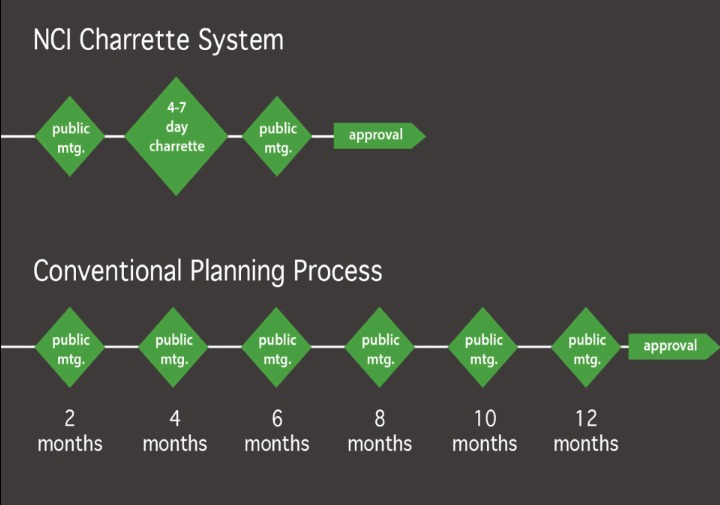
Designing healthy, complete neighborhoods requires a holistic, collaborative process, but collaboration can get messy. Charrettes are a creative way for agencies, organizations, groups, and community members to bust out of their specialist silos and work together to solve community planning and design problems. Charrettes are of often intense meetings lasting multiple days. The National Charrette Institute (NCI) began training professionals in collaborative design and charrettes in 2002. In 2017, NCI partnered with the Michigan State University (MSU) School of Planning, Design and Construction (SPDC) and MSU Extension. Professionals, such as transportation engineers, architects, urban designers, and planners need to work together with citizens, elected officials, ...
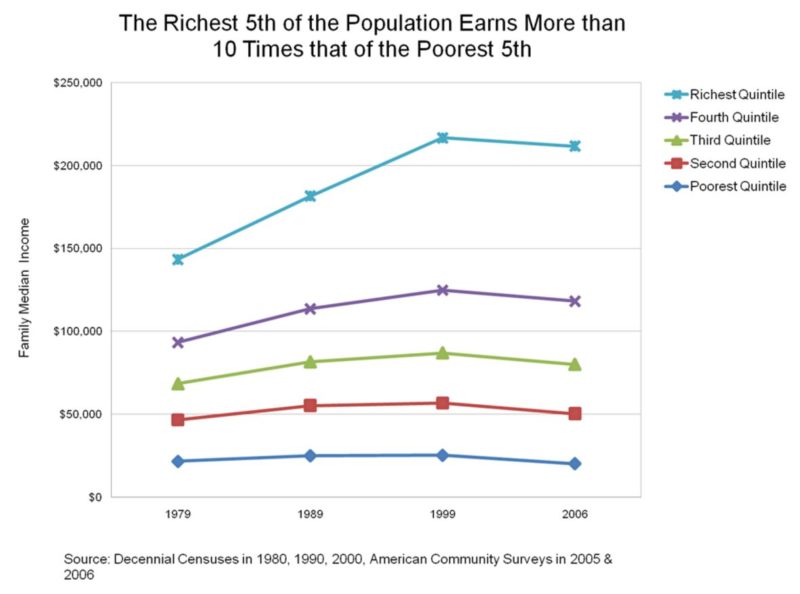
Latinos suffer fast differences in health and social conditions compared to other racial and ethnic groups, particularly whites. These differences, called health disparities, are rooted in social disadvantage and are often unavoidable. The Metropolitan Area Planning Council (MAPC) in Boston, Mass. (18.81% Latino population), has released a new report discussing the growing health and income disparities in the area. Some of the report’s findings include new stats about the rapidly rising rates of youth asthma hospitalizations in Greater Boston. According to the findings, the rate has increased by 22 hospitalizations per 100,000 from 2003-2007 to 2008-2012. One of the chief causes has been the growing number of Latino youth asthma cases. “In the asthma arena what [the findings] ...
A new study looking at 24 corner stores in disadvantaged neighborhoods and two wholesale stores in Baltimore City, Maryland were tested on the impact of how store-directed price discounts and communications strategies impact healthy food supply and demand. The study, published in Public Health Nutrition reported that stores that used healthy marketing and discounts on healthy foods did, in fact, impact the supply and demand of healthier foods in stores. The stores were randomized into categories including pricing interventions, communication interventions, combined pricing and communications interventions, and a control store. During the 6 month trail, communication stores promoted healthy items with signage, taste tests, and refrigerators. The pricing intervention stores were ...
The Salud America! national Latino childhood obesity prevention program has received a one-year, $1.5 million grant from the Robert Wood Johnson Foundation (RWJF) to empower people to work for policy changes to help Latino children grow up healthy. Salud America!, established in 2007 and based at UT Health San Antonio, has a national online network of 100,000 parents, health providers, and school and community leaders who support its mission: "Inspire people to drive community change for the health of Latino and all kids." The new funding will allow Salud America! to expand its network and engage members with enhanced educational content—multimedia role model stories, social media events, online resources, digital action campaigns, and marketing—geared toward healthy ...
How we get around each day shapes our physical and mental health, and overall quality of life. Walkable communities are consistently found to be healthier communities. Demand for walkability has steadily increased. Regional transportation planning agencies and metropolitan planning organizations (MPOs) play a critical role in planning and constructing more convenient, attractive, and safe places to walk or bike for transportation, recreation, and/or health because they are the gatekeepers of billions of transportation dollars. The American Public Health Association and Transportation for America developed a policy paper outlining four policy levers for MPOs to prioritize health in their plans, projects, and policies to decrease health disparities and increase access to local ...
Two years after Mexico implemented a soda tax, sugary drink consumption has decreased shows a new study. According to the researchers at the University of North Carolina's Gillings School of Global Public Health and the Executive Director of the Center for Science in the Public Interest, Michael Jacobson, the taxes are decreasing soda purchases as much as 5% in the first year of the tax and 4% in the second year. Sugary beverages are a danger for Latino kids in America, where studies show 74% of Latinos have had a sugary drink by age 2 and Latino kids ages 0-5 years old consume more sugary drinks than the overall average. Experts warn that sugary drinks bring increased risks for children and teens, who often face higher risks for unhealthy weights, heart disease, high blood ...
New guidelines are out from Healthy Eating Research (HER) for Health Professionals on infant and toddler feeding. Evidence shows that the first 1,000 days or the period from conception to age two for children are critical in obesity prevention. Many Latino children often deal with unhealthy weights due to more consumption of sugary drinks, less access to healthy foods and limited breastfeeding opportunities. With the new evidence-based guidelines from HER parents can find out what and how to feed infants and toddlers as well as how to address screen time, media use, sleep and other topics that impact childhood weight outcomes. Some of the main recommendations of the review include: Encouraging breastfeeding from birth until 6 months and after adding complimentary foods, ...
Did you know this week is National Eating Disorders Awareness week? An increasing amount of Latino and other minority populations deal with "disordered eating"—restrained, compulsive or binge eating and an associated loss of control—in different ways depending on their culture. Let’s use #SaludTues on Feb. 28, 2017, to tweet about #EatingDisorders, their impact on Latinos, and info, resources, and tips how to promote healthy eating patterns for all! WHAT: #SaludTues Tweetchat: “Let’s Talk #EatingDisorders”
DATE/TIME: 1-2 p.m. ET (Noon-1 p.m. CT), Tuesday, Feb. 28, 2017
WHERE: On Twitter with hashtag #SaludTues
HOST: @SaludAmerica
CO-HOSTS: @EDCoalition We’ll open the floor to your stories and experiences as we explore: What are some signs of ...