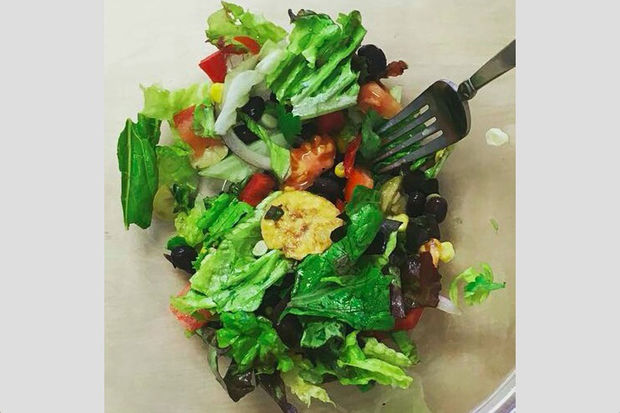
Restaurant owners and a nonprofit group are working to push a new salad on menus in hopes of improving health in the Bronx, New York's least healthy county. The Bronx Salad aims to appeal to the large local Latino populations with familiar ingredients, including plantain chips, corn, beans, red onions, cilantro, and a dash of hot sauce, according to a report by NY1. The salad was created by Chef King Phojanakong. "When you think of the Bronx, maybe think of hot dogs, Yankee Stadium, a lot of fast food," Phojanakong told NY1, noting the Bronx salad as a healthy alternative that locals can make easily themselves with lettuce from a rooftop garden and veggies from other community gardens. "We didn't want to create a salad with things that are so difficult to get." Access to ...
Is the food your baby eats truly healthy? Marketing for baby and toddler food and formula often contradicts expert guidance and “encourages parents to feed their young children products that may not promote healthy eating habits” needed for lifelong health, according to a new report. Marketing of added-sugar baby foods to Latino parents is especially problematic, given Latino children’s higher rates of overweight and obesity and health disparities. Let’s use #SaludTues on Nov. 15, 2016, to tweet about marketing techniques and the truth about the nutritional quality of children’s food and beverages. WHAT: #SaludTues Tweetchat “Is Your Baby’s Food What It’s Cracked Up to Be”
TIME/DATE: 1-2 p.m. EST Tuesday, November 15, 2016
WHERE: On Twitter with ...
Marketing infant formula to pregnant Latinas is associated with reduced rates of initiating breastfeeding, shorter duration of breastfeeding, and increased use of formula. In September 2016, the National WIC Association (NWA) announced that they were ending their relationship with infant formula manufacturers. The NWA is the education arm and advocacy voice of the nation’s 12,200 WIC public health service provider agencies and the 8 million WIC mothers and young children. In 2004, the NWA began taking the first steps to prohibit infant formula manufacturers from exhibiting, sponsoring, or promoting formula at NWA Nutrition & Breastfeeding Conferences. Their efforts expanded over the next decade, and in 2015, the NWA Voting Members approved a resolution that dissolves ...
The tax on sugary drinks in Mexico is projected to prevent 190,000 cases of diabetes, 20,000 heart attacks and strokes, and 19,000 deaths among Mexicans ages 35-94 over the next 10 years, according to a new study. The tax will save $1 billion in direct healthcare costs in a decade, the study found. For the study, researchers from UC San Francisco and Mexico created a new simulation model of diabetes and heart disease to make the first long-term projections about the health and economic effects of the tax in Mexico, where 75% of adults are overweight or obese and diabetes rates are extremely high. Mexico adopted a 10% excise tax on sugary drinks in 2014. The tax’s effect on diabetes alone is expected to reduce health care spending on clinic visits and hospitalizations by $983 ...
Fútbol (soccer) is played by 250 million people in more than 200 countries. The sport has many benefits, including its simplicity for beginners and complex strategies for veteran players, aerobic physical activity that lowers body fat and builds endurance from shifts in walking, running and sprinting, and social and leadership skill development. BUT…many U.S. Latinos and others miss out on fútbol because soccer fields tend to be limited to middle-class suburban neighborhoods and pay-to-play soccer clubs, experts say. Here’s some ways to bring soccer closer to home:
Building Soccer Fields for All
Soccer enthusiasts Shawn Levy and Ricki Ruiz, dismayed by the lack of safe, affordable physical activity opportunities in their part of Oregon, led innovative campaigns to help ...
Bad news: Latino kids don't get enough physical activity. Good news: You can speak up now for active kids! Public comments are being sought for the second edition of the U.S. Physical Activity Guidelines for Americans, which sets vital activity recommendations for youth and adults. Add your public comment now! Not sure what to say? Use our sample comment:
Salud America! led a research review (http://www.communitycommons.org/groups/salud-america/big-bets/sa-active-spaces/) that found Latino children in underserved communities often have limited opportunities for physical activity. To be able to stay their healthiest, Latino children and their families need safe places to walk, roll, bike, swim, and play. Safe routes and shared or open use agreements are evidence-based ...
Research has long shown that U.S. Latinos face higher rates of diabetes and obesity. But are there differences among Mexicans? Cubans? Puerto Ricans? The Hispanic Community Health Study/Study of Latinos (HCHS/SOL), the first long-term study to look exclusively at the health of Latinos, is studying heart disease, obesity, and diabetes among a cohort of more than 16,000 U.S. Latino adults of Mexican, Cuban, Puerto Rican, Dominican, South American and Central American heritage in the Bronx, Chicago, San Diego and Miami areas, the American Heart Association (AHA) reports. For diabetes, a study of this cohort found that adults of South American heritage have the lowest rate of diabetes. Only about 10 percent of them have diabetes compared with about 18 percent of persons of ...
How can busy families stay healthy? Dr. Amelie Ramirez, a San Antonio health expert and leader of SaludToday, said it's going to take individual and systemic change. For systems, that means more local farmer's markets. Healthier cafeteria food. More physical activity programs during school, and opening playgrounds to families after school. For people, that means staying away from the middle aisles at the grocery store, where junk food is prevalent. Parents making healthy meals with kids. Make a game of reading food labels. Limiting screen time. More outdoor play time. Ramirez was featured this week on the Making Awesome Changes TV series, which partners San Antonio's KSAT-TV and Salud America! to feature people pushing for healthy changes. Salud America!, a Latino ...
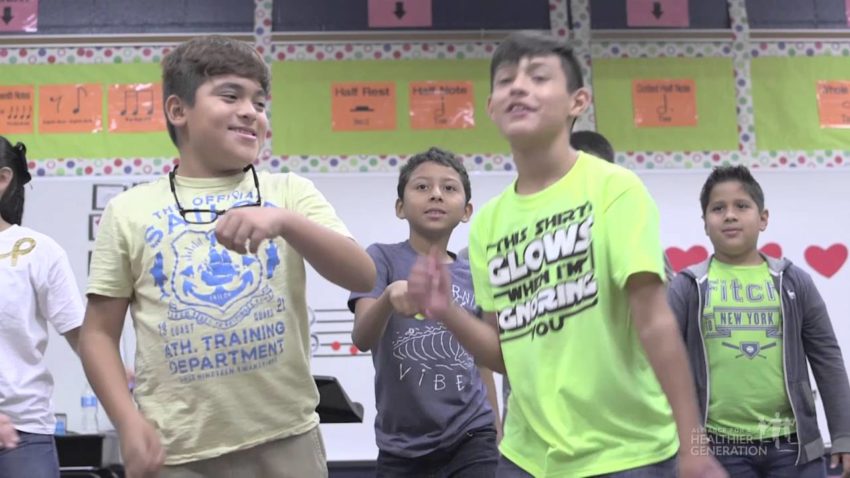
Latino students tend to have more access to unhealthy food at school and are less physically active than their peers, according to a Salud America! research review and animated video. That's why we need more schools like Blanca E. Sanchez Elementary in South Texas. School officials at Sanchez Elementary, just 10 miles from the Mexican border in McAllen, Texas (85% Latino), wanted to help their students overcome language barriers and limited resources to achieve healthy minds and healthy weight. So they started taking kids out for a morning recess. Started providing activity breaks throughout the day. Earned a $25,000 national physical fitness grant to do more. Teachers also instruct students on healthy eating at school and home. Now, thanks to their efforts and support from ...