by
by 
Share On Social!
A lot of the time a cancer survivor’s story goes: “I felt a lump in my breast, I got it checked out, and it was breast cancer.”
That’s not the story of Deb Blake-Ontiveros.
The single mother visited a doctor after she felt a lump in her breast. But her doctor dismissed it as something else.
Two years passed before Deb was diagnosed with breast cancer.
“If we go back in time … and I would have been maybe a little bit less distracted with the baby and more like, ‘Hey, I think I would like further screening’ that could have been the change there. But that’s the reality, though,” Deb told Salud America!
That reality is that some women with breast cancer, especially young Latinas whose symptoms often go ignored or misdiagnosed, never get to ring the bell.
For Deb, cancer is a life-long battle.
Deb Blake-Ontiveros: Breast Cancer Diagnosis
It was 2016 and Deb was playing the role of a single mom to a 2-year-old and living in Salt Lake City, Utah.
Like most mothers, Deb was always on the go.
Deb was balancing motherhood, mental illness, organizing community rallies, maintaining friendships and relationships, and a custody battle. She often served as a community leader, supporting others by helping them find resources they needed.
But when it truly came down to it, motherhood always came first.
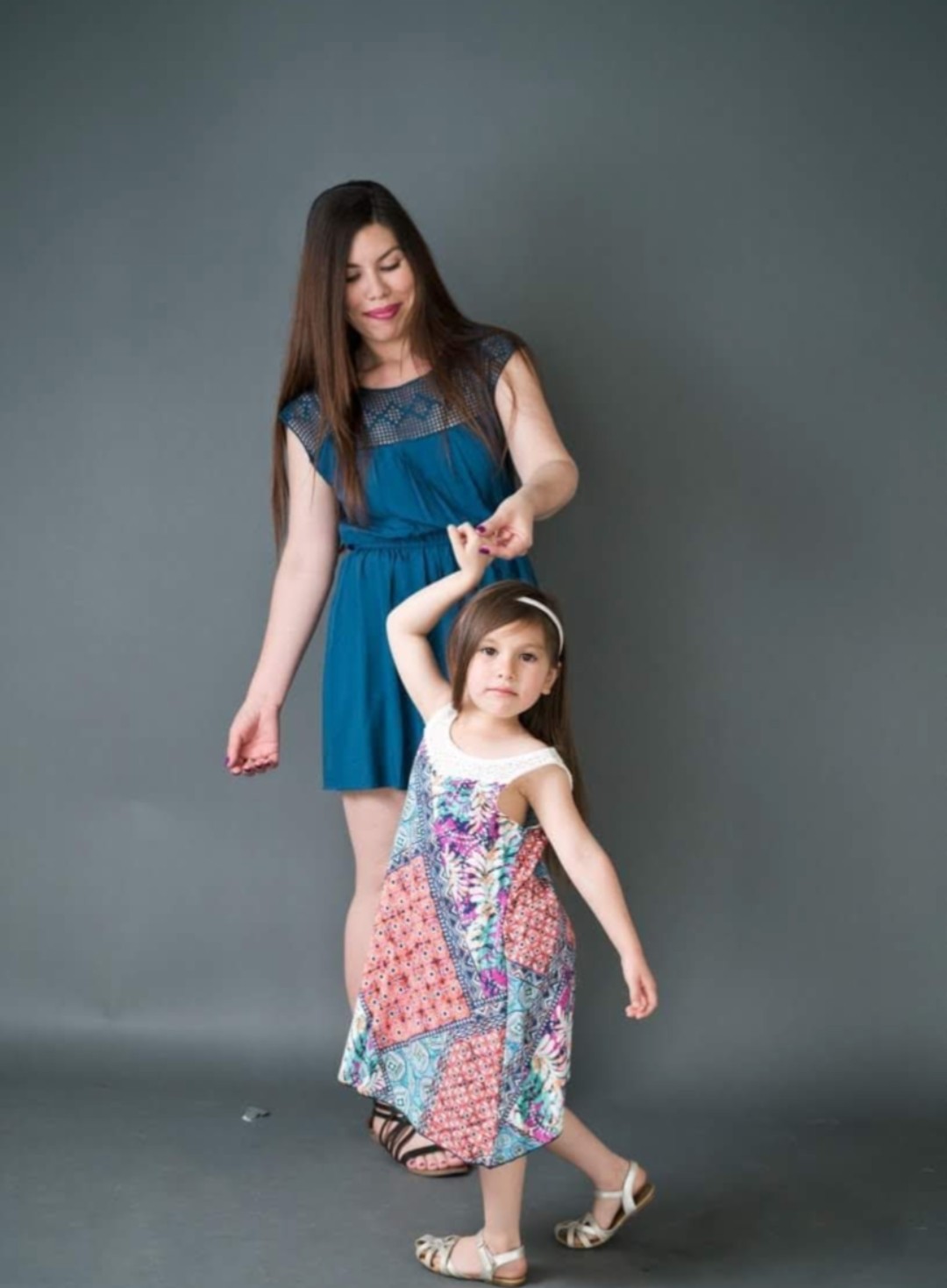
“I felt like a super mom. That was my whole concentration all the time. Everything else came second,” she told Salud America!
But while life was busy life-ing, her body had other plans.
One day while breastfeeding her daughter, Deb noticed a lump on her right breast. So she booked an appointment with her primary care physician.
“He was an older man, and he was great during my pregnancy, so I didn’t have any reason to think that he would brush me off. But that’s exactly the experience I had. You know, single mom, woman of color, on Medicaid. It kind of felt like things were stacked up against me,” Deb explained.
Because of her age, the lump was dismissed as a clogged milk duct, which occurs when milk isn’t drained frequently enough, and he diagnosed her with mastitis — a painful inflammation of the breast tissue that can lead to infection.
Deb had no reason to doubt the doctor and carried on breastfeeding her daughter.
Two years passed, but the lump remained.
“I was so busy that I kind of just disregarded it … I’m kind of lazy about my health at this point … You’re busy when you’re a single mom, I’m just too busy. I gotta get her in preschool, Now I gotta do this. I gotta do that,” said Deb.
Around this time, Deb had recently started dating again. It was her partner who drew attention to the lump.
“It was so embarrassing, because he was like, ‘Hey, you really need to get this checked out. I had a friend pass away from breast cancer,’” she said.
This time, Deb saw a female physician who grew concerned after performing an exam.
Deb was asked to return for a mammogram, which then turned into a biopsy.
“I’m by myself for my first biopsy, and I’m so scared. The nurse is holding my hand, and they’re like, ‘We can’t read this … it doesn’t look great,’” she recalled. “You kind of just start to compartmentalize … I’m so worried about my daughter getting out of school, being OK while I’m getting a biopsy, which was so painful. Oh my God. It was one of the most painful things I’ve experienced.”
After the biopsy, Deb snapped right back into “mom mode.”
Deb gets a call two days later while boarding the train headed toward a parent-teacher conference.
It was breast cancer.
While the news came as a shock to Deb, then age 37, she couldn’t think of anything else but getting to the school on time for her parent-teacher conference.
Deb Blake-Ontiveros: Metastatic Breast Cancer Diagnosis
Given Deb’s mental illness, it was difficult for her to process the thought of receiving chemotherapy.
“I am terrified of the idea of doing chemo. I want time to think about it. I want to go the natural way … so I’m thinking that I’m going to find the [natural] cure that’s going to get rid of this for me,” she said.
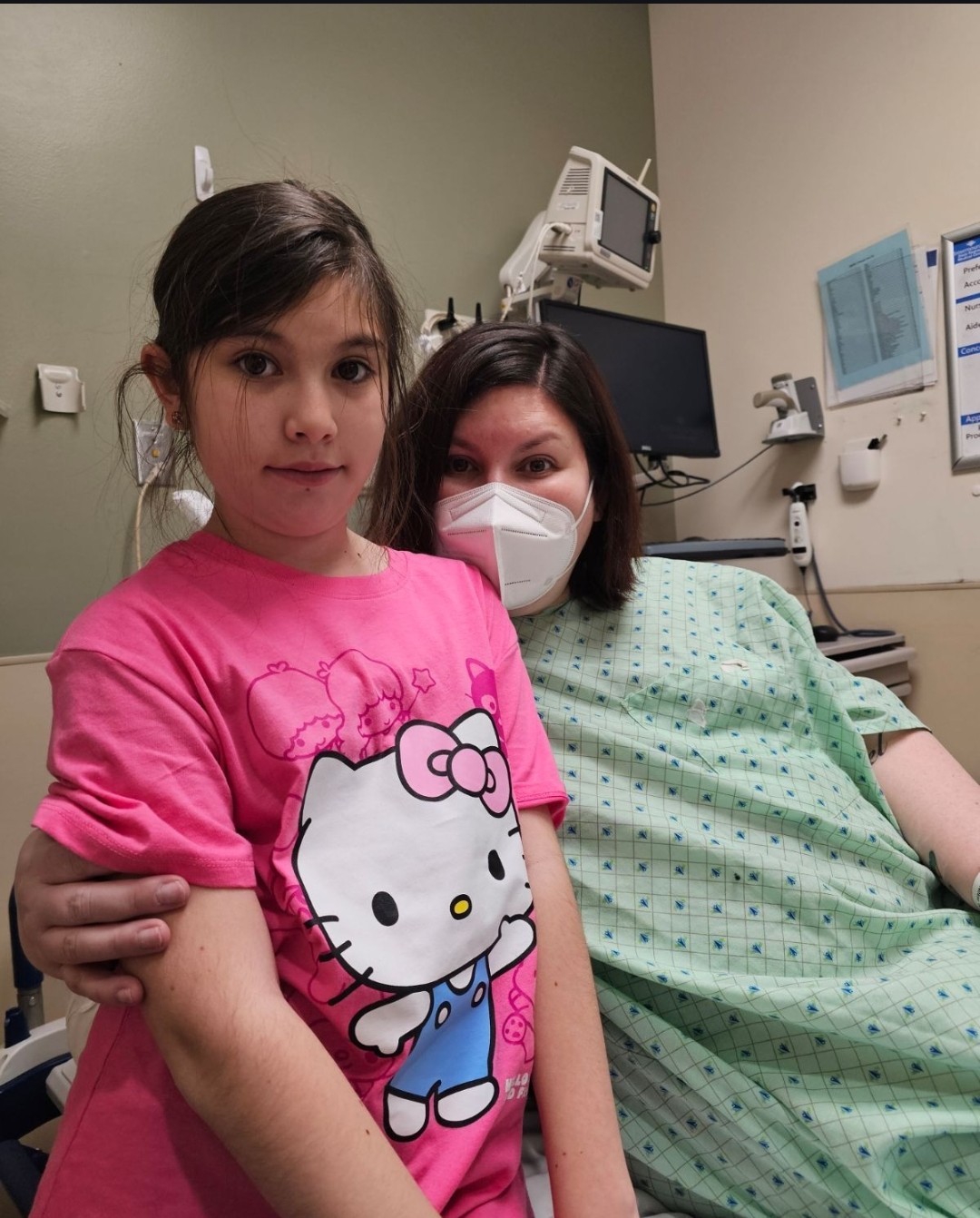
Spiraling at everything life had thrown at her, Deb made the decision to postpone treatment.
Before Deb completed her month-long grace period to search for answers, she went in for a PET scan.
The PET scan confirmed the worst — it was metastatic breast cancer that had spread to her lungs, lymph nodes, and a central part of her chest cavity.
“I was just like a Christmas tree up [in the chest area] … I’m being completely honest … I didn’t really know what metastatic meant,” she confessed.
The news kicked her manic “Super Woman” mode into high gear, and she set off on her hot chemo summer.
Dating, hanging out with friends, attending poetry readings, riding motorcycles, and going to concerts kept her mind occupied while the chemo fought the cancer.
“It really saved me,” she said.
A few months, Deb completed chemotherapy, and her scan came back clear.
“I was so excited because I got my first clear scan … I was [declared no evidence of disease]. I beat it, right? I beat it so my brain thought I beat it. I beat it … My oncologist looks at me and she’s like … ‘Alright, we’ll see you in three weeks.’ And I was like, what?”
Deb was informed she would have to return for more treatment — indefinitely.
“That’s when it hit me that that’s what metastatic meant. Oh, I’m NAD, but that’s not the same as cured. This can come back and I’m going to have to be on medicine for the rest of my life,” said Deb.
Every three weeks for the rest of her life, Deb would have to get an infusion.
Deb Blake-Ontiveros: Second Breast Cancer Diagnosis
After primary treatment concluded, Deb moved out of Salt Lake City and into a rural part of Utah to give her and her daughter a fresh start.
Deb moved in with her partner and dedicated herself to cancer patient advocacy.
After committing so much of her life to community organizing, switching gears to cancer patient advocacy was a natural progression.
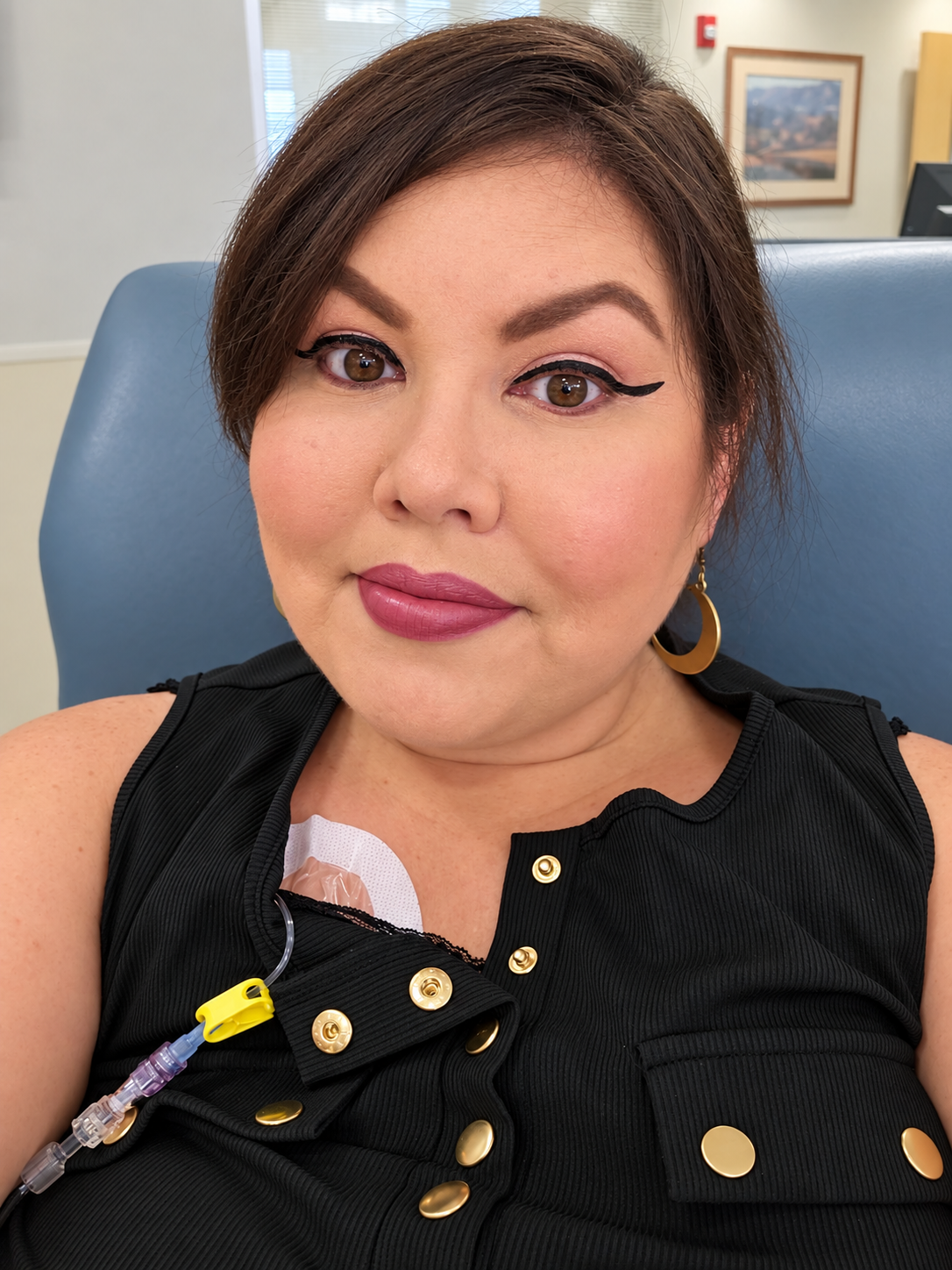
“I’m in a rural area now, so there were no more protests and no more organizing. So, what am I going to do? I’m going to shift focus. My partner was like, ‘Hey, I really think you should do breast cancer advocacy. You’re so good at what you do with this other stuff, just shift complete focus,’” she said.
In the years after her diagnosis, Deb has become a young advocate with Living Beyond Breast Cancer. She also wrote guest blogs for WebMD on breast cancer, got involved in state organizations focused on cancer, shared her story with cancer organizations and news outlets, and spoke on panels.
Just when she felt like she had adapted to what was now her new normal, life dealt Deb the biggest reverse card possible.
In 2023, Deb was doing a routine self-examination on the first of the month and found a lump on the same breast as the previous one had been.
This was Deb’s “Here we go again” moment.
She got a mammogram followed by an ultrasound then a biopsy.
But this time was different.
She was in a committed relationship with a supportive partner.
“This time I had a hand to squeeze and this time I had music that I liked playing,” she said of her biopsy experience.
The biopsy came back positive for an unrelated stage 2-3 breast cancer.
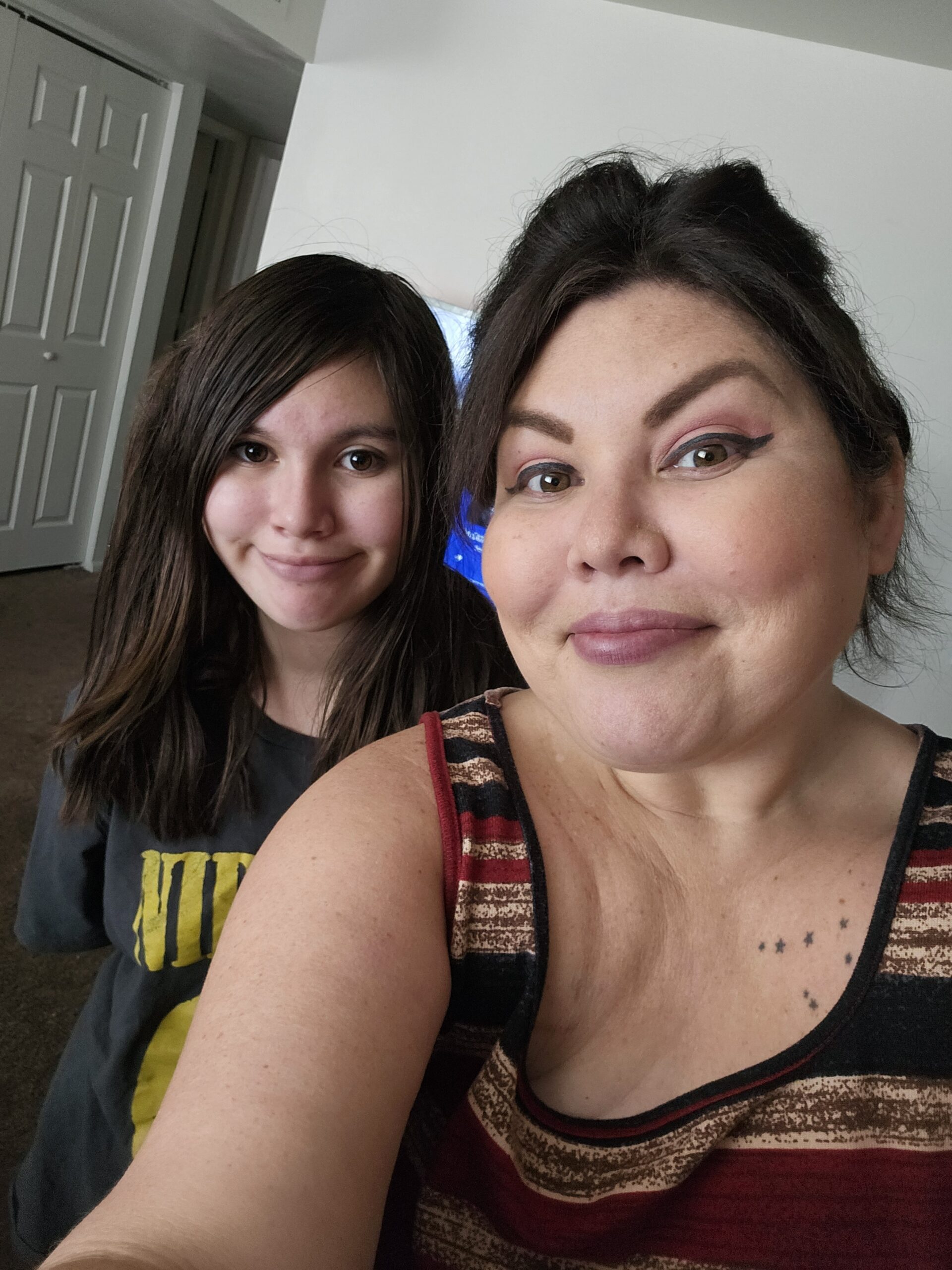
It was like Groundhog Day for Deb.
The chemotherapy. The hair loss. The sickness.
It was all too familiar to her, but for her partner it wasn’t.
“He didn’t see me sick the first time. We were in a long-distance relationship. Now he saw me sick the second time, and it was real for him, and it was too much … My love story ended quicker than I thought but I’d have no regrets, because I know it’s hard to be a caregiver for somebody with cancer,” Deb said.
The two separated ways, leaving Deb without a support system, and she once again found herself a single mom trying to navigate cancer.
The transition was hardest on her daughter, who was only 4 when she was diagnosed with cancer the first time.
“My 12-year-old daughter seems to be picking up caregiving habits to help mom around the house, and it breaks my heart because now I don’t have a partner that’s here every day helping me … I still struggle with a lot of fatigue and a lot of side effects,” she explained.
As of 2026, Deb is still in treatment for her second brush with breast cancer.
Deb Blake-Ontiveros: Sharing Her Cancer and Mental Health Story to Help Others
Like life before cancer, it’s been go, go, go for the last eight years for Deb.
She’s still a mother and advocate, but those two passions look slightly different these days.
After dropping her daughter off at school, Deb is visiting doctor’s offices, getting treatment, and finding ways to be an advocate for herself as well as others.
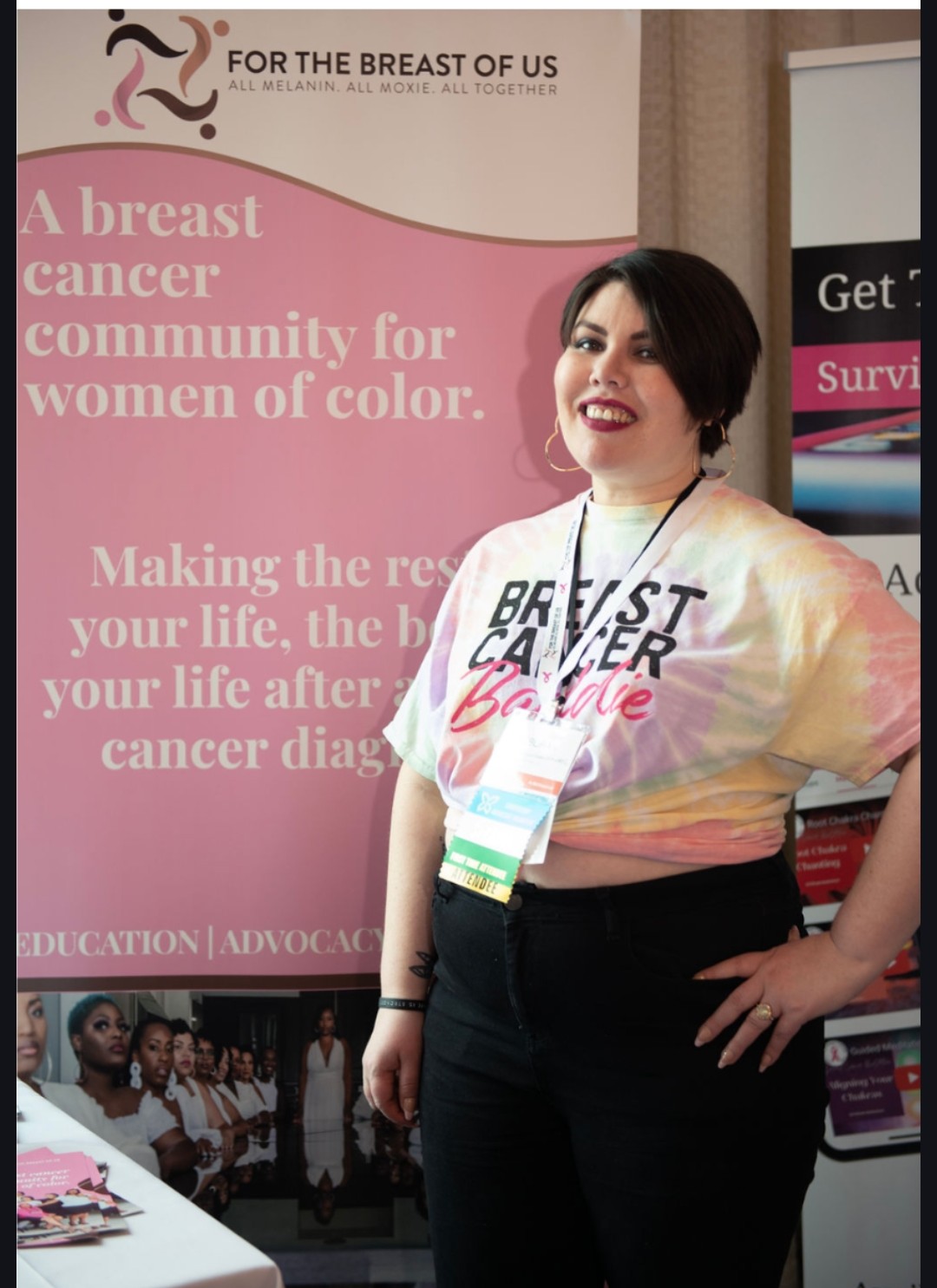
One of the ways Deb does this is by sharing about mental illness with the cancer community.
Deb has been very vocal about her mental illness, which played a role in her diagnosis and the way she emotionally and physically handled her cancer journey.
Her bipolar disorder has been a strength just as much as it’s been a hinderance to her survivorship.
The truth is that cancer is mentally taxing. The long-term effects of cancer can be just as draining for your mental health, especially those with preexisting mental illness.
It’s even harder for overlooked populations, including Latinos, who face generational and background-specific stigmas around mental health.
But Deb is not ashamed to represent the cancer and mental illness community by sharing her story.
“I still want to keep talking about this. I still want to keep taking opportunities to educate and share my story … My family acts like cancer is an embarrassing thing, because there were other family members that have had cancer and stuff. I don’t. I’m like, ‘This happened, and I don’t want it to happen to any other person in this family, so I’m going to talk about it, even if it makes you uncomfortable,’” she declared.
That’s why she continues to be a voice for cancer survivors with mental illness and advocates for more mental health resources for those with cancer.
“All I needed was to know that one person felt seen … because I have a feeling that there’s a lot of people with breast cancer and deeper mental health issues than just depression and anxiety, and there’s so much stigma,” Deb said.
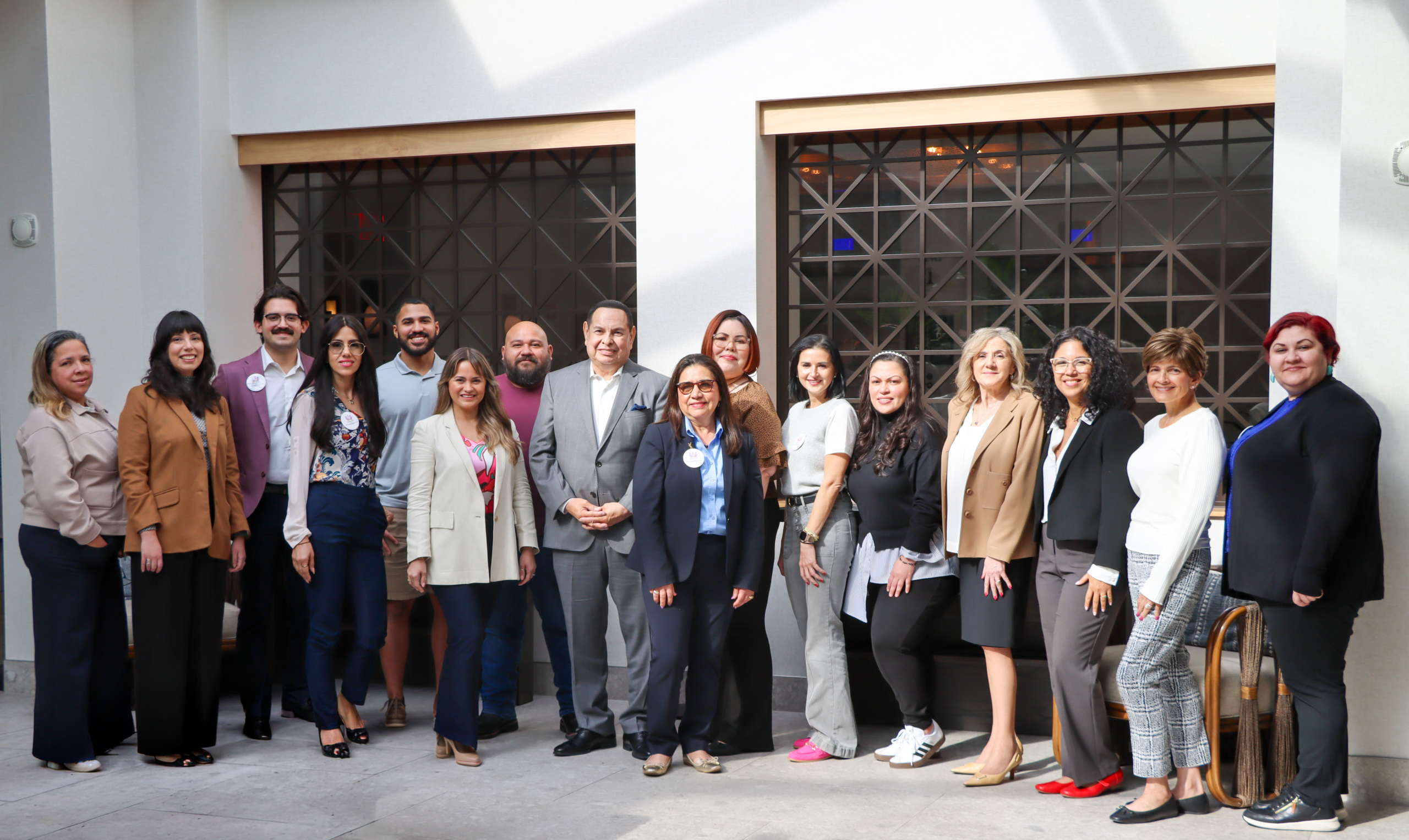
It’s a platform that she got to share with her fellow trainees of the 2026 Latino Cancer Patient Advocate Training Program.
The training program held ahead of the biennial Advancing Cancer Research for Latinos and All Populations Conference in San Antonio, Texas, brings together Latino cancer survivors to learn from experts on how to serve the cancer community.
“[The program was built] to create that community for them to learn from each other and it’s been amazing,” said program co-leader Dr. Barbara Segarra-Vázquez of the University of Puerto Rico.
Armed with the training she got from the program, Deb continues to help the cancer community by sharing her story and supporting others by sharing resources.
But through it all, Deb always stays true to herself.
“I’m never going to stop being me. Cancer will not change that about me. I will never stop being me, but I will adapt and keep adapting,” she vowed.
Explore More:
CancerBy The Numbers
142
Percent
Expected rise in Latino cancer cases in coming years
This success story was produced by Salud America! with support from the Robert Wood Johnson Foundation.
The stories are intended for educational and informative purposes. References to specific policymakers, individuals, schools, policies, or companies have been included solely to advance these purposes and do not constitute an endorsement, sponsorship, or recommendation. Stories are based on and told by real community members and are the opinions and views of the individuals whose stories are told. Organization and activities described were not supported by Salud America! or the Robert Wood Johnson Foundation and do not necessarily represent the views of Salud America! or the Robert Wood Johnson Foundation.