by
Share On Social!
Cancer doesn’t just impact the person diagnosed — it affects the entire family.
For Priscilla Brittine, a Latina mother who lives in Kansas City, Kansas, cancer is a family affair that brought her and her cousins closer together.
Stomach cancer runs in Priscilla’s family.
She and many of her family members have a genetic mutation that increases stomach cancer risk, and Priscilla tested positive for the gene.
“The surgical oncologist told me it wasn’t if I would get stomach cancer, it was when. I felt like a ticking time bomb,” Priscilla said.
With her life on the line and a family to protect, Priscilla took cancer prevention into her own hands and had her stomach removed.
While Priscilla is living life without a stomach, which comes with its own set of challenges, it was a small price to pay for being alive and making sure she’d be there for her children.
Now Priscilla is raising awareness about knowing your family history to prevent cancer and bringing attention to the need for gastric cancer diagnostic testing.
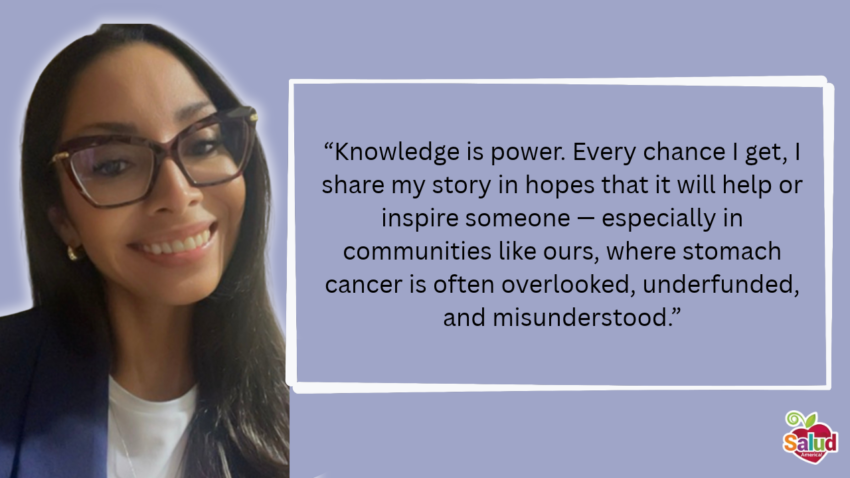
“Knowledge is power. Every chance I get, I share my story in hopes that it will help or inspire someone — especially in communities like ours, where stomach cancer is often overlooked, underfunded, and misunderstood,” she said.
Priscilla Brutine: Family History of Stomach Cancer
Priscilla was 14-years-old when she first heard the words “stomach cancer.”
The words felt foreign on her tongue, but little did she know they would hold a permanent place in her vocabulary.
It started with her mother.
For months, Priscilla’s mother experienced reoccurring vomiting. Family gatherings and restaurant outings were tainted by her symptoms.
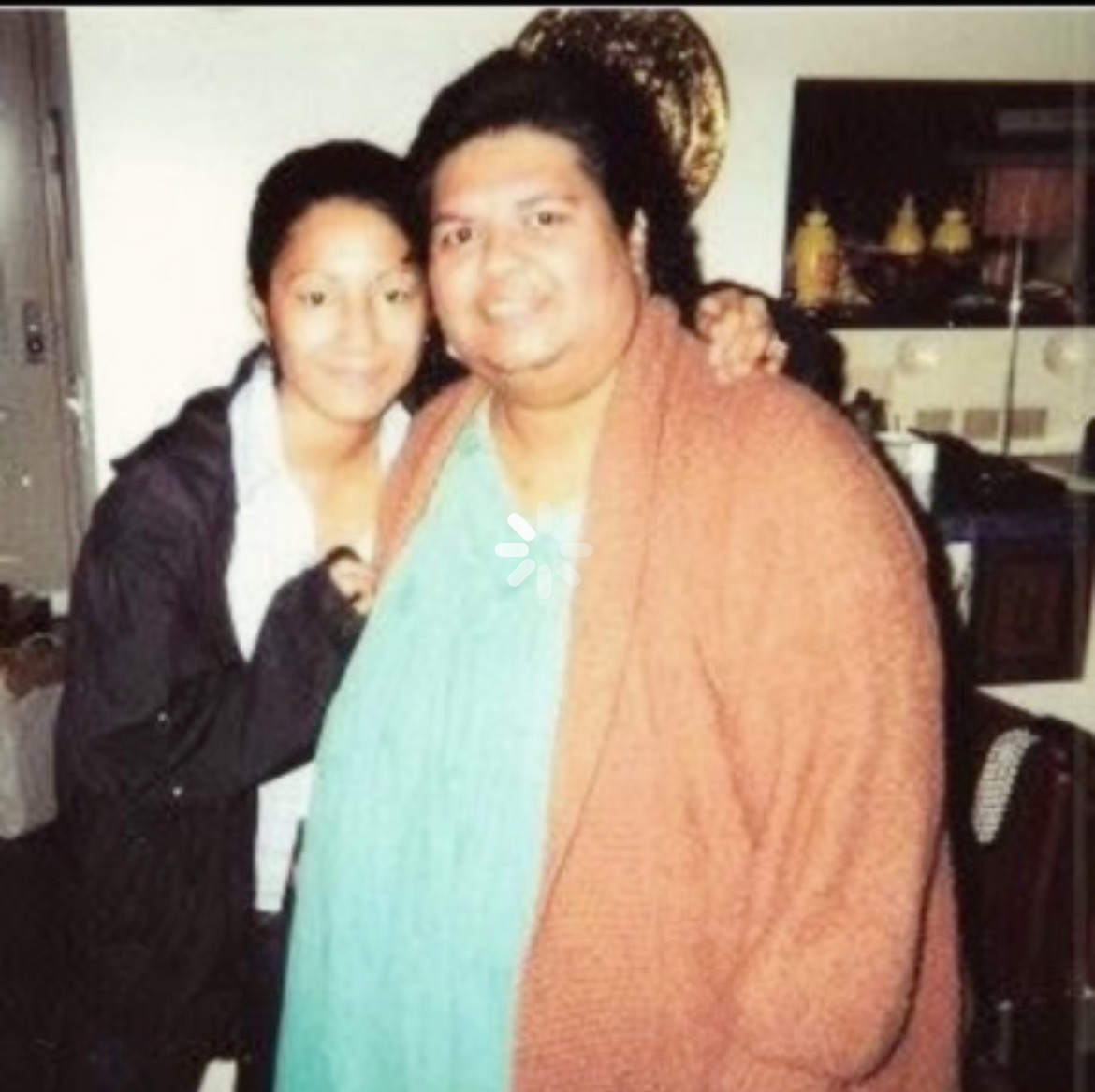
Time and time again, her mother went to the hospital for medical help, and her symptoms were dismissed as acid reflex and treated her with antacids.
When her symptoms became too much to bear, her mother was sent for extensive testing and that’s when her condition was finally revealed.
However, they didn’t know how advanced the cancer was until she underwent surgery.
“She went in there and they opened her up. They didn’t even go all the way with the surgery. Once they opened her up, they closed her back up,” Priscilla shared with Salud America!
Her mother was diagnosed with stage 4 stomach cancer and given 8 months to live.
No one prepares you for losing a parent, especially at a young age and to a disease like cancer.
“With this type of cancer, once symptoms appear, it is often too late. My mom had been misdiagnosed, and precious time slipped away … Watching my mom slowly die was one of the hardest things I have ever endured. In a Hispanic family, losing the matriarch feels like losing the center of your world,” Priscilla said.
Priscilla’s mom died on Feb. 1, 2001, at the age of 42.
But it wouldn’t be the last family member she would lose to stomach cancer.
Two years later, Priscilla’s beloved uncle was diagnosed with stomach cancer and given two weeks to live. He passed away at the age of 36.
“Losing him was another devastating blow,” Priscilla said. “In Mexican‑American families, tíos are woven into everyday life. They’re not distant relatives; they’re part of your childhood, your memories, your celebrations. Losing him felt like losing another piece of our foundation.”
Over a decade would pass before she realized that the fate of her family wasn’t a mere coincidence but by design.
Priscilla Brutine: Genetic Testing for Stomach Cancer
As an only child, Priscilla craved relationships with family members.
In Mexican American culture, families are raised closely together with comadres, compadres, and primos feeling more like siblings and parents rather than extended family.
Years had passed since her mother’s and uncle’s deaths, and she was now a mom to three boys.
But she still carried the loss of her mother and uncle.
In 2018, she was connected to distant cousins that geographically weren’t so distant.
“I felt like it was a door that needed to be open … I felt like it was something to make me closer to my mom,” Priscilla explained. I found them and then that’s when I found out this stomach cancer journey was bigger than I ever imagined.”
At this point, one of her cousins had already had her stomach removed to prevent the disease while another had lost his mom and sister to stomach cancer.
Upon connecting with one of her distant cousins, Priscilla was informed that the University of Kansas Medical Center (KUMC) was studying the family because so many relatives were dying young and rapidly from gastric cancer.
“Doctors at the University of Kansas Hospital were like, ‘What is going on in your family?’” she said.
Some of the family members that had already died from stomach cancer had genetic testing before they passed, revealing a mutation on her mother’s side of the family.
This mutation, CDH1, carried an 80% lifetime risk of stomach cancer and a 60% risk of breast cancer.
“For the first time, we had answers. My cousins’ courage paved the way for the rest of us to be tested, potentially saving our lives and future generations,” she said.
Priscilla was tested for the mutation and tested positive.
“That moment marked the beginning of my own journey,” she stated.
Priscilla Brutine: Preventing Stomach Cancer
After witnessing so many of her families battling and dying from stomach cancer, Priscilla took a proactive approach to prevent the disease.
She was referred to a specialized team of physicians and underwent a high‑risk upper endoscopy, in which 37 biopsies were taken to search for cancer.
While they all came back normal, Priscilla could still hear the steady tick of the clock telling her it was only a matter of time before stomach cancer found its way to her.
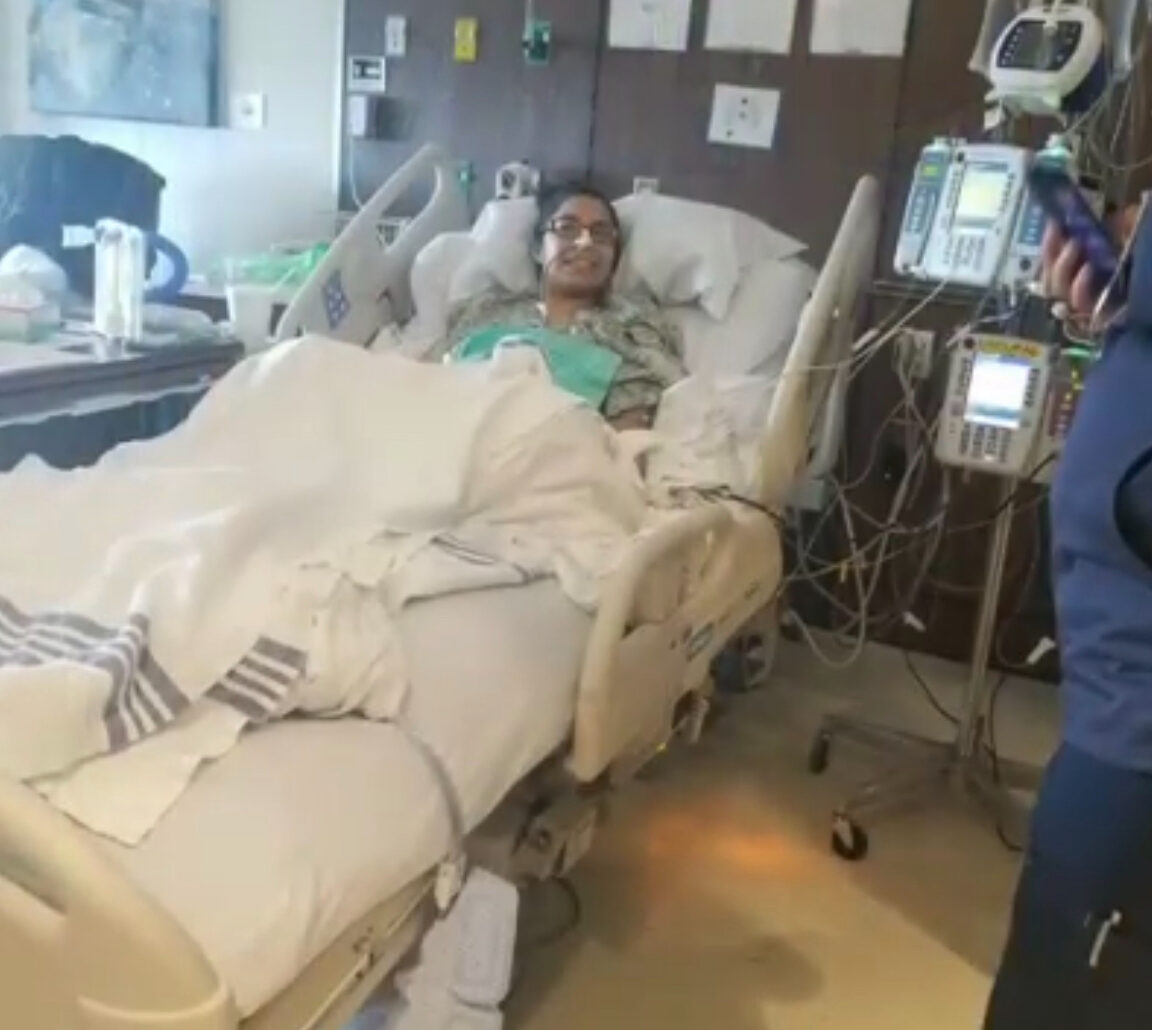
That’s when she made the decision to have her stomach removed.
“First off, I was like, ‘Wait, I can live without a stomach? How will life be?’ They said, ‘Yeah, you can, but I mean, it won’t be easy. You will have some ups and downs, but it’s manageable.’ It’s better than the alternative … I knew that other side because I lost close people to me and I didn’t want that for my kids,” she said.
Priscilla had surgery in 2019 and her stomach was sent away for testing.
Upon studying her stomach, they found the beginnings of early-stage cancer.
“It was only a matter of time before it crossed the membrane and entered my bloodstream. I am grateful every day that I made the decision when I did. It is emotional to think how close history was to repeating itself,” Priscilla shared with Salud America!
The important thing was she had survived, but adapting to life without a stomach came with its own set of challenges.
After surgery, Priscilla was put on a feeding tube, she lost a considerable amount of weight, she had to undergo physical therapy because she was bedbound with severe nausea, and the recovery took a serious toll on her mental health.
She eventually got used to her new normal, but surviving without a stomach is a daily battle.
Priscilla must take medications daily, watch what she eats, and undergo yearly blood and iron transfusions and dilations to maintain her health.
The hardest part is taking in enough calories and the feeling in the back of her throat that makes it difficult to enjoy food.
“Learning to live without a stomach was the hardest challenge of my life. It took time for my body to adjust to its new ‘plumbing,’” she shared.
As one of four cousins in her family living without a stomach, Priscilla shares a bond and a commonality that helps her not to feel so alone.
“We’ve talked amongst each other for support,” Priscilla said.
Priscilla Brutine: Preventing Breast Cancer, Too
Even though she had had her stomach removed, there was still a lingering threat of breast cancer.
With the knowledge that she possessed a 60% chance of getting breast cancer, Priscilla alternated between mammograms and MRIs to monitor her for signs of the disease.
What made the situation even harder was that she had extremely dense breasts, which made the cancer even harder to detect.
After a scare, her physicians ordered a needle biopsy, and that’s when it clicked — no matter how much monitoring she underwent, there would always be that threat of breast cancer.
“I was always tense, like ‘Oh my gosh, what are they going to find? Are they going to find cancer? Are they going to find something?’ I was getting tired of feeling like that all the time,” she explained.
Enough was enough.
Just like her stomach was removed, her breasts were also removed, which also removed the threat of getting breast cancer, too.
Despite not having breasts or a stomach, Priscilla believes she made the right decision, especially at a young age when her body could handle the surgery and recovery.
“It’s a risk, but it was a risk that was worth taking to be alive and to make sure that I was here for my kids and my family, and I’m glad I did it,” she told Salud America!
Priscilla Brutine: Cancer Survivor Turned Advocate
Even though Priscilla had a close family support system with cousins who have gone through the same experience she had, she knew she needed some other kinds of support — she needed a community behind her.
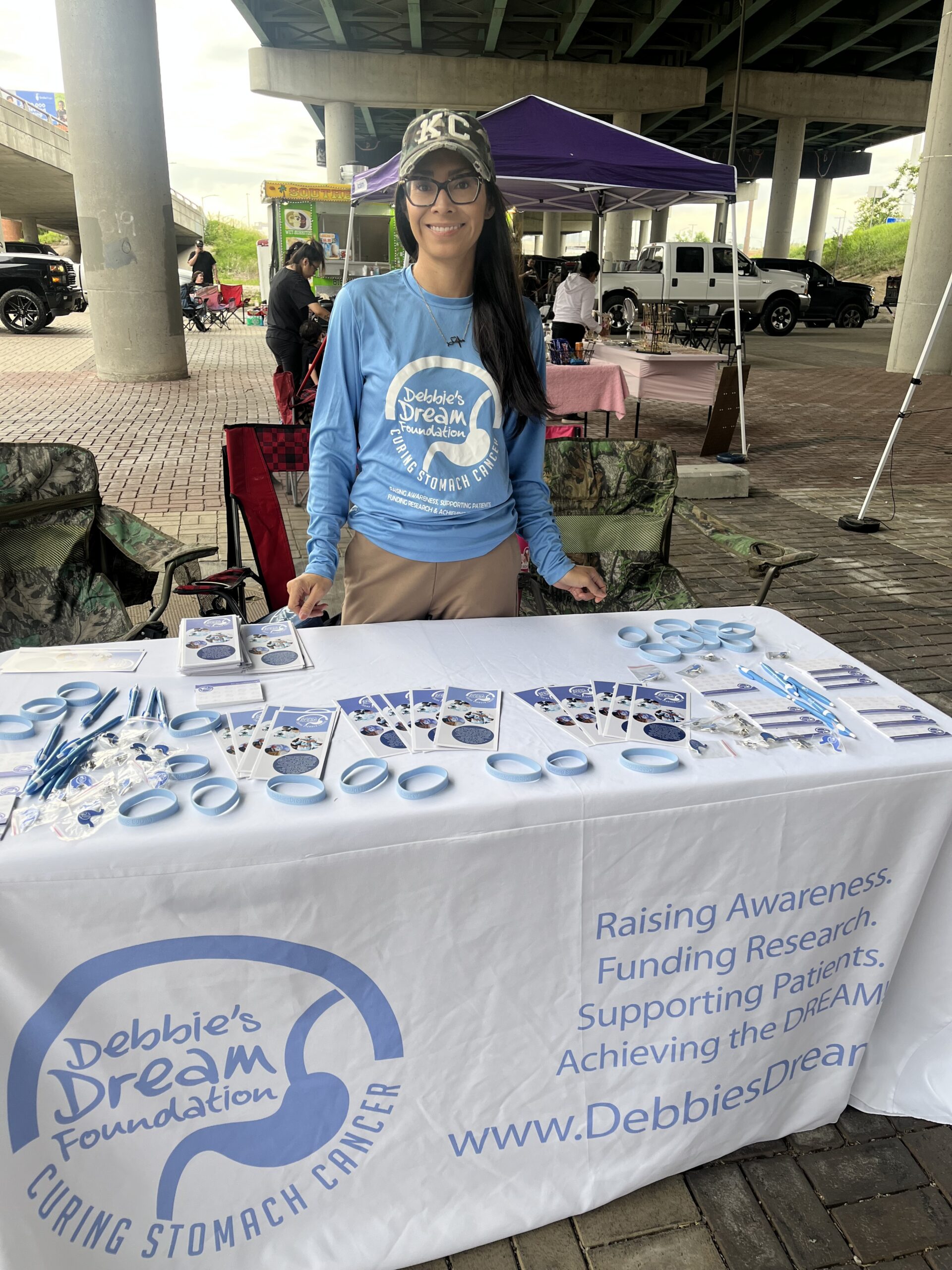
She found that community when she stumbled upon Debbie’s Dream Foundation on social media.
Debbie’s Dream is a stomach cancer nonprofit that focuses on support, education, and research funding advocacy with the goal of creating better stomach cancer outcomes.
“It took me down just a path of different people that had been through the same [thing] or they have it worse than what I’ve been through,” Priscilla said.
Priscilla dived into the organization slowly, tipping a toe in to test the waters by reading other survivor stories.
As her confidence grew, Priscilla began to speak up about her experience.
The community the organization provided was reassuring and supportive.
But she knew she wanted to do more, so she sought an opportunity to share her story with her state representatives in hopes that it would spark support for her personal cause of more gastric cancer diagnostic testing.
“I just wanted to be involved where I could help by sharing my story, to bring more awareness, to bring more funding for stomach cancer because there is research that needs to be done still to be able to prevent other people from going through this,” she said.
Fast forward to 2026, and Priscilla has extended her family further with people who are part of the stomach cancer survivorship community within the Debbie’s Dream Foundation.
The experience of sharing her story has even led her to make bigger contributions to the organization when she was chosen to lead one of the foundation’s biggest annual events in her hometown.
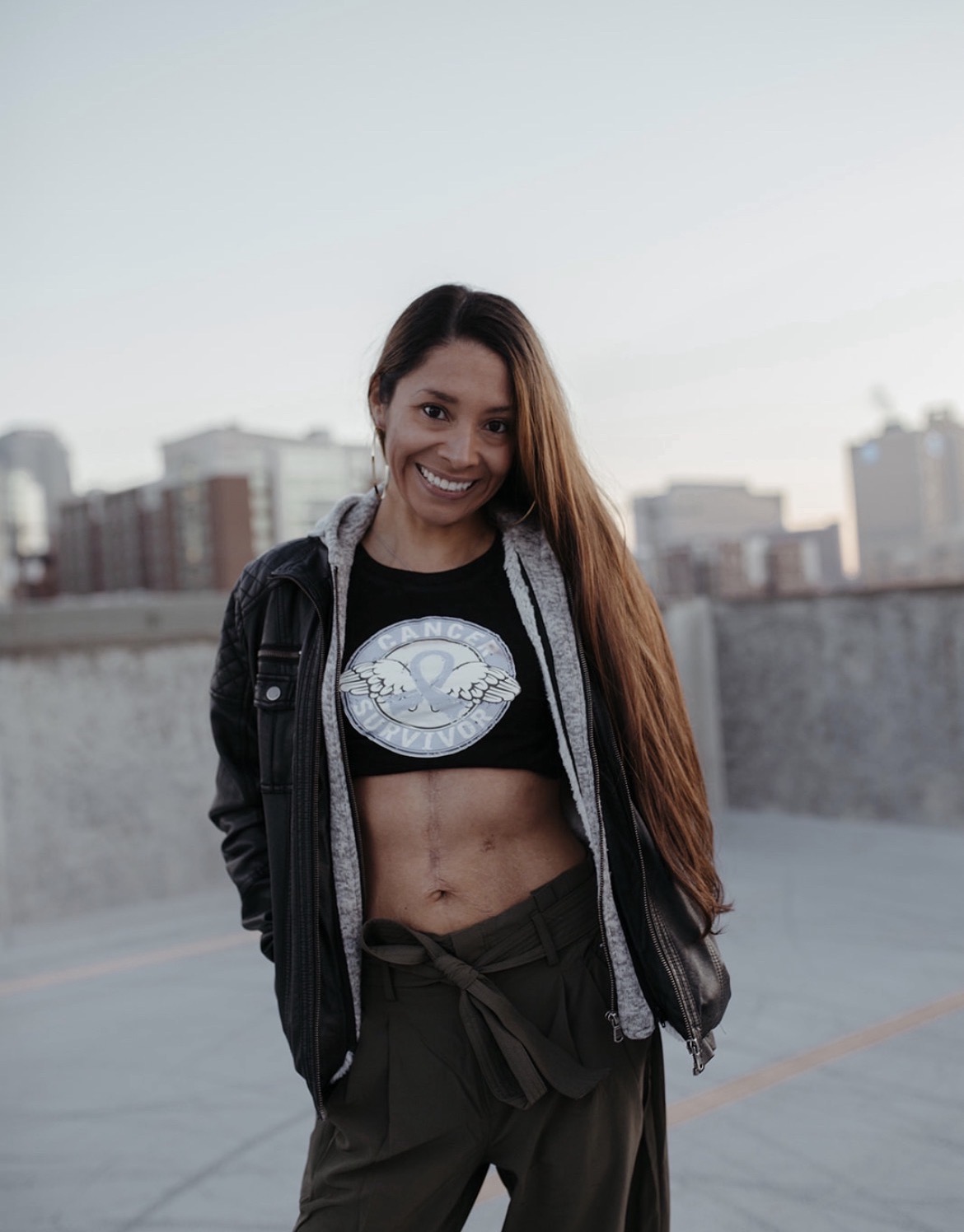
Every year Debbie’s Dream Foundation hosts awareness-walk fundraisers across the country in celebration of National Stomach Cancer Awareness Month in November.
These events aim to amplify stomach cancer awareness and the importance of listening to your body when something is amiss.
All the proceeds from the events go to the nonprofit, which is dedicated to petitioning lawmakers to fund research that finds a cure for the disease.
Priscilla will be hosting her event, “Guts for Glory,” from 9 a.m. to 12 p.m. on Sunday, Nov. 15, 2026, in Kansas City, Kansas, alongside fellow survivor and advocate Yolanda “Yoli” Barrera Day.
Register now! https://debbiesdream.org/event/guts4glory/
Find a fundraiser walk near you.
“We hope this event can help start more conversations about stomach cancer here in Kansas City, Kansas, and shine a light on a cancer that deserves more awareness, attention, and research funding. I want to help make sure people affected by stomach cancer know they are not alone and that their stories matter,” Priscilla told Salud America!
Share Your Stomach Cancer Story with Avanzando Caminos
Stomach cancer is a leading cause of cancer-related deaths among Latinos.
That’s because symptoms are either ignored, dismissed, or diagnosed until the disease has progressed to an advanced stage, and the survival outcomes aren’t favorable.
Not only does stomach cancer have higher rates of death, but those who do survive the disease get to live at the cost of not having a stomach, which comes with life-long health complications.
More must be done to support the post-cancer life for gastric cancer survivors.
Sharing your experience with stomach, prostate, colorectal, lung, liver, endometrial, breast, cervical, kidney, bladder, melanoma, ovarian, thyroid, or lymphoma cancers can help future generations of survivors.
The Avanzando Caminos Hispanic/Latino Cancer Survivorship Cohort study is attempting to capture the stories of survivors who have completed primary cancer treatments within the last 10 years for these cancer types in South Texas.
Through the study experience, program manager Dr. Derek Rodriguez hopes it gives cancer survivors an opportunity to process what they’ve been through.
“We want to be able to promote healing because for the first time in a long time, this may be someone’s first opportunity to give their cancer story,” Dr. Rodriguez told Salud America! “We want to be able to empower others to share their story as well. And we want to be able to better understand, detect, treat, and prevent cancer in the long run for other future survivors.”
To volunteer for Avanzando Caminos or ask questions, contact Dr. Ramirez’s team at the Institute for Health Promotion Research at UT Health San Antonio at 210-562-6514 or caminos@uthscsa.edu.
Alternatively, visit the Avanzando Caminos website in English or Spanish to fill out a quick eligibility survey and a member of the study team will be in touch!
SHARE YOUR STORY WITH AVANZANO CAMINOS!
Explore More:
CancerBy The Numbers
142
Percent
Expected rise in Latino cancer cases in coming years
This success story was produced by Salud America! with support from the Robert Wood Johnson Foundation.
The stories are intended for educational and informative purposes. References to specific policymakers, individuals, schools, policies, or companies have been included solely to advance these purposes and do not constitute an endorsement, sponsorship, or recommendation. Stories are based on and told by real community members and are the opinions and views of the individuals whose stories are told. Organization and activities described were not supported by Salud America! or the Robert Wood Johnson Foundation and do not necessarily represent the views of Salud America! or the Robert Wood Johnson Foundation.