by
by 
Share On Social!
Breast cancer is a common cancer affecting US women, including Latinas.
While breast cancer is very treatable, many Latinas get diagnosed at later stages when the cancer has already spread, resulting in a higher risk of death.
The best way to detect breast cancer early is by getting your annual mammogram.
However, many women, including Latinas, have dense breast tissue, making it harder to conduct a mammogram and detect cancer.
Here are eight things you need to know about breast density and cancer.
1. Dense Breasts Occur When There is Less Fat than Tissue
The Breast Cancer Research Foundation (BCRF) defines dense breasts as a measure of how two types of breast tissue found in the breast compared to the amount of fat tissue.
Dense breasts are categorized by having more fibroglandular tissue, which is the connective tissue that holds the breast in place, compared to fat.
2. Dense Breasts Are Caused by a Variety of Factors
Dense breasts can be caused by several factors, including genetics, body mass index, and hormonal factors, according to MD Anderson Cancer Center.
What’s more, more dense breasts are linked with pregnancy or breastfeeding, hormone replacement therapy, which is also associated with a higher risk for cancer, and lower body weight, according to the BCRF.
3. Dense Breasts are More Common Than You Think
Dense breasts are far more common than you may have realized.
In fact, 50% of women have dense breasts, according to the Cleveland Clinic.
Dense breasts occur in half of woman older than age 40, according to the BCRF.
While breast density is common among women older than 40, it’s higher in women younger than 40 because breast density decreases as women age.
Demographically, breast density affects 40% of women in their 50s and 25% of women aged 60 and over, according to the BCRF.
According to a 2023 study of 900,000 women in the Breast Cancer Surveillance Consortium cited by the BCRF, breast density was more prominent in Black women compared to Latina or white women.
4. Dense Breasts Can Only Be Measured by Mammogram
There are no physical symptoms, including pain or change in appearance, when it comes to dense breasts, so they can’t be detected by physical examination, according to the Cleveland Clinic.
While it’s important to know if you have dense breasts, the only way to find out if you do is by receiving a mammogram.
In fact, the U.S. Food & Drug Administration (FDA) has a rule that requires women to be notified if they have dense breasts in a final mammography report that is issued to their home.
The rule is part of the Federal Register: Mammography Quality Standards Act, which went into effect on March 10, 2023.
5. Dense Breasts Can Make Breast Cancer Harder to Detect
Starting at age 40, women who aren’t at a higher risk for breast cancer should receive a mammogram every two years. And every year between ages 45 and 54, when chances of developing breast cancer are at their highest.
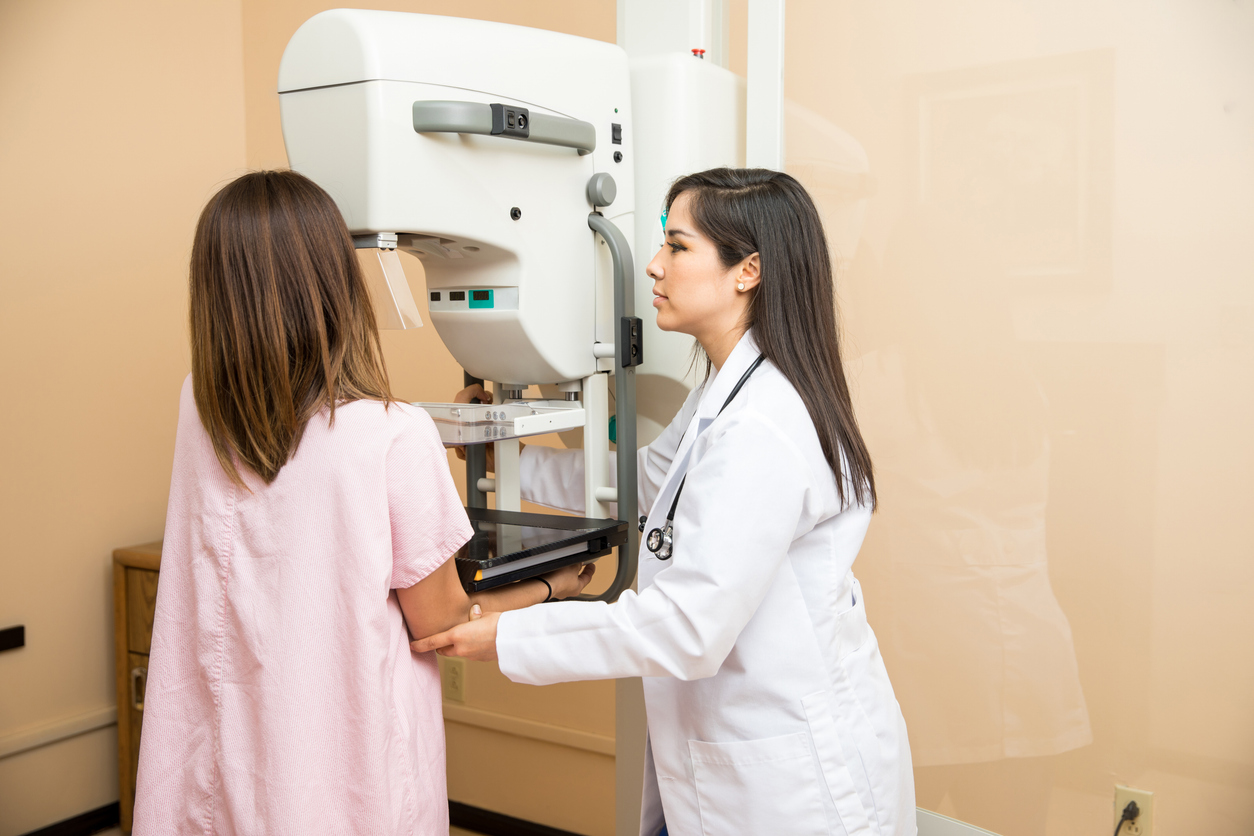
However, dense breast tissue can make mammograms difficult.
While mammograms can tell you how dense a breast is, breast density appears white on a mammogram, and so do tumors, making it difficult to differentiate between regular breast tissue and cancer, according to the Memorial Sloan Kettering Cancer Center.
Due to this imaging discrepancy, it can make breast cancer much harder for radiologists to detect.
This may result in women with dense breasts being diagnosed with breast cancer at a much later stage, when the treatments are much more aggressive, expensive, and have a lower rate of success than when caught early.
6. Women with Dense Breasts are at Higher Risk for Breast Cancer
Not only do dense breasts make breast cancer more difficult to detect, but dense breasts are also associated with a higher risk for breast cancer.
According to the American Cancer Society, 15% to 20% of women with dense breasts have a higher risk of developing breast cancer compared to the national average.
While the reason is still unknown, it’s believed that having more glandular tissue, where breast cancer usually develops, may allow for more opportunities for cancer cells to grow and multiply, according to the BCRF.
7. Women with Dense Breasts May Need More Cancer Screenings than Usual
Due to the increased risk for cancer and the fact that dense breasts make it harder to detect cancer on a mammogram, additional screening may be needed, according to a source with MD Anderson Cancer Center.
“It’s important for women to know whether or not they have dense breast tissue,” said Ethan Cohen, a breast radiologist at MD Anderson West Houston.
In fact, your provider might recommend supplemental breast screening in addition to having a mammogram.
This may be done so that cancer can be detected and treated as early as possible.
8. Understand Your Breast Density and Talk to Your Doctor Today
Understanding your breast density gives you a clearer picture of how your body shows up on a mammogram and how your screening needs may differ from someone else’s.
If your mammogram report mentions dense breast tissue, you may want to consider taking some measures to keep yourself healthy.
Discuss your results with your doctor and come up with a plan on how to approach additional screening options and find out how often you should get checked.
The best way to handle breast density is to stay informed and stay up to date on cancer screenings.
Editor’s note: This blog post was curated and published with grant funding from Novartis. To learn more about Novartis’ commitment to breast cancer innovations and prevention, please visit their website.
Explore More:
Latino CancerBy The Numbers
1
out of 10
Pedestrians survive when hit by a car at 40 MPH