by
by 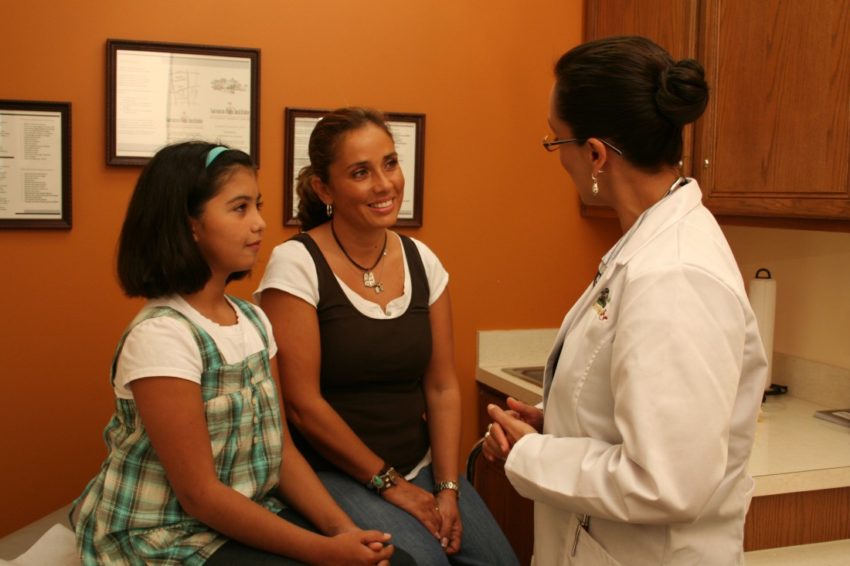
Share On Social!
A vaccine can’t prevent disease unless people use it.
In Texas, a largely Latino state, only 39% of girls and 15% of boys ages 13-17 complete the three-dose HPV vaccine for the human papillomavirus (HPV), a common sexually transmitted infection that can cause cervical cancer and other problems.
Dr. Deborah Parra-Medina has a plan to change that.
Parra-Medina, a health researcher at the Institute for Health Promotion Research at UT Health San Antonio, received a new $1.2 million grant from the Cancer Prevention and Research Institute of Texas to develop an professional education and community outreach program to increase awareness and uptake of the HPV vaccine among children in South Texas.
She and her team will train local health care providers to deliver accurate HPV vaccine info and strongly recommend HPV vaccination to patients and parents.
“Increased vaccination coverage among adolescents will help reduce morbidity and mortality from HPV-related diseases and can help reduce or eliminate health issues, particularly cervical cancer,” said Parra-Medina, who also is co-director of the South Texas Area Heath Education Centers Program.
For the project, Parra-Medina and her team, including The Immunization Partnership and South Texas Area Heath Education Centers, will conduct surveys, interviews, and patient chart reviews to understand the HPV vaccine practices of health providers in six clinics that are part of South Texas Rural Health Services, Inc., in Dimmit, LaSalle, Frio and Medina counties.
They will use what they learn to create a bilingual program to improve health care workers’ timely provision of the HPV vaccine to adolescent patients.
They also will bring in two bilingual community health works (promotoras) to reach out to local residents to increase the HPV vaccine initiation and completion rates among adolescents.
“It’s important for parents to know that the vaccine is the primary means of preventing HPV,” Parra-Medina said. “The only way it will work is if we immunize before there’s any chance that the child has had exposure.”
By The Numbers
142
Percent
Expected rise in Latino cancer cases in coming years