Students in the Park City School District (20.7% Latino) will now be offered fresh school meals made without unneeded and unhealthy ingredients. The school has decided to take out five ingredients including, trans-fat, high-fructose syrup, monosodium glutamate (MSG), sucralose and sulfites. Since 2012, a non-profit group called EATS Park City has been advocating for healthier school meals for the district, giving out samples to elementary students for taste test trials, encouraging the district to move away from processed foods, and more to fresh, made-from-scratch meals. “It’s been a long time coming, but it takes a while to gain that support in the community and to gain that support with the school district and the school board. I can’t tell you how pleased we are with ...
Entre 2014 y 2015, la tasa de obesidad adulta en Estados Unidos disminuyó en 4 estados (Minnesota, Montana, Nueva York y Ohio), aumentó en dos (Kansas y Kentucky), y permaneció igual en los demás, esto de acuerdo al informe The State of Obesity: Better Policies for a Healthier America, de la organización Trust for America’s Health y la Fundación Robert Wood Johnson. Estos datos marcan la primera vez en una década en que un estado ha experimentado una reducción en la tasa de obesidad entre los adultos, excepción hecha de Washington DC, que experimentó una reducción en 2010. Pese a esta modesta mejoría, la obesidad continúa poniendo a millones de estadounidenses en alto riesgo de sufrir enfermedades crónicas como la diabetes y males cardíacos, y le cuesta al país ...
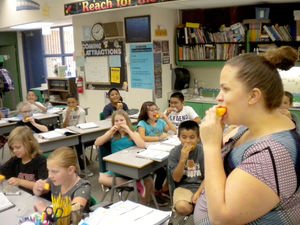
Want a healthy break at school? Why not bite into fresh fruit. Students in some Arizona schools are now enjoying the fresh apples, cantaloupes, and other fruits and vegetables offered as part of the Dept. of Agriculture's Fresh Fruit and Vegetable program, started back in 2002. The program has opened in 94 schools in Arizona with $3.7 million dollars allocated in helping to reimburse school's healthy snack purchases, that can then be disbursed to students throughout the day during class times. Casa Grande Elementary School District (65.7% Latino) is thrilled to enjoy the fresh produce in class, like string beans, and exotic star fruit. The schools that have applied for the program are hoping to encourage students to increase healthier snacking selections even when outside ...
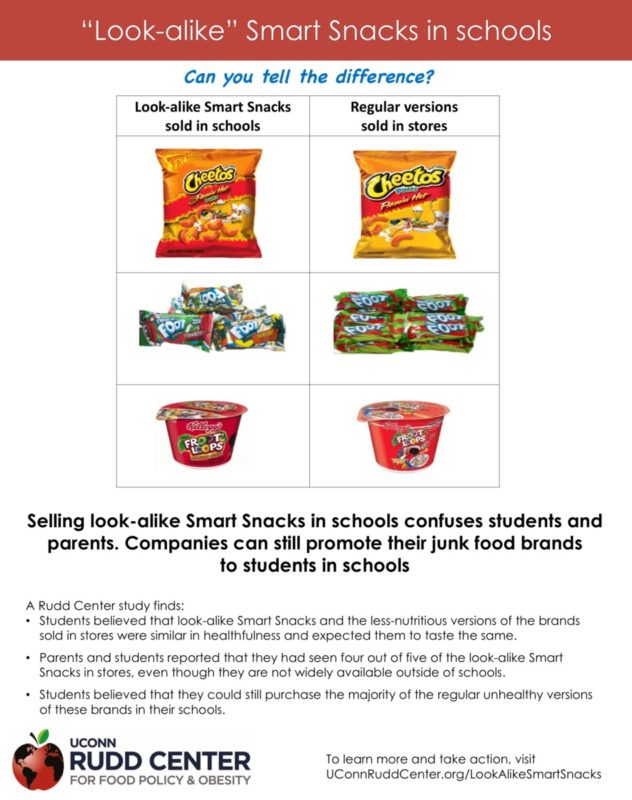
The UConn Rudd Center just released a study today in the Journal of Obesity, looking at how healthier snacks that are "smart-snack" approved, can change the attitude about the food brand and confuse parents and children when shopping for healthier snack options. The study examines how parents and children rated look-alike snacks in taste, healthfulness, and purchase intent. Smart Snacks were considered healthier, but less tasty, however, many parents and kids believed they had seen similar products for sale in stores. This can be a challenge for parents looking for the healthier options in stores, believing that the "copycat" or "look-alike" versions of junk food are in fact, approved by Smart Snack regulations set by the U.S. Department of Agriculture in 2013. Schools are ...
Need to figure out what to do in your school to have safe and clean water access and encourage everyone to drink more water? Watch the video webinar to learn more about how the Wisconsin (58% overweight or obese) created the Wisconsin Oral Health Coalition that has helped with initiatives to increase water consumption, reduce tooth decay and ensure students have access to safe and appealing water resources in schools. Through watching the webinar viewers will: Have a basic understanding of the need to decrease consumption of sugary drinks to increase oral health and reduce tooth decay or cavities
Know about recent research of how low-cost water initiatives bring benefits in the help to fight childhood obesity & tooth decay
Have tools and a guideline to help advocate ...
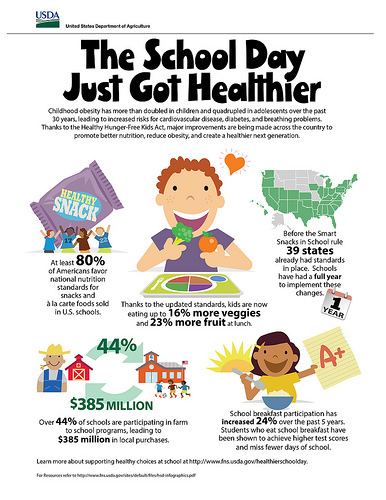
The new U.S. Department of Agriculture (USDA) guidelines for Smart Snack in Schools is working to help students have healthier snacks in schools, encouraging schools to stop selling foods high in unnecessary sugars, salts and fats like candy bars, sodas, and fried foods. In fact, new recommendations from the American Heart Association reveal that children and teens should consume less than 6 teaspoons of sugar a day. Are Smart Snacks in your school? Each snack offered must meet guidelines set by the USDA, including but not limited to sugar, salt, fat and calorie limits. Beverages are limited in schools as well, no soda is allowed to be sold and only 100% fruit or vegetable juice is allowed, although some juices still contain high amounts of natural sugars. Find out more ...
Fresh fruits and plenty of vegetable options will now be offered in Duncan Public Schools in Stephens County, Oklahoma (7.3% Latino) starting this school year, according to a local article. The school is planning to continue following federal requirements on the menus but also plans to join a co-op of other school districts that will help the school save money and have greater purchasing power for healthier choices. Children eat almost half of their daily calories at school, so it is important to offer healthier options like fruits, vegetables, and whole grains.
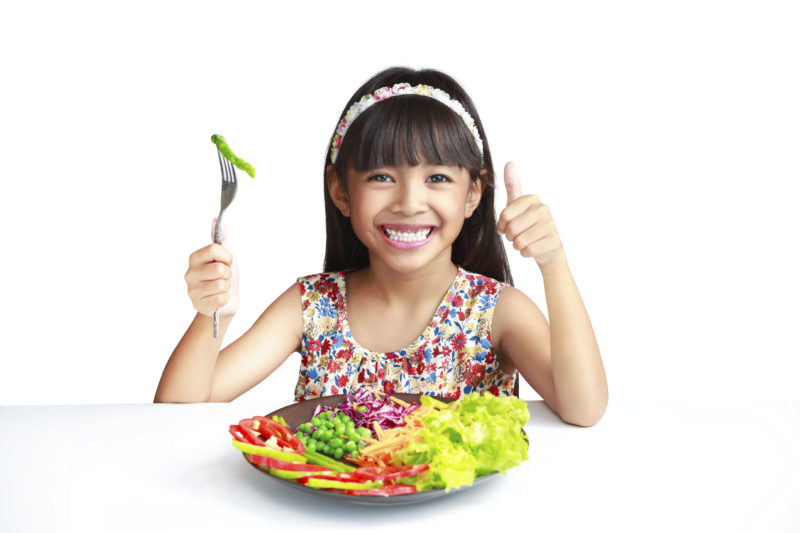
The school will allow children to not only have a fresh salad bar daily but also offer students two to three choices of vegetables and fresh fruits.
Researchers from the Center for Disease Control and Prevention have ...
Many Latinos in Minnesota get “left out,” of the healthcare picture. That’s why HealthFinders Collaborative aims to provider healthcare and services to marginalized families in Rice county, nearly 50 miles south of Minneapolis and St. Paul. But HealthFinders leaders like Charlie Mandile continued to identify gaps in local healthcare. Mandile and his team came up with a solution a few years ago: the Pura Vida Healthy Lifestyles Program, an effort to bring free preventive health and fitness classes to the local rapidly growing Latino population. How has the effort paid off?
Gaps in Latino health in Minnesota
HealthFinders Collaborative, community health centers in Northfield, Minn. (8% Latino population), and Faribault, Minn. (11.74% Latino population) formed to ...
According to information released by the Department of Health and Human Services (HHS), even if rates were to increase in 2017 by double digits, over 70% of consumers on HealthCare.gov will still be able to purchase a plan for less than $80 per month. Since the Affordable Care Act (ACA) became law, prices for plans have risen. In a hypothetical scenario, one in where all rates increase by 25%, the HHS found the vast majority of consumers (73%) would be able to purchase coverage for less than $75 per month. All Marketplace premiums will be finalized and made public this coming October. “[Rate increases reported in the headlines] do not reflect what consumers actually pay,” said Kathryn Martin, Acting Assistant Secretary for Planning and Evaluation. “Our study shows that, even ...