
 by
by 
Share On Social!
Cancer is not a disease that happens overnight.
It often creeps up slowly, silently, and without warning — revealing itself in some of the most unlikely ways.
That’s exactly what happened to U.S. Congress Rep. Joaquin Castro.
Amid a car accident involving a Spanish boar in Spain, Castro received some devastating news — he had neuroendocrine cancer.
While a treatable form of cancer, Castro won’t get to ring the bell signaling the end of his treatment.
For Castro, treatment continues at UT Health San Antonio.
“Unless something changes, I’ll have cancer for the rest of my life, but thankfully, and hopefully, cancer won’t take my life,” he said during an address to the 2024 Advancing Cancer Research for Latinos And All Populations Conference.
Castro’s diagnosis came as a surprise, but it motivated him to make an even greater effort to improve the health of the communities he serves.
Joaquin Castro and His San Antonio Upbringing
Born in San Antonio on September 16, 1974, Castro is proud to call The Alamo City home.
As a second generation Mexican American, Castro’s family immigrated to Texas more than 100 years ago, according to the congressman’s official biography.
He was raised on the West Side of San Antonio and attended public school.
While growing up in San Antonio, Castro developed an interest in public service after watching his parents become involved in political movements and civil rights.
With a retired schoolteacher for a father and a mother, who was a community leader, Castro grew a deep understanding and respect for the democratic process and learned how to serve a community.
It would have a huge impact on him later in life.
After graduating high school, Castro went on to attend Standford University, where he graduated with honors in 1996. From there, he went to Harvard Law School and received his Juris Doctorate in 2000.
At age 28, Castro returned home to San Antonio and joined a private law practice.
That’s when his career in politics would begin.
Joaquin Castro and His Career in Politics
Around the time, Castro was elected to the Texas Legislature. He served five terms as the state representative for District 125.
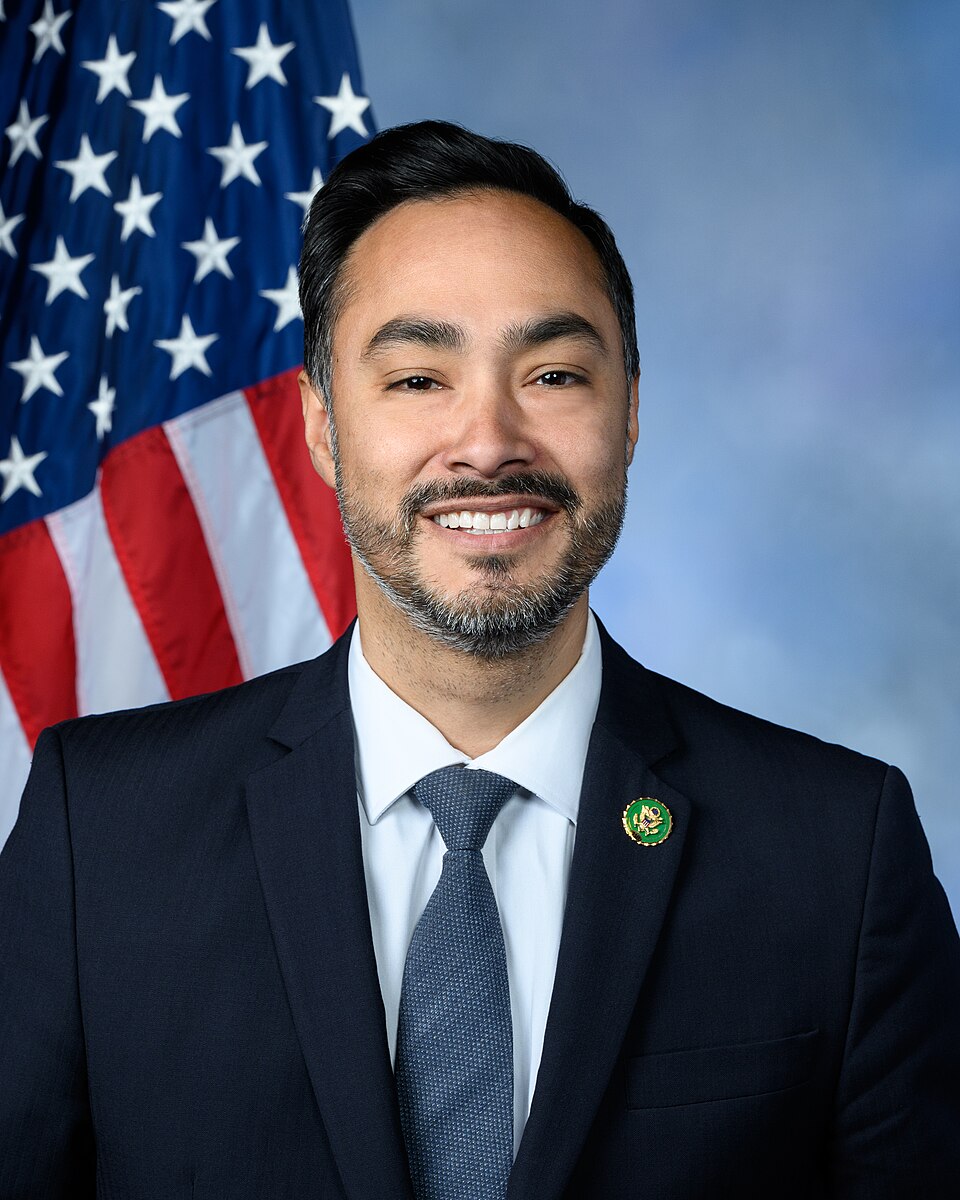
As a state legislator, Castro helped “restore millions of dollars in funding to critical health care and education programs,” according to his official biography.
During his time in the state legislature, he served as Vice Chairman of the Higher Education Committee and Democratic Floor Leader where he proposed mental health, teen pregnancy, and juvenile law reforms.
In 2012, he ran for and was elected to a seat in the U.S. House of Representatives, where he represents Texas’ 20th Congressional District, which spans parts of San Antonio and Bexar County.
Castro is now serving his seventh term in the U.S. House, where he serves on the House Foreign Affairs Committee and the House Permanent Select Committee on Intelligence.
In 2013, Castro was Co-President for the House freshman Democrats and the chair of the Congressional Hispanic Caucus for the 116th Congress, according to his official biography.
Joaquin Castro and His Community Service
While serving a larger public, Castro continues to give back locally.
Castro created the Trailblazers College Tour, which helps raise money to send students on college visits. He also started SA READS, a literacy campaign and book drive that benefits children, schools, and shelters across San Antonio.
In support of grandparents and other family members raising children who aren’t their own, he began the annual Families Helping Families dinner and awards.
Joaquin also gives back by teaching law at St. Mary’s University and serves as an adjunct professor at Trinity University.
Joaquin Castro and His Cancer Diagnosis
At the peak of his career, Castro was diagnosed with neuroendocrine cancer in 2023 while on a trip to Spain.
One night Castro was the passenger of a car going 70 miles an hour when all of a sudden the driver struck a wild boar.
“It was so quick. It was one of those things where in my mind, I saw it appear in front of us. And I thought, wait a minute, we’re headed right for this thing. We’re gonna hit it in a sec. And then, boom,” the politician recalled in a podcast with Texas Public Radio.
While the accident didn’t cause major damage to either the car or the people inside, Castro was taken to the hospital to be looked over.
It was there that physicians made a startling discovery.
Castro was told that he had two neuroendocrine tumors that had moved up his small intestine and into his liver.
“I had to ask [the doctor] again, because I couldn’t even pronounce the word neuroendocrine. But I knew that anytime somebody’s telling you that you’ve got tumors inside you, it’s not a good thing, and that they spread — even worse,” he told Texas Public Radio.
From the moment he was handed his diagnosis, Castro’s mind was clouded with thoughts of his family — his wife and three young children.
Mainly, he wondered how much time he’d have left.
“That was some of the toughest part … I think to some degree, people handle it differently … But it’s always on your mind, especially in those early days. It’s with you every day, weighing on you, and it’s a very, very heavy, obviously, on you,” he reflected in the podcast.
“I think there is a kind of depression and sadness, but also, I think, a hope that medicine will and treatment will get you through it … And also, I think, a newfound appreciation for the people in your life and … just how much they mean you.”
But Castro wasn’t going to let this diagnosis be the end.
Instead, he allowed it to help shape his understanding of the flaws in the health care system, giving him a new perspective on the issue.
Joaquin Castro and His Life with Cancer
Following his diagnosis, Castro sought treatment for the complicated and rare form of cancer.
Castro went to MD Anderson Cancer Center in Houston where he had a major surgery that removed part of his small intestine, part of his colon, his appendix, his gallbladder, and 44 lymph nodes, which at least 20 turned out to be cancerous, he explained during the podcast.
While the surgery was a success, Castro wasn’t declared cancer-free and wouldn’t be for the rest of his life.
Despite the surgery, Castro has tumors on his liver and due to the nature of the disease he’s required to be treated monthly at UT Health San Antonio to slow tumor growth.
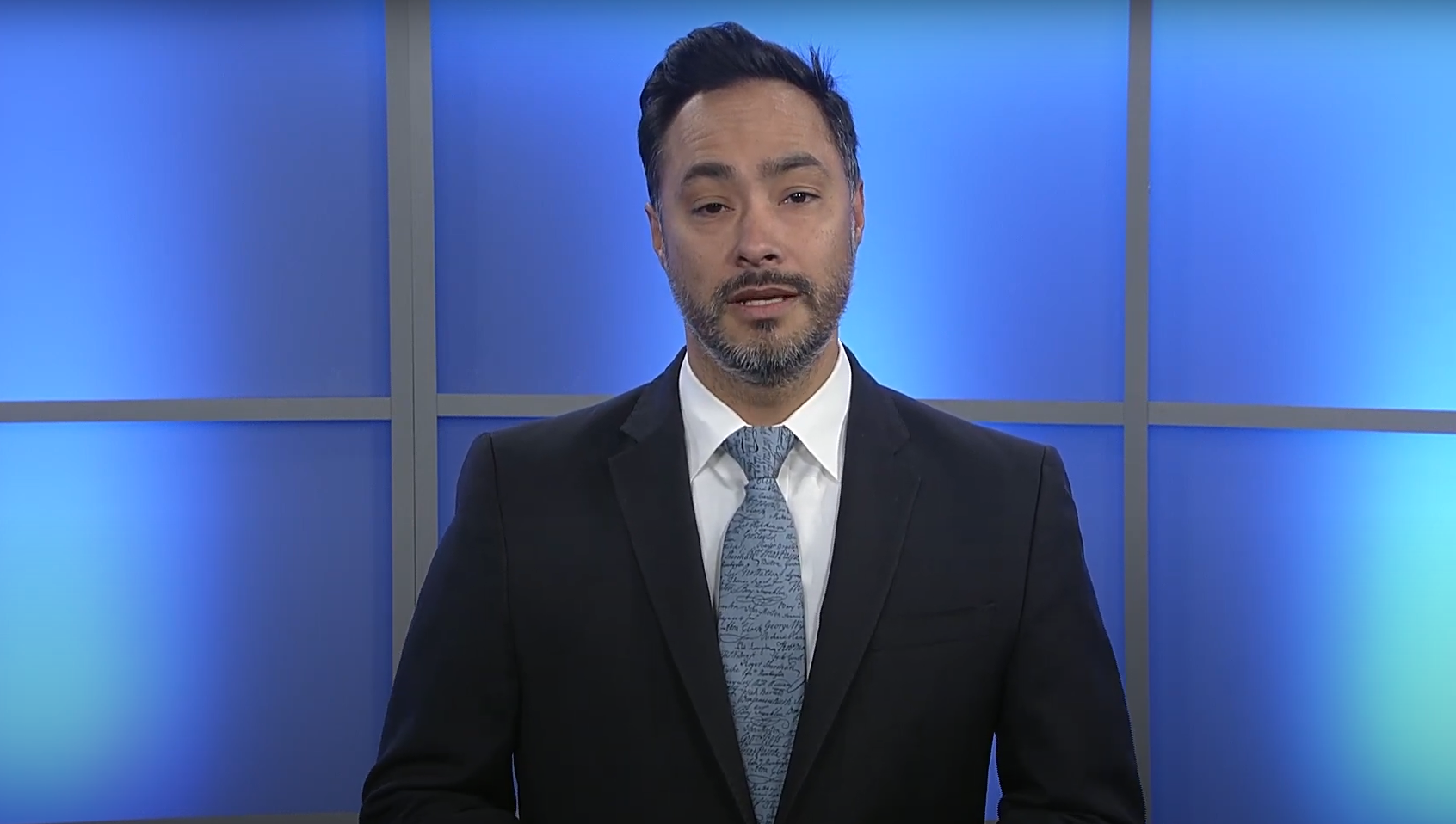
But Castro is one of the lucky ones.
“It turns out that cancer is a bigger threat to Latinos in South Texas than I think most people think about or give credit to,” Castro told Texas Public Radio.
Many South Texans, including many Latinos, are unknowingly living with cancer and are only diagnosed when the disease is at a much later, more advanced stage, contributing to higher numbers of cancer deaths.
What’s more, insurance, or lack thereof, continues to weigh heavily on South Texans diagnosed with cancer.
That’s something that Castro had to get hands-on experience with.
“I had to become an expert on insurance, which I’d never done before,” he said. “I went to the doctor when I needed to, but I didn’t really need to much … and so I had to figure out exactly deductibles and co pays and in network and out of network.”
The list price for the medication that is improving Castro’s life is $24,000 before insurance and $1,000 after insurance.
“For a lot of folks, [that’s] crippling,” Castro commented.
In the end, having cancer has opened the politician’s eyes about health care issues.
“[Cancer has] reaffirmed my belief that everybody should have health care coverage and that we need to move as a country towards universal health care coverage, whether that’s Medicare for all or some other system that covers people,” he stated in the podcast.
Joaquin Castro and His Investment in Health and Wellness
Since his diagnosis, Castro has co-sponsored several cancer-related legislations, including the Metastatic Breast Cancer Access to Care Act and the Medicare Multi-Cancer Early Detection Screening Coverage Act.
The Metastatic Breast Cancer Access to Care Act waives the 24-month waiting period for Medicare and the 5-month waiting period for Social Security Disability Insurance to cover benefits for eligible individuals with metastatic breast cancer.
The Medicare Multi-Cancer Early Detection Screening Coverage Act seeks to expand Medicare coverage for early detection screening tests that are approved by the Food and Drug Administration for several different cancer types.
However, coverage under the bill, which will be enacted in 2028, is limited to those younger than age 68, increasing by a year every year, and to one test every 11 months.
This will greatly increase access to preventative care for those who need it most and hopefully decrease the number of deaths caused by cancer.
What’s more, Castro’s involvement in health legislation has gone beyond cancer.
He’s also helped to advance legislation that expands healthcare coverage, worked on improving access to healthcare for seniors and children with birth defects, and championed heat-related protection for workers.
Joaquin Castro and His Commitment to Cancer Research
Not only has his cancer diagnosis better informed his legislative actions, it’s also affirmed the need for more cancer research and support for it.
Castro has done this through exploring avenues to increase funding for research.
He’s done this by propelling funding for the Mays Cancer Center as well as UT Health San Antonio via the Community Project Funding grant process.
This has led to a $1 million grant to the School of Public Health at UT Health San Antonio for building renovations, including classrooms, staff and student lounges, study spaces, and research labs.
He also helped achieve another $1.9 million in grant funding for new instruments and specialized equipment, which will be devoted for research leading to the treatment of fatty liver disease, which is a risk factor for liver disease and cancer.
What’s more, these contributions allowed for the development of new chemical synthetic techniques to prevent liver failure.
Given the prevalence of fatty liver disease in South Texas, especially among Latinos, the funding has gone to help his community while honoring his commitment to cancer research.
Castro has also been approached about support for research with national organizations and foundations, such as the Debbie’s Dream Foundation, which fundraises for stomach cancer research.
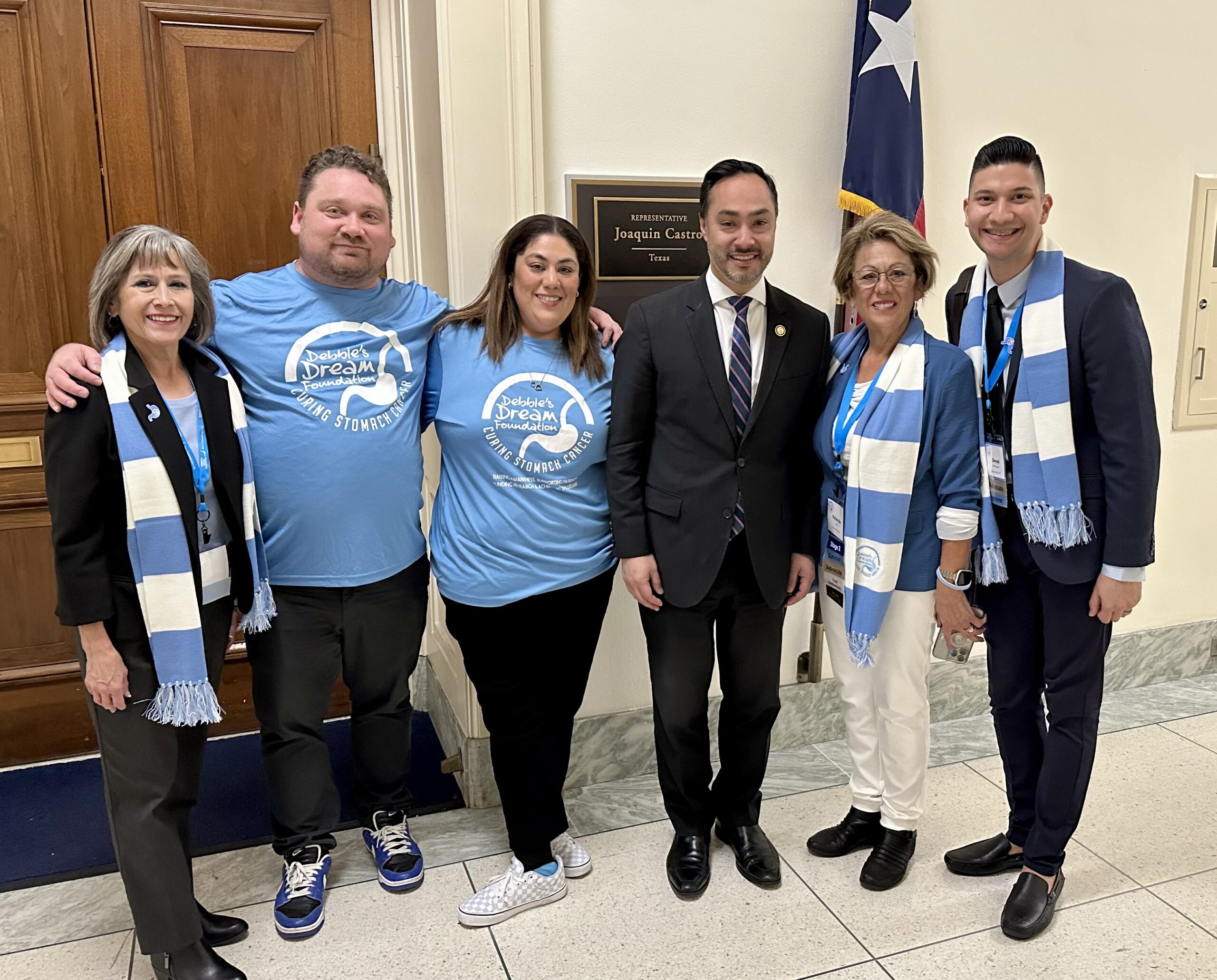
In February 2025, the foundation, along with a representative of the Institute of Health Promotion Research and Avanzando Caminos Hispanic/Latino Cancer Survivorship Study at UT Health San Antonio, traveled to Washington, D.C., to push lawmakers for change.
“We got to speak with these leaders who are representing us and who are essentially the voice of the people and what they’re doing to help uplift the community, how they’re doing that, and what policy making actions can we as patients and as [community leaders] share with them to amplify that voice,” research scientist Dr. Derek Rodriguez said about his time on Capitol Hill.
Not only was Castro receptive to what they had to say, he was in firm agreement that more needed to be done.
“He is in the same boat as everybody else there because he knows the community, but more so specifically, because of his own journey,” Rodriguez said. “He was able to not only take the time to sit with us, but also listen and to, you know, ask questions as well, and then show his support … I was like, ‘Are you willing to help research studies like these?’ And he’s like, ‘Yeah, send me the information.’ So he was very willing, and he was very receptive to getting any and all information that we had to share.”
Joaquin Castro Shares His Cancer Story
His openness to sharing his cancer journey has not only led him to support health legislation, but it has also helped bring more awareness to the health issues his community faces.
For his contributions to health, Castro was recently named as one of the Association of American Cancer Institutes (AACI) Public Service Award honorees for 2025.
The award exists to “recognize public servants for their support of the NIH, the NCI, and cancer centers in their respective states,” according to the AACI website.
Castro was nominated by Dr. Amelie G. Ramirez, leader of Salud America! and the Institute for Health Promotion Research at UT Health San Antonio, and Dr. Lei Zheng, director of the Mays Cancer Center at UT Health San Antonio.
“Congressman Castro’s journey is a testament to the power of personal experience to shape compassionate leadership for health improvement. With his background as a cancer survivor, he has elevated the conversation around health improvement for all,” Dr. Ramirez wrote in her letter of nomination for the award.
The congressman also recently appeared in a special video at the 2024 Advancing Cancer Research for Latinos and All Populations Conference at UT Health San Antonio, which is helmed by Ramirez, talking about his cancer journey and the need to address cancer now.
Castro continues to share his cancer story with the public in hopes that it may help others while raising awareness and a need for policy change.
“Cancer doesn’t know what your politics are. Since my diagnosis I’ve met people from across the political spectrum who’ve been affected by it. People who’ve been brought together by some of the worst news that you can possibly get,” Castro told conference attendees. “Cancer is a reminder that everyone should get the care they need … I resolve to do everything I can to make sure that cancer is on the minds of legislators everywhere.”
By The Numbers
1
out of 10
Pedestrians survive when hit by a car at 40 MPH
This success story was produced by Salud America! with support from the Robert Wood Johnson Foundation.
The stories are intended for educational and informative purposes. References to specific policymakers, individuals, schools, policies, or companies have been included solely to advance these purposes and do not constitute an endorsement, sponsorship, or recommendation. Stories are based on and told by real community members and are the opinions and views of the individuals whose stories are told. Organization and activities described were not supported by Salud America! or the Robert Wood Johnson Foundation and do not necessarily represent the views of Salud America! or the Robert Wood Johnson Foundation.

[…] Read Full Article: […]