by
by Share On Social!
Marielle Santos McLeod thought she knew a lot about cancer care.
Years as a health professional had given her time to learn about cancer care and gain a closer look at the challenges Latinos face in getting treatment.
That’s why, when the mother of four was diagnosed with colon cancer at age 36, she was shocked by just how little she really knew.
However, it was enduring the disease as a young Latina that guided her toward her life’s purpose – serving as a patient health leader to uplift the voice of Latino cancer survivors.
“I love advocacy …. It’s like one of the things that I’m convinced that I was put on this earth to do. I just had to get cancer to get to it first,” Santos McLeod said.
Update 03/16/2026: After the initial publication of her story in 2024, Salud America! recently caught up with Marielle to learn how she continues to use her voice and survivorship story to help others through her role is a patient leader. Check out the update below toward the end of this story.
Spanish-Language Influence
Santos McLeod doesn’t believe she gives off the appearance of being Latina, but the second she opens her mouth to speak to her patients in Spanish, she relishes the moment their expressions go from shock and confusion to relief as all their fears and concerns melt away.
“I love the shock factor,” Santos McLeod said.
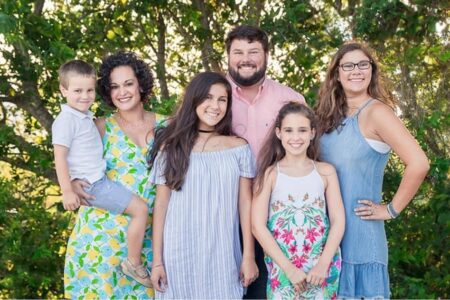
While she may not look it, Santos McLeod was born and grew up in the Dominican Republic, where Spanish was her first language.
Halfway through the fifth grade, she was uprooted from her home to live in Charleston, South Carolina.
When she first arrived, being the only Latina student in school was a struggle. She was bullied and teased for not speaking English well. She fell behind on homework and class assignments.
But by high school, she came to terms with how special it made her feel.
Upon graduating, Santos McLeod earned a scholarship running cross country and majored in Spanish at Coker College, a private institution located in Hartsville, South Carolina.
She would go on to use her degree to teach Spanish, but there was something missing.
Santos McLeod would later recall visiting the pharmacy her grandmother worked at — the memory providing a valuable influence on the direction she would take.
“She did not achieve a very high education, but she managed the hell out of this pharmacy. She would take me with her every single time that I was with her. I kind of grew up around that environment,” Santos McLeod recalled.
Answering the Call to Help
Santos McLeod enrolled in nursing school while working as a medical interpreter at the Medical University of South Carolina.
During her time as a medical interpreter, she learned about the challenges of being a Spanish-speaking patient.
She flipped the script, using the language to support patients.
“I became known as the feisty interpreter because I would talk back and I would be like, ‘This is not right.’ I was there to do a job, but also my job is to make sure that my patients are treated well,” Santos McLeod explained.
In her time in the role, Santos McLeod built strong relationships with her patients, giving her space to support their needs.
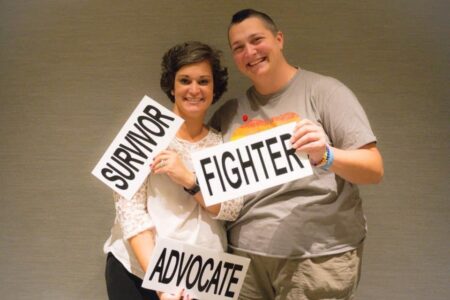
She formed a particularly strong bond with a gastrointestinal patient while working in the oncology offices.
Santos McLeod followed her care for over a year, often stepping in to interpret for her.
One day the patient interpreter tried to make plans to meet the patient, but the patient rescheduled for the next day because she didn’t feel well.
The following day the patient’s name couldn’t be found on the roster. A few hours later, Santos McLeod found out what had happened.
“[The doctor] calls … he said, ‘I just want you to know your patient passed last night.’ It devastated and rocked me. I ended up finding out she had colon cancer, and it was spreading to her stomach,” Santos McLeod recalled.
Little did she know, Santos McLeod would receive a colon cancer diagnosis of her own a few years later.
To spare herself the emotional burnout, Santos McLeod switched tracks to help patients from an administrative perspective.
Santos McLeod ended up taking a break from pursuing a Master of Health Administration when her grandfather developed Alzheimer’s disease, which motivated her to concentrate on end-of-life care.
Amid taking care of her ailing patients, Santos McLeod would get the diagnosis that changed her life forever and altered her advocacy journey – she had colon cancer.
One-of-a-Kind Diagnosis
In 2017, when Santos McLeod began to bleed, she knew something was wrong and sought the advice of a medical professional.
She was put on medication to manage it. A week later the stomach pain began, which she attributed to her history of endometriosis adhesions.
The medication wasn’t working, and Santos McLeod was eventually permitted to visit a gastroenterologist, who prescribed more medication.
A few weeks later, constipation set in, and her physician instructed her to change her diet and increase her medication.
Weeks go by and Santos McLeod’s symptoms intensify, resulting in a 20-pound weight loss.
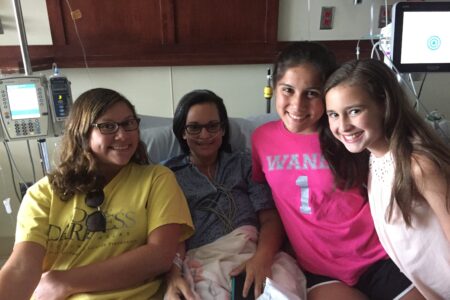
Sensing something was terribly wrong and knowing the consequences of not having medical intervention, she insisted on having a scope done — something her doctor refused to perform due to her age and something her insurance wouldn’t cover.
“I love advocating to give patients a voice because I was not heard, and I was not listened to. Even with the knowledge that I had, I too fell through the cracks, and I was very easily dismissed because I was young,” she said.
But Santos McLeod didn’t need a test to tell her what was causing her pain, deep down she knew she had colon cancer.
The results of the scope confirmed the presence of several cancerous lymph nodes.
The only thing she didn’t know was how severe the cancer was or what outcome was possible as a young Latina, given there was no data to compare herself to.
“There’s still such a lack of demographics, and data for people like me that I had nowhere to turn to,” she said. “All that I knew at that time from seeing this diagnosis come across my desk, almost every day, it’s like, ‘I only have one more prong on that ladder to become metastatic.”
After undergoing resection surgery, she was diagnosed with stage III colon cancer.
Never missing a day of work, Santos McLeod went through 12 rounds of chemotherapy treatment, only to be fired from her job — one day shy of FMLA eligibility.
Santos McLeod is one of the many Latino cancer survivors that had to bear the severe financial burden of the disease.
The Changing Demographic Landscape of Colorectal Cancer
So much has changed since the time Santos McLeod was handed her colon cancer diagnosis.
At the time, there was no outcome precedent for someone with her demographic background — a young Latina.
Colorectal cancer is now one of the fastest-growing cancers among Americans younger than 55.
Rates have risen 1% to 2% every year since the mid-1990s, according to the American Cancer Society. This type of cancer is expected to bring about 152,810 new American cases and 53,010 deaths in 2024, making it the second most common cause of cancer deaths.
Between 2014 and 2019, Latino men had a colorectal cancer incidence rate of 39.2 rate while Latinas were at a 27, according to Cancer Facts & Figures for Hispanic/Latino People 2021-2023.
Symptoms of colorectal cancer include blood in the stool, constipation, and abdominal pain — common symptoms found in other ailments that are more likely to affect younger people than cancer.
“The majority of the patients that I have navigated in the past, especially with being young, were always brushed off because every symptom of colorectal cancer is synonymous with a stress symptom,” Santos McLeod said. “Because of our age we’re even more dismissed because the typical story and song is ‘Oh, colon cancer is only for 70-year-old men, but you’re not 70. You’re not 50.’”
Like Santos McLeod, some colorectal cancer survivors didn’t have any of the risk factors, such as obesity, diabetes, and tobacco and alcohol use, or had a family history of colon cancer.
“I had no family history. I’m the only person in my family with colon cancer. I have no genetic markers or predisposition to make me have colon cancer. But guess what? That is the demographic. There are so many environmental factors that are unknown in all of these young adult patients that are getting diagnosed with colon cancer,” Santos McLeod said.
Due to the growing number of diagnoses younger Americans, health experts are now recommending screening for the disease starting at age 45 for those with an average risk.
For many years, colon cancer was typically screened for by undergoing a colonoscopy.
But advancements in science have made testing more accessible and less invasive.
Several medical companies have created home testing kits, making the disease as easy to screen for as COVID-19 and pregnancy.
While the tests aren’t 100% accurate and a positive test can be an indicator of other gastrointestinal disorders, such as hemorrhoids and irritable bowel syndrome, their existence is an important step in standardizing screening practices and saving lives.
From there, patients can bring a positive test to a physician and get a colonoscopy to confirm the diagnosis.
Breaking Down Background Challenges Through Supporting
Santos McLeod’s diagnosis and treatment opened a lot of doors to continue her advocacy work.
After being out of work for several months, Santos McLeod was hired as a bilingual patient and family support navigator with a national colon cancer organization, leveraging her experience to help others.
It was a perfect fit.
When faced with a cancer diagnosis, patients are expected to know many things – including the fundamentals of cancer, scientific language, and clinical trial research — and language gaps makes these things harder to understand.
As a navigator, it’s Santos McLeod’s job to supply patients with the knowledge they need to have conversations about treatment with their medical teams.
Having first-hand cancer experience, Santos McLeod takes great responsibility in empowering her clients to speak up for themselves.
“I have already been where you are. I might not know where you’re going, but I can give you the steps on how to appropriately get there,” Santos McLeod said. “I’m also trying to break the cultural barriers space of we’re very respectful within specific roles. We don’t ask questions, we do what authority tells us to do, and you can still do it in a respectful manner. There’s nothing wrong with you coming back with … a question.”
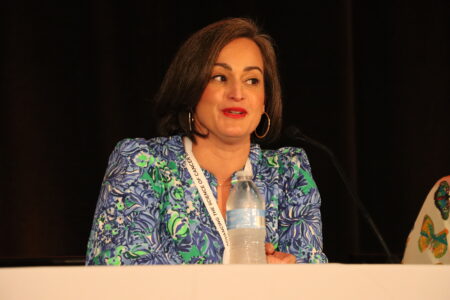
The cancer survivor’s background in supporting patients made her the perfect candidate for the first-ever Latino Cancer Patient Advocate Training Program.
Santos McLeod was one of 15 Latinas in the program, which provides advocates with the tools and resources they need to help patients navigate the healthcare system and promote Latinos in cancer research.
The training was designed by Dr. Barbara Segarra-Vázquez of the University of Puerto Rico and Sandi Stanford, who is a fellow member of the ACRLP conference planning committee and a cancer survivor.
As a result of her training participation, Santos McLeod was invited to take part in the 2024 Advancing Cancer Research for Latinos and All Populations Conference. She also shared her story on the survivorship panel and promoted advocacy in an article in the San Antonio Express-News.
Her time at the conference and advocate training program was life-changing, she said.
The experience opened new opportunities to advance her advocacy work, such as being offered a spot on a steering committee and invited to apply for scholarships and grants.
“If I never would have gotten into this advocacy program, I don’t think I would have been given the experiences and opportunities that have come my way … It makes it worth it knowing that everything that I do is coming full circle,” Santos McLeod shared her excitement for the future.
Crash Course in Cancer Patient Leadership
It’s been two years since Marielle joined a cohort of 15 Latina patient leaders training alongside one another to help uplift patient voices within the cancer clinical research sphere and shared her harrowing story of survivorship at the 2024 Advancing Cancer Research for Latinos and All Populations Conference.
Armed with the tools and knowledge she gained from the training, Marielle entered the world of government and big pharma to speak up for the needs of her fellow survivors.
“It allows me the opportunity not only to be a [patient leader], but to also share the importance of why our [involvement in research] matters,” she told Salud America!
Since the training, Marielle has become the patient leader for gastrointestinal cancers at SWOG, which is a cancer research network initiative.
She also participated as a consumer reviewer for the FDA and Department of Defense and attended the Guiding Researchers & Advocates to Scientific Partnerships (GRASP) training. She served on several steering committees for pharma industry partners, and acted as a Latina voice for the Cologuard launch for Exact Sciences.
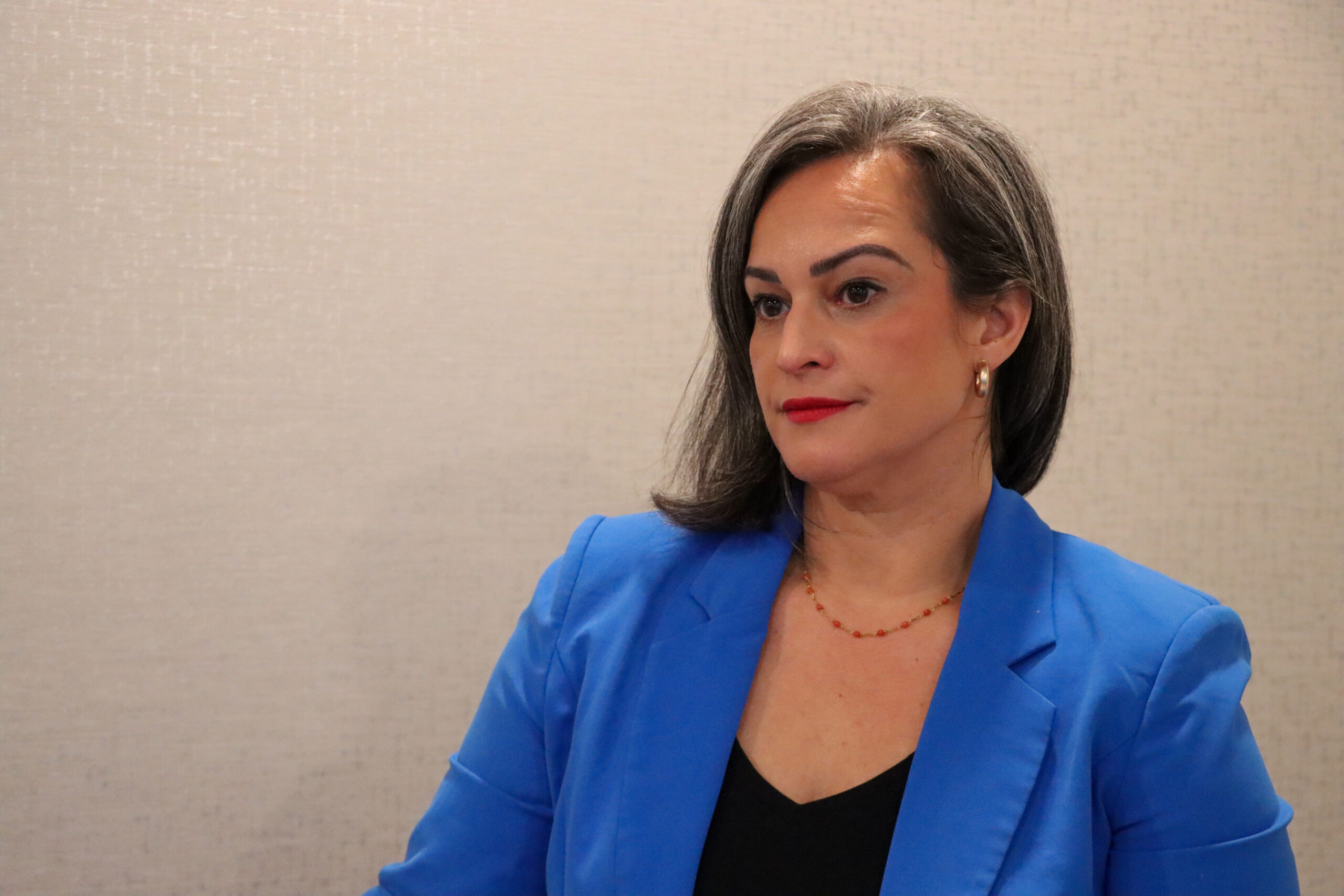
“This has been incredible because I not only get to participate on the back end of sharing the patient voice within the clinical trial, research, and design, it allows me to further validate and stand on those soapboxes of why [our voices] matter and why is so important for Latino patient [leaders] to be move involved,” Marielle explained.
Marielle attributes her success as a patient leader to the training she received and the connections she made during the conference.
“The [Cancer Patient Advocate Training Program] completely has changed my life,” she said. “The moment that I left, it has never been the same in all the great ways. I was able to receive such important and valuable education and training from the [Program] that I’ve been able to kind of pick it up and just run with it.”
While serving as a patient leader, Marielle has gotten to work next to her personal mentor, Dr. Barbara Segarra-Vásquez of the University of Puerto Rico.
In addition, Marielle will be a guest in an upcoming Salud America! podcast about her involvement with the training program with Segarra-Vásquez, a fellow training graduate, and training sponsor and partner Exact Sciences.
Segarra-Vásquez said she is “very proud” of Marielle’s progress in serving others survivors.
“[Marielle] has used the opportunities given to her to amply the voices of cancer patients and families and share their needs and concerns. I am glad that the Latino Cancer Patient Advocate Program of 2024 allowed her to learn about new opportunities and gave her the confidence to spread her wings,” Segarra-Vásquez said.
As a result, Marielle returned to the Latino Cancer Patient Advocate Training Program in 2026 as a mentor. She is now helping shepherd a new group of Latino patient leaders, who are freshly out of training and meeting with cancer research stakeholders to help make a difference for Latinos and all cancer patients.
The future looks bright for the colon cancer survivor who is continuing to travel the country to share her story and make an impact in research.
In advancement of the second Latino Cancer Patient Advocate Training Program, Marielle shared her advice for those looking to follow in her footsteps and go into patient leadership.
“[Enter into research patient leadership] scared. Do it without knowing the landscape. Your voice is all that you need and your lived experience. And those are the things that us as patients on the other side want to be able to connect with,” she said.
Marielle will be appearing in an upcoming Salud America! podcast about her involvement with the training program with a fellow training graduate, program co-creator and mentor Dr. Barbara Segarra-Vásquez, and training sponsor and partner Exact Sciences.
Supporting a Variety of People in Clinical Trials/Research
Not only were there no cancer research statistics for someone like Santos McLeod, but there were also no clinical trials. Clinical trials are studies with volunteers that help researchers learn how to slow, manage, and treat different diseases.
That’s one of the reasons Santos McLeod makes clinical trial participation a crucial part of how she advocates for her patients.
Often bogged down with medical jargon, clinical trials can be difficult to understand if you don’t possess a medical background. Adding a language gap on top of it can make the process even more challenging.
“Make the language understandable for the patients that are wanting to participate in one or even entertain one easy enough to where you maintain the integrity of the trial … but be able to put it in a form that doesn’t dumb it down to insult the patients so they can truly understand and feel empowered to have these discussions with their doctor,” Santos McLeod suggested.
To help boost clinical trial enrollment, Santos McLeod works with the patient to create a list of questions for the patient’s provider and uses the answers to guide the patient to possible clinical trials they can bring up with their medical team.
Lack of Latinos in clinical trials, impacting the effectiveness of treatments for the Latino population.
As of 2019, Latinos make up 10% of National Cancer Institute clinical trial participation and 4% of FDA drug trials.
With the help of advocates like Santos McLeod, Dr. Amelie G. Ramirez, director of Salud America! at the Institute for Health Promotion Research at UT Health San Antonio, is helping increase Latino participation in cancer clinical trials, with help from Genentech, a member of the Roche Group.
She is using Salud America! to uplift the voices of Latinos participating in clinical trials or programs, such as lung cancer survivor Angelina Vazquez Felsing and breast cancer survivor Diana Lopez.
“Latinos who volunteer in clinical trials are helping themselves. And they’re building a future with better treatments that can help their families in the years to come,” Dr. Ramirez said.
Visit Salud America!’s clinical trials page to find a clinical trial, read about hero volunteers, and more!
Elevating the Voice of Latinos in Other Ways
Another area that Latinos are largely left out of is scientific research — something Santos McLeod is hoping to focus on changing through her work.
After learning about the All of Us Research Program at the ASCL conference, Santos McLeod is looking forward to making sure the Latino patients she supports for are accounted for in research by introducing the program to the first national peer support group in Spanish at Cancer Hope Network she is spearheading.
The All of Us Research Program is a historic effort to gather the health profiles of one million Americans in research, and build a research database.
“I just hope that if [people] end up following any sort of lessons that they see or learn along the way it’s that it’s everybody matters. Our community matters. I matter. They matter.”
Learn more about the All of Us Research Program by join the fight to make sure All of Us are represented in scientific research in San Antonio (in English or Spanish) and nationwide.
By The Numbers
142
Percent
Expected rise in Latino cancer cases in coming years
This success story was produced by Salud America! with support from the Robert Wood Johnson Foundation.
The stories are intended for educational and informative purposes. References to specific policymakers, individuals, schools, policies, or companies have been included solely to advance these purposes and do not constitute an endorsement, sponsorship, or recommendation. Stories are based on and told by real community members and are the opinions and views of the individuals whose stories are told. Organization and activities described were not supported by Salud America! or the Robert Wood Johnson Foundation and do not necessarily represent the views of Salud America! or the Robert Wood Johnson Foundation.