Sugary drink taxes are taking out the fizz across the nation. From Washington, D.C., to Berkeley, Calif., sugary drink taxes are raising the price of soda, tea, and energy drinks, with the hope that people will buy fewer taxed drinks. These drinks do not contribute to good health, according to a Salud America! research review. But are shoppers really buying fewer sugary drinks as a result? A series of studies explores this question.
How Sugary Drink Taxes Affect Purchases
A new study from Mathematica Policy Research and others indicates that sugary drink taxes can reduce purchases of sugary drinks. Researchers examined the impact of taxes in four cities: Philadelphia, San Francisco, Seattle, and Oakland. They compared changes in household monthly purchases to nearby cities ...
Schools can serve as so much more than space for children to learn. They can even transform community health. That is, if schools share their spaces with the public when classes are out. Fortunately, the team at ChangeLab Solutions is showing how easy and beneficial it is for schools to share use of school grounds with local residents and groups after and before school, and during summer.
What Is Shared Use of Schools?
Playing can help a kid’s healthy brain development. But many communities are not kid-play-friendly. Latino neighborhoods tend to lack safe places that welcome kids and multi-generational families to play. Many schools lock up their facilities after class ends. Shared use agreements—also called open use or joint use—are specific plans and rules that ...
Folic acid has long been linked to a healthy pregnancy. In fact, pregnant women who consume a folic acid vitamin and folate-rich food have lower risk of their babies experiencing major neural tube birth defects of the brain (anencephaly) and spine (spina bifida). More than 300,000 neural tube birth defects happen every year in the U.S. Latinas face a higher risk. They also have lower knowledge about the benefits of folic acid, along with lower folic acid consumption compared to women from other racial/ethnic groups. To celebrate National Folic Acid Awareness Week (January 7-13), let’s tweet with #SaludTues on Jan. 7, 2020, to spread the importance of folic acid among Latinas and all mothers-to-be. WHAT: #SaludTues Tweetchat: Why Folic Acid is Important for Latina and ...
Mexico holds a special place in Marissa Jauregui’s heart. Jauregui has taught English to students in Yucatan as a Fulbright scholar, and she grew up traveling to visit her grandparents. Now she is keeping her roots in mind as a first-year student in the Community Oriented Public Health Practice program at the University of Washington, Seattle. She already is focusing on mental health, reproductive health, health disparities, and health policy. She has strong leadership qualities and desires to conduct research and advocate for mental health services outside of the clinic. To further her experience and education, Jauregui applied for the Éxito! Latino Cancer Research Leadership Training program. The Éxito! program, led by Dr. Amelie G. Ramirez at UT Health San Antonio ...
Latino children are less likely to have their vision tested compared to their peers. From 2016 to 2017, only 58.6% of Latino children ages 3 to 5 had taken a vision test from a health professional, according to new CDC data. "Childhood vision screenings may provide early detection of vision disorders and opportunities for subsequent treatment," the authors say.
Latino Eye Health Risk Factors
In addition to Latino disparities, screening rates also were affected by differences in socioeconomic status, parental education, and healthcare access: Children living in families with incomes below 200% of the federal poverty level were about 10% less likely to have their vision tested.
Children whose parents had the equivalent of a high school diploma or less were almost 20% less ...
Having worked firsthand with promotoras de salud, Emily Reyes understands the important role community health workers play in addressing Latino health disparities. Reyes, who has a master’s degree in public health from California State University, Fullerton, specializes in health promotion and regularly works with underserved communities to bring health equity and sustainable change through education, services and civic participation. Her interests include improving rural health, public policy, and infectious diseases research─all done with the same resilience and grit as her mother, who earned a master’s degree while raising a family as a single mom. To further her experience and education, Reyes applied for the Éxito! Latino Cancer Research Leadership Training ...
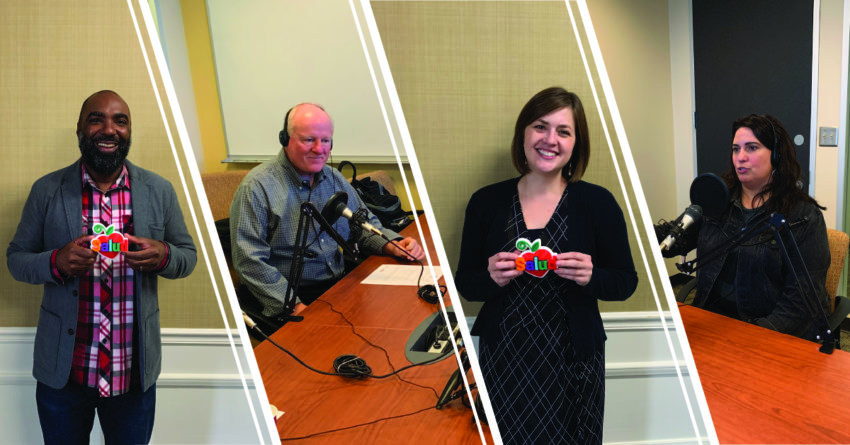
Salud America!'s latest project—the Salud Talks podcast—will be back in 2020 with more episodes all about holistic health equity. The first episode of the new year and decade will go live on Jan. 8 and will kick-off a slate of discussions. These productions will feature grassroots advocates, government officials, healthcare professionals, and others who discuss the issues impacting Latinos and all Americans today — from the aspirational communications to sugary drinks to childhood wellness. Episodes will be available every Wednesday on Apple Podcasts, Spotify, SoundCloud, and others. "We're excited to see this project continue its work in informing listeners on the harmful disparities impacting Latinos and all Americans today," said Dr. Amelie Ramirez, director of Salud ...
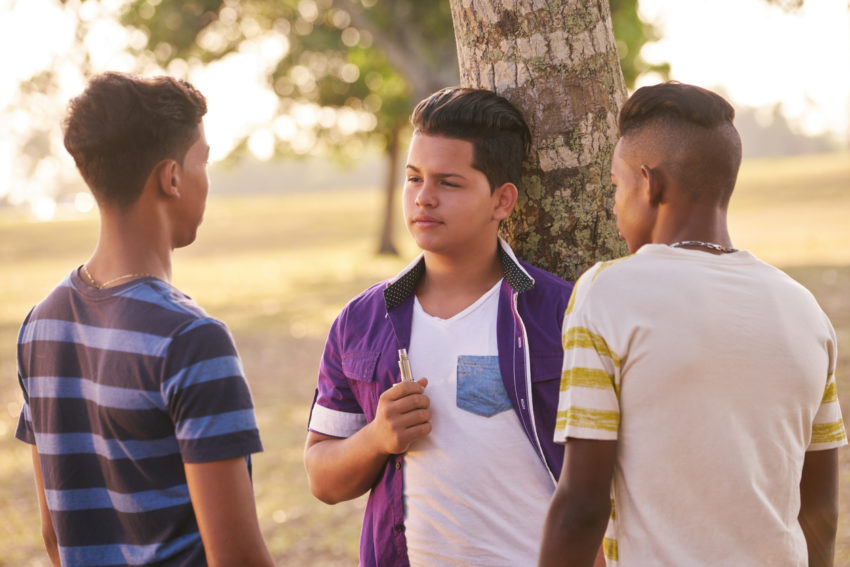
Amid mounting health concerns over teen vaping, the U.S. Congress voted on Dec. 19, 2019, to raise the purchasing age for all tobacco products—including e-cigarettes—from 18 to 21, the New York Times reports. President Trump is expected to sign the measure on Dec. 20, 2019. Experts say raising the purchasing age will reduce the number of people who begin smoking at very young age. Nearly 9 out of 10 smokers started smoking by age 18. The rule is also a response to deadly health concerns over teen vaping. The CDC announced in December 2019 that 54 people died and 2,506 cases of lung-related illnesses had been reported due to vaping. “Raising the tobacco age to 21 is a positive step, but it is not a substitute for prohibiting the flavored e-cigarettes that are luring ...
Earlier this year, the EPA under Andrew Wheeler announced plans to address widespread lead corruption in U.S. public water supplies. In October, the agency released proposed revisions to the Safe Drinking Water Act's "Lead and Copper Rule." These modifications aim to decrease the pervasiveness of the toxin through a series of regulations — including limits on allowed levels of lead in water. Environmentalist groups—including Clean Water Action—are calling for further action. Mainly, they urge for a full replacement of lead services lines throughout the country. If these lines are left intact, they pose a serious concern to Latinos and Americans across the country who face dangerous lead exposure through their drinking water. "Everything else is small potatoes," Erik ...