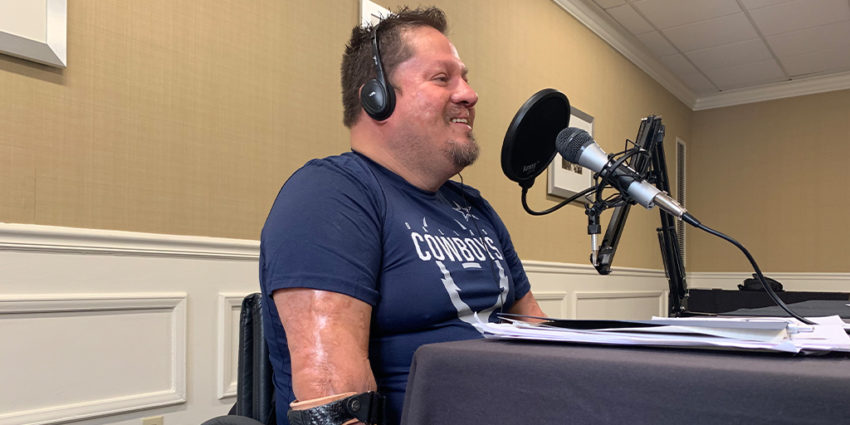
When was the last time you noticed whether or not a sidewalk had a ramped curb cut for those in wheelchairs? Or if an intersection had a Soundsystem for the visually impaired? For over 60 million Americans with disabilities, these issues can become an everyday burden when equal access is not a priority for local, state, and federal governments. Worse, it can make the already more difficult aspects of living life even harder for those in that group. Bob Lujano, Information Specialist for the National Center on Health, Physical Activity, and Disability joins Salud Talks to discuss these issues, and how we all can step up to make life more equitable for his community. Check out this discussion on the Salud Talks Podcast, Episode 20, "A Positive Experience"! WHAT: A ...
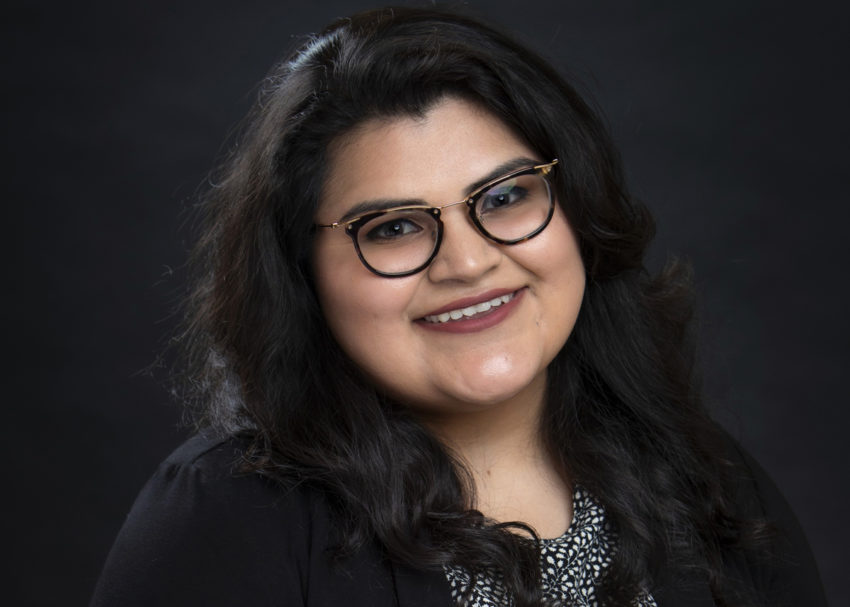
Growing up as a “Southsider” in the 63% Latino city of San Antonio, Norma Gonzalez witnessed firsthand many socioeconomic and educational disparities. This gave her a clear passion for and sense of social justice. Now, fueled by her passion and resourcefulness, Gonzalez is a first-year master’s-degree student the Columbia University Mailman School of Public Health. She also is working to address structural barriers while bringing great honor and pride to her community. She is already making a difference in health disparities programing, education, and public health, including research on support strategies for Mexican immigrant parents. To further her experience and education, Gonzalez applied for the Éxito! Latino Cancer Research Leadership Training program. The ...
A soda tax can stir up controversy. Health experts say they curb consumption of unhealthy sugary drinks. Detractors say they're bad for local businesses. Many don't like taxes in any instance. But most people miss what happens after soda tax revenue comes in. That's why we are excited to share a new video series, Health Investments for Berkeley, which celebrates the community-led public health work paid for, in part, by the nation's first-ever soda tax enacted in Berkeley, Calif., in 2014. The series, created by the Praxis Project, an Oakland health justice group, has four parts: Berkeley Unified School District
Healthy Black Families
Multicultural Institute
Ecology Center "This series is intended to flip the national narrative around soda taxes that ...
February is American Heart Month. While awareness is important for all people, certain groups—like Latinos—are at a higher risk for heart-related diseases. Cardiovascular diseases are the primary cause of death in the United States. For Latinos, it is the second-leading cause of death behind cancer. Let’s use #SaludTues on Feb. 25, 2020, to tweetchat about ways to promote heart health for Latinos and all people! WHAT: #SaludTues Tweetchat: “Healthy Hearts: Celebrating American Heart Month!”
TIME/DATE: 1-2 p.m. EST Tuesday, Feb. 25, 2020
WHERE: On Twitter with hashtag #SaludTues
HOST: @SaludAmerica
CO-HOSTS: The Heart Truth (@TheHeartTruth), Public Health Maps (@PublicHealthMap), U.S. Department of Health and Humans Services' Region 2 ...
The number of children living in single-parent households has grown significantly over the past 50 years. In fact, it has actually doubled — jumping from 13% to 32% in 2017, according to a new Pew Research Center analysis of US Census Bureau data. High cost-of-living, including necessities such as food and transportation, can significantly impact single parents. Worse, it can prohibit their ability to break cycles of poverty or build substantial wealth.
Single Latino Parents
In the US, there about half of each sing-parent race group are white, roughly 15% are Black, about one-fourth are Latino/Hispanic, and a small share are Asian. "These gaps are driven largely by racial differences among the large share of solo parents who are mothers," Gretchen Livingston with PEW ...
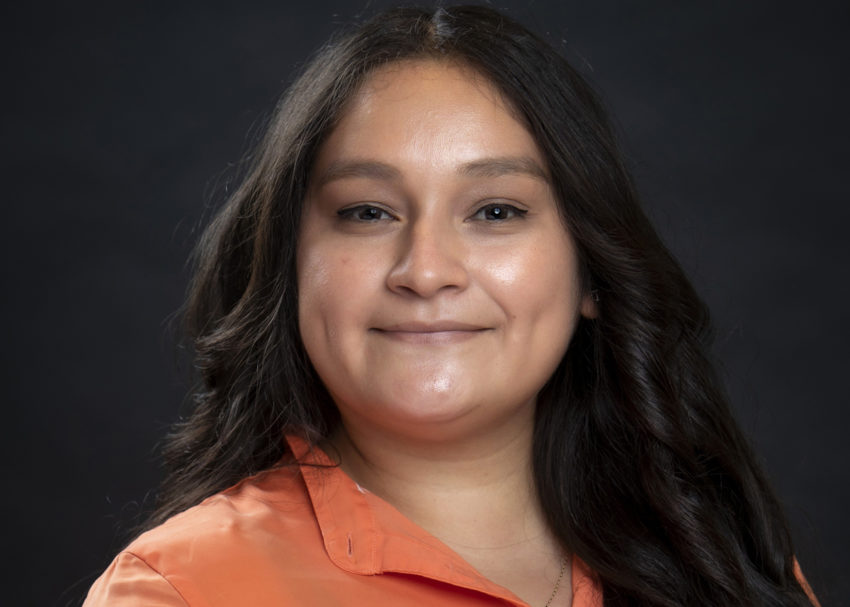
Raised by a strong, single mom, Lucero Silva is a first-generation Mexican-American student who is dedicated to pushing for better health for Latinas. Silva, a candidate in the public health program that focuses on community health education at California State University, Long Beach, has already begun investigating why women fare worse for so many health issues. She interned at the Center for Latino Community Health, Evaluation, and Leadership Training. She focused on health promotion through health education and community based participatory research. Now Silva is a graduate research assistant for Familias Saludables, a childhood obesity prevention research that focuses on Latinx youth and their families. To further her experience and education, Silva applied for the Éxito! ...
Many severe side effects of prescription drugs are not reported, according to new findings from JAMA Internal Medicine. Moreover, the researchers who completed the study comment that current FDA regulatory practices need reform, especially the process used to report harm caused by medical devices. “Over the last 4 decades, the approval and regulation processes for pharmaceutical agents have evolved and increased in complexity as special programs have been added and as the use of surrogate measures has been encouraged,” the researchers write. “The FDA funding needed to implement and manage these programs has been addressed by expanding industry-paid user fees. The FDA has increasingly accepted less data and more surrogate measures and has shortened its review times.”
What ...
Early childhood adversity like abuse and divorce is a root cause of many of the greatest public health challenges we face today. But doctors don’t even screen children for exposure to adversity. That’s changing in California, thanks to Dr. Nadine Burke Harris and other child advocates. As of Jan. 1, 2020, almost 100,000 physicians in 8,800 clinics will be reimbursed for routinely screening Medi-Cal patients for adverse childhood experiences (ACEs), in an effort California hopes will help prevent ongoing ACEs-related stress and disease. Here are nine big questions surrounding the change.
1. What Is Childhood Adversity (ACEs) and its Impact?
Adverse childhood experiences (ACEs) include abuse, neglect, divorce, parental incarceration, parental mental illness, etc. These ...
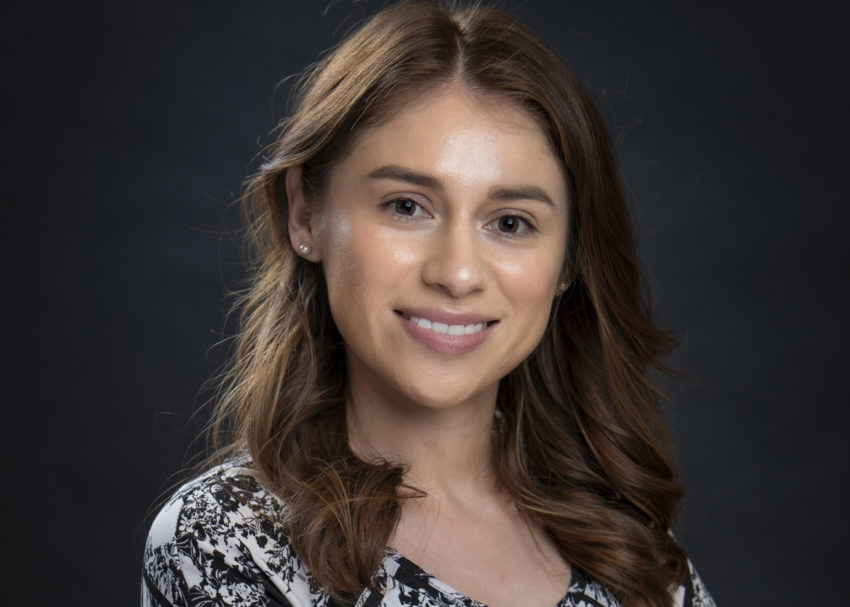
Just like her three-legged, good-luck Chilean pig that perhaps “gave up one of its legs to help others,” Julissa Marin is always looking to lend a hand wherever she goes. That includes lending a hand to improve healthcare systems. Marin, a full-time healthcare administration student in the Executive Program at California State University, Long Beach, wants to address inconsistencies in data information and review healthcare redesign. She also works full-time in the business officer of the Clinical and Pathology Laboratories at University of California, Los Angeles, where she rectified over $16 million by stabilizing the influx of lab charge errors in hospital billing work queues. To further her experience and education, Marin applied for the Éxito! Latino Cancer Research ...