Adult obesity rates reached 35% in at least 7 states and saw increases in 31 states across the U.S. from 2012-2017, while no significant drops in obesity rates were seen in any state, over the last year. These are the latest findings from a report from the Trust for America's Health and The Robert Wood Johnson Foundation. The report developed using data from the CDC's Behavioral Risk Factor Surveillance Survey (BRFSS) goes on to highlight how adult obesity continued to rise in at least 6 states: Iowa, Massachusetts, Ohio, Oklahoma, Rhode Island, and South Carolina, between 2016-2017. In the case of Iowa and Oklahoma, this is the first time these states reach the 35% obesity threshold. The states with the highest levels of obesity by rank are: #1- West Virginia ...
Dr. Amelie G. Ramirez, director of Salud America! at the UT Health San Antonio, has received a new $1.3 million prevention grant to enable local doctors to guide patients who smoke to join a smartphone-based quit smoking service. The grant is from the Cancer Prevention & Research Institute of Texas (CPRIT) The funding will enhance tobacco screening and treatment for two groups. One is primary care patients at the UT Health Physicians medical practice. The other is oncology care patients at UT Health San Antonio MD Anderson Cancer Center. During routine patient visits, doctors will assess and track if a patient smokes. They will then counsel and prompt patients to use their smartphones to join Quitxt. Quitxt encourages quitting smoking via bilingual text or Facebook ...
Buses don’t run to a Latino mobile home community outside Minnesota’s Twin Cities. Instead, people there are forced to rely on cars─dangerous, expensive, polluting cars─ when they need to get to jobs, food, and healthcare. This isolates them from opportunities for health, jobs, and affordable housing, just like many other suburban and rural parts of our nation. Fortunately, planned public transit improvements will enable more buses across the Twin Cities, including the mobile home community. But how? Will it work for Latinos and all vulnerable neighborhoods?
Twin Cities Growing in Population, Traffic
The area to the east of the Twin Cities─the Interstate 94 (I-94) corridor─is expected to see a 24% increase in population and a 30% increase in jobs by 2040, according ...
Mental health isn't talked about enough in the Latino community. Even if they want to talk, their doctors are rarely equipped to overcome language and cultural barriers to answer questions. That's starting to change in Missouri. A new residency program is recruiting doctors-in-training to provide Spanish-language mental healthcare services to Latinos in clinics across the state. The program is a collaboration between Ponce Health Sciences University in Puerto Rico, which operates a satellite campus in Missouri, and Compass Health Network, a nonprofit with healthcare clinics serving rural residents across Missouri, the St. Louis Post-Dispatch reports. "Very few Missouri clinics have therapeutic staff who speak Spanish," according to the news report. "Compass Health Network ...
Latina and black women who are living in poverty face much higher risk of eviction than other racial groups, according to a new report. The new report, from Princeton University’s Eviction Lab, examined court records and found that 2.3 million people were evicted from their homes in 2016. That’s 6,300 people evicted each day. “[The data] demonstrate widespread housing insecurity in both urban and rural locales around the country,” wrote Catherine Lizette Gonzalez of Colorlines. Latinos and Risk of Eviction Other recent studies from the Eviction Lab and researcher Matthew Desmond have found that Black and Latino women with low-incomes were evicted at alarmingly higher rates than other racial groups due to factors such as having children, low wages ...
Colorado moms in the Special Supplemental Nutrition Program for Women, Infants and Children (WIC) can text peer counselors any time of day for breastfeeding advice, thanks to a new program being expanded across the state. WIC is a federal program that boosts healthcare and nutrition for vulnerable women and children. Latinos comprise nearly half of the 8.8 million WIC participants. WIC aims to improve breastfeeding rates, curb obesity, and boost early childhood development. Could texting help WIC moms get breastfeeding support they need? “We know breastfeeding is the healthiest way to feed babies, but sometimes new moms need extra support,” Heidi Hoffman, director of WIC in Colorado, said in a news release. “Using technology, we can help more moms in more places for less ...
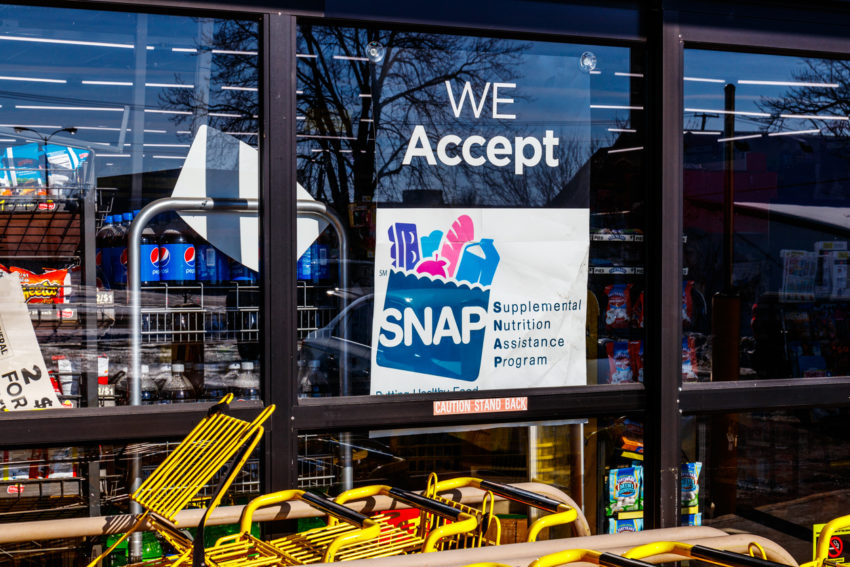
UPDATE: After the U.S. House failed to pass the Farm Bill on May 18, 2018, reports surfaced June 20, 2018, that the U.S. House will "take a second look at their version of the Farm Bill, which again would jeopardize SNAP. A proposal to cut $20 billion over the next 10 years from the Supplemental Nutrition Assistance Program (SNAP) program as part of the proposed Farm Bill would dramatically impact Latino health, according to various reports. Latinos comprise more than 20% of participants in SNAP, commonly known as food stamps. SNAP benefits Latinos in a variety of ways, from accessing healthy food to lifting them out of poverty. Cuts to SNAP in the proposed Farm Bill, set to expire in September 2018, could jeopardize that aid by cutting support and adding barriers to ...
Latino and other minority youth have higher rates of poverty and greater gaps in education and health opportunity than their white peers, according to a new report. The 2018 County Health Rankings found that: Poverty rates among children and youth are at least 1.5 times higher than rates among adults aged 18 and older, and the rates are even higher for Latino, Black, and American Indian/Alaskan Native children and youth. Child poverty rates for Latino and Black children are worse across all types of counties, and are even higher in suburban counties than for White children in rural counties.
More than 1 out of every 5 youth in the bottom performing counties do not graduate from high school in four years. It's worse among racial/ethnic groups. 1 out of 4 Latino youth do not ...
More than three of four Latinos worry about global warming and climate change, a higher worry rate than their non-Latinos peers, according to a recent English and Spanish survey by the Yale Program on Climate Change Communication. Why are Latinos so worried? What policies can help? How willing are Latinos to take action, and how will that impact health equity and safer streets? Salud America! is excited to launch a three-part series exploring the issue of climate change for Latinos. Today we will tackle what climate change is, why Latinos are worried, and whether they should be. Part 2 will address what kinds of policies Latinos would support to address climate change. Part 3 will focus on a potential solution for both climate change and health equity.
What is Climate ...